
Blockchain: Electronic ledger, but the cornerstone of the cryptocurrency world
The term 'blockchain' often evokes high-tech, cryptography, complex algorithms, and revolutionary technology in people's minds. However, understanding the essence behind the phenomenon is the key point in grasping a technology. Specifically, why must virtual currencies represented by BTC and the virtual currency trading market be built on blockchain technology, and what are its core advantages?
The simplest way to understand it is to think of a block as a ledger filled with transaction information. Blocks are linked together to form a blockchain. In other words, the BTC system can be roughly understood as an entire ledger filled with BTC transaction records.

1. The essence of the financial system
First, let's look at the essential commonalities between traditional finance (banks, exchanges, etc.) and the cryptocurrency space.
Trade is for mutual exchange, and since humans began entering primitive society, the 'goods' people wanted to exchange have been countless, making it fundamentally difficult to price each other. Thus, from shells to gold and then to paper currency, humanity began using generally equivalent items, or money, as the core of trade. And whether we are depositing, transferring, shopping, buying stocks, or opening futures contracts, essentially these actions are not 'the flow of money', but 'the change in accounts'.
In the digital age, with paper currency basically exiting daily circulation, and with the cryptocurrency space being built entirely on the network, keeping accounts is the core of the world.
How much money does a person have? Did this payment go to A or B? Did he engage in double spending? Has he actually spent all the money, and is he now in negative balance? To avoid these issues, bookkeeping is necessary. Bookkeeping is the essence of the financial system.

2. Centralized Trading
As modern humans living in the 21st century, we actually do not need to consider these issues in our daily lives, because in the face of bank credit based on nation-states, these problems are somewhat close to the anxious ramblings of a worrywart. The vast majority of us in the cryptocurrency space would not have considered such topics before engaging with it.
In the centralized trading system based on banks, the 'money' we have is not in a safe deposit box with our name on it, but rather there is a line of numbers in the bank's backend system: XXX's balance of x yuan. Transfer shopping deducts y yuan; salary refunds add z yuan. We can only check the account, but cannot verify.
Why do we trust this line of numbers? Because the existence of banks itself proves everything.
If we change the scenario to Binance, the essence remains the same. For example, when buying coins in c2c, why do we dare to click 'I have paid, please notify the seller to release'? Because we trust the scale and commercial credibility of the Binance platform, so that string of USDT numbers in our fund account can be transformed into real 'money' that can be spent, or fiat currency.
3. Decentralized Trading: No 'human' bookkeeping
As mentioned above, to design a decentralized trading system that removes centralized institutions like banks, blockchain itself is a series of thick electronic ledgers connected by code. Its essence and the commonality with banks and CEX is that it is still used for bookkeeping, recording who transfers money to whom, and what the balances are. (However, privacy tokens like Monero (XMR) can maintain token consensus under the condition that the transaction parties and amounts cannot be viewed externally; the principles behind this belong to a refined technical field and will not be discussed further).
The essential difference is that no one is keeping the accounts, or everyone is keeping the accounts.
Bank statements are maintained by the bank's servers, while exchange statements are kept by the exchange's servers. In contrast, blockchain statements are owned by all participants in the blockchain (or token holders, everyone involved in consensus nodes); they are ubiquitous and thus unalterable, as you cannot simultaneously modify the data on all computers in the world (to be precise, the data on all participating nodes' devices).
Secondly, all ledgers are publicly visible. We know that blockchain is a large ledger, and in banks, we can only see our own balance and transaction records with others, but on the blockchain, we can see every address, every transaction, and every transfer (still using BTC as an example). In the blockchain, the authenticity of transactions does not come from the credit of centralized institutions, but from the verifiability of the blockchain itself.
In other words, the core demand of blockchain is one of the core ideas proposed by Satoshi Nakamoto when designing Bitcoin: centralized institutions guarantee trustworthiness through authority, while decentralized trading - web3 guarantees trustworthiness through its own structure. Every Bitcoin transaction is automatically broadcast to devices worldwide after miners complete packaging, and all computers/phones of Bitcoin participants will automatically stamp the already completed transactions with the most reliable seal: no one can simultaneously modify the data of tens of millions of computers worldwide.
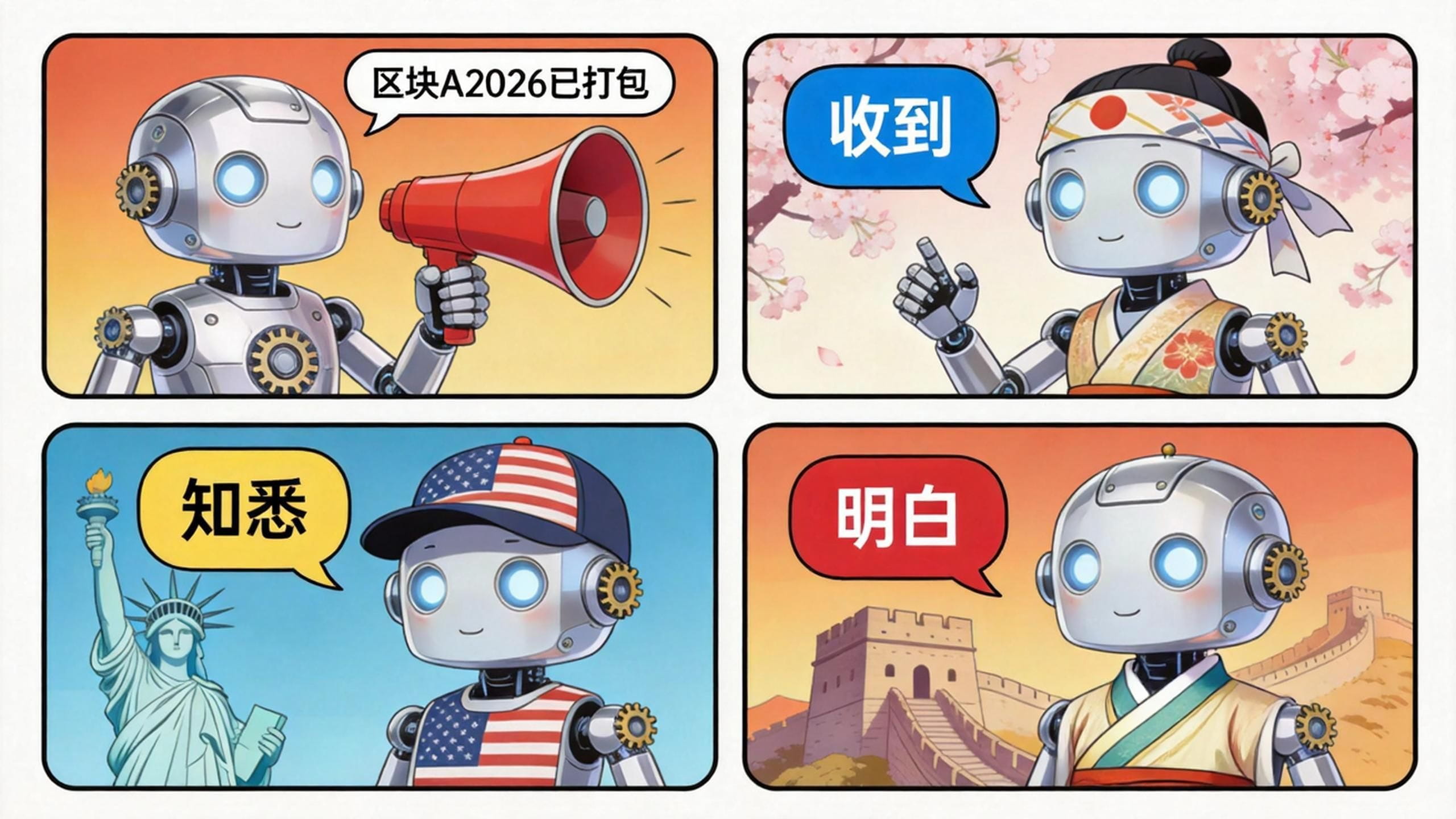
The cornerstone of the decentralized concept means that blockchain bypasses borders and banks, avoids the complex banking clearing system and cross-border restrictions, allowing for endless global trading 24 hours a day, with no language barriers and no centralized institutional supervision. This is the foundation from which the digital currency boom emerged, giving birth to the cryptocurrency space.
