
I have been trading cryptocurrencies for ten years and made 30 million, but the biggest secret is: I spend most of my time 'not trading'. In this market that advocates 'working hard to get rich', 90% of people are heading towards poverty due to overexertion.
Today, I want to tell you how to defeat the market with 'laziness' in the crazy world of cryptocurrencies.
If you expect to get rich immediately after reading this article, then you can close it now. I do not have 'wealth secrets' here.
There is only one set of 'survival rules' that allowed me to survive three bull and bear markets and accumulate 30 million in assets.
This is not a feel-good article, but a 'health report' that will diagnose the most fatal problems in your investment system.
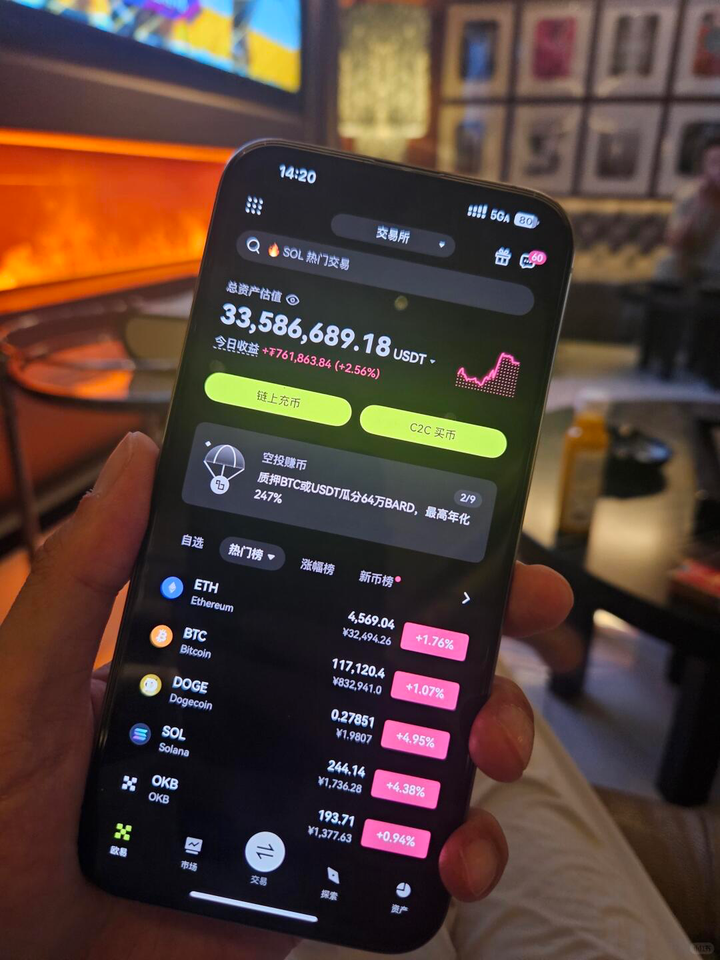
Before discussing techniques, I want to share the iron rules of trading in the coin market:
First, for those coins that are complex and unclear, never rush in. Pick the softest persimmons!
Second, don't put all your money into the same coin at once, even if you are very optimistic about it, and even if it later proves you right; don't invest all at once. Because circumstances change rapidly, no one knows what will happen tomorrow.
Third, if you mistakenly buy coins in a downward trajectory, you must quickly sell them to avoid further losses.
Fourth, if the coin you bought hasn't lost yet but has entered a downward trajectory, you should exit and observe quickly.
Fifth, for coins that are not in an upward trajectory, it is advisable to pay less attention. Regardless of what happens in the future, do not accompany the main players to build positions. Retail investors don't have the time to waste with them.
Sixth, do not fantasize about making money while constantly doing short trades, going in and out every day. Frequent trading may give you a thrill but can lead to significant losses. The only beneficiary is the exchange, and you won't have that high level; you are not an operator. Don't buy too many coins; it's best not to exceed 10. You don't have the energy to keep an eye on them. It's like wanting to marry five wives; even if you're in good shape, you can't satisfy them all. Wei Xiaobao's story only happens in novels.
Seventh, just because this coin is cheap and has dropped a lot doesn't mean it's a reason to buy. It could still get cheaper!!!
Eighth, just because this coin is very expensive and has risen a lot does not mean it is a reason for you to refuse to buy or sell. It could still go higher!
Advice
1. Don't easily give up on strong coins, prioritize strong coins, and engage in both hot and strong coins; investment and speculation should go hand in hand.
2. The most important thing for traders is the ability to adapt during trading.
3. Qualitative analysis must be done well. Qualitative analysis on large cycles, selecting coins on weekly charts, assessing on monthly charts, tracking on daily charts.
4. Follow the rules strictly, using Bollinger Bands or moving averages that you find feasible to analyze the market.
5. Skills are not taught; it all relies on technical proficiency. Repeating successful experiences makes earning money a habit; consistent earnings are more important than big wins.
As an old trader in the coin market, I have summarized 12 iron rules for trading coins today. Each one is a blood-and-tears lesson; after reading, you can avoid losing 100,000!
1. The time difference between the East and the West: Stay up late to watch the market; the coin market is primarily active during European and American hours (Beijing time 21:30-7:30), and the big increases happen in the early morning! So, do you want to make money? Staying up late is a must! Sleeping at 20:00 and waking up at 4:00 to watch the market is the routine of a qualified trader.
2. Don't panic during a big drop in the daytime: if the foreigners pull the market in the evening after a big drop during the day, don't be afraid! At 21:30 in the evening, once the foreigners enter, they will quickly pull it back! Remember: a big drop during the day is an opportunity to buy low; never chase high during a big rise in the daytime as it will likely drop back in the evening.
3. The deeper the pin, the stronger the signal: K-line pin (long upper and lower shadows) is a common method used by the operators. The deeper the pin, the stronger the reverse signal!
A pin often represents the best time to buy or sell; never let the operators deceive you into exiting!
4. News landing is always bearish: Before major meetings or positive news, prices will definitely rise, but once the news is released, they will immediately drop! Therefore, lay out your plans in advance, and as soon as the news comes out, run quickly. Don't be greedy!
5. Heavy positions lead to liquidation, light positions are the way to go: Holding heavy positions? Congratulations, you are already on the exchange's liquidation list! The operators are focused on heavy-position users, making sudden moves to liquidate you! Therefore, light positions and diversification are the way to survive!
6. After a stop-loss, the price drops; after a take-profit, the price rises: after a short position is stopped out, the price drops; after a take-profit, it rises. The operators just don't want you to make money! Therefore, be cautious with stop-losses, and take profits in batches; don't be led by the operators!
7. You're almost out of the loss: Stop dreaming: Getting out immediately? The rebound suddenly stopped! How could the operators let you escape easily? Therefore, when close to breaking even, reduce your position appropriately; don't be greedy!
8. Excitement = waterfall warning: When you are overly excited, the waterfall is about to come! The operators use your emotions to cut the leeks; staying calm is the way to go!
9. When you have no money, the market is full of opportunities: When you are broke, every coin is rising, and FOMO emotions are at their peak! But remember, 80% of the market is manipulated; don't jump in easily. Patience is what makes you a winner!
How can one achieve long-term survival in the market? To survive and succeed in the market long-term,
You can follow these key strategies:
1. Risk management
Use spare cash for investments, avoid using high leverage or loans.
Set a stop-loss point. Once the preset loss limit is reached, sell decisively to avoid further losses.
2. Investment strategy
Diversify investments: Don't put all your funds into one project; instead, diversify investments across different coins and projects to reduce risk. Long-term holding: For quality projects, hold for a longer time to leverage the power of compound interest for wealth growth. Timely selling: If there are significant bearish news events at market highs, it may be a good time to sell.
3. Information acquisition and processing
Establish your own information sources, such as CoinMarketCap+, Defllama+, etc., to obtain accurate market data.
Learn to discern the authenticity of information, avoiding being misled by false information.
4. Psychological adjustment.
Stay calm and don't be affected by short-term market fluctuations.
Set reasonable expectations to avoid over-trading and frequent operations.
5. Continuous learning
Regularly learn about blockchain technology and digital currency-related knowledge, keep up with industry developments, participate in community discussions, and exchange experiences with other investors to broaden your horizons.
6. Balance life and investment.
Ensure that investment activities do not interfere with daily life and health.
Maintaining physical and mental health helps better cope with challenges in the investment process.
Many friends find it unbelievable when I say 'I only trade for 7 hours a week'—they work 9 to 5 all week, earning a fixed salary; while I average 1 hour a day analyzing charts and finding buy/sell points, earning more than they do working hard. Today, I want to share my efficient trading secrets with you, helping you quickly advance to being a successful trader who 'watches less and earns more.'
But let me pour some cold water on you: this is by no means an easy path. Mastering trading may take years; Rome wasn't built in a day, and you can't grasp the essence in a short time. But once you fully understand this method, you can continuously compound your funds and profit sustainably in the market.

Let me tell you a little story:
My friend Xiaohua is a consistently profitable trader, while another friend Junliang has just learned trading for two weeks. One time, while shopping together, Junliang kept checking his trading app, looking at floating profits and losses, getting increasingly anxious; while Xiaohua only opened the trading platform for the first time during their afternoon break—resulting in Xiaohua making 1000 while Junliang lost 100.
Junliang asked Xiaohua how he did it. Xiaohua said: 'I'm not an amazing trader, my win rate is quite ordinary, but I have one thing more than you—I completely believe in my trading analysis.'
This story hits the pain point of many traders: you don't have to stare at the market all day, nor do you need to repeatedly check gains and losses. Just make a good trading plan, set your stop-loss and take-profit, and let the market run itself.
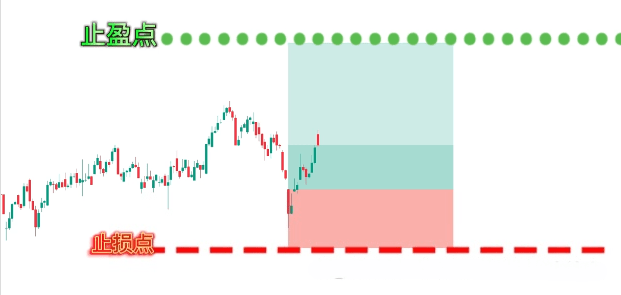
Unless you are doing scalp trading, day trading and swing trading should be 'set and forget'—frequently watching the market will only make you tense and emotional, swayed by short-term fluctuations, leading to wrong decisions.
Let me mention a pitfall I encountered early on:
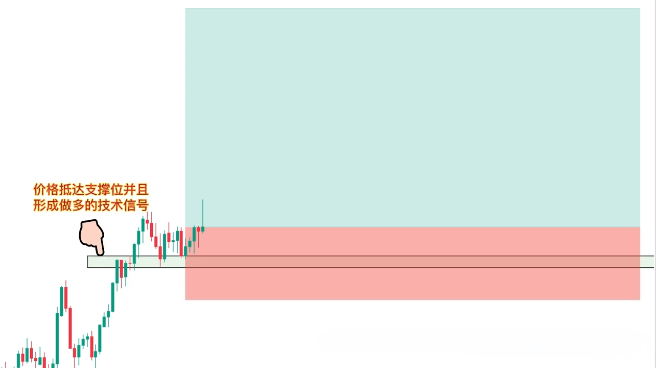
I used to love staring at the market, seeing prices pull back to key support levels during an upward trend, and entering long positions after seeing bullish signals. The result? When the price dipped slightly, I panicked, thinking it would reverse and I had to stop-loss, quickly closing my position.
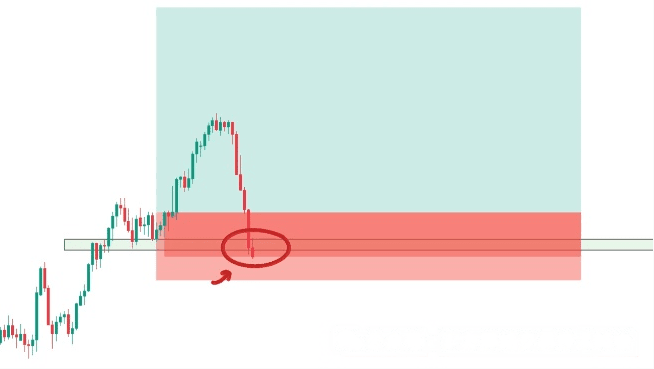
I didn't expect this to be just a small pullback, and then the price surged directly. I watched as the orders that should have made me a lot of money flew away, regretting it immensely.
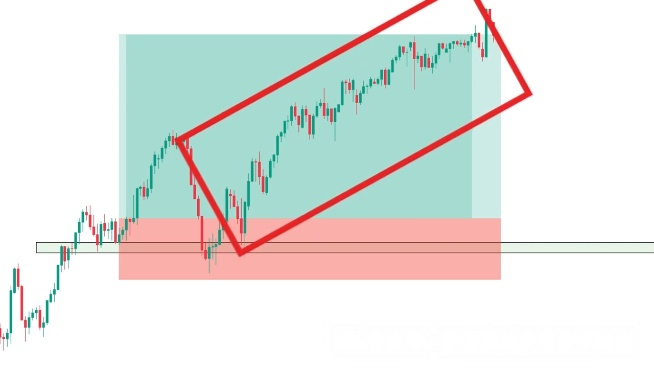
Later, I realized that this wasn't a technical issue, but the fear of human nature at play. Everyone is afraid of losing, and short-term fluctuations amplify this fear, leading you to take 'self-protective' wrong actions. The core solution to this problem is to reduce staring at the market and trust your analysis.
Why do I only trade for 7 hours a week? Three core reasons.
Reason 1: Avoid 'analysis paralysis,' refuse over-trading.
There is a term in the trading circle called 'analysis paralysis'—when you stare at the market all day, your brain becomes increasingly fatigued, judgment declines sharply, and you fall into a vicious cycle of 'the more you analyze, the more chaotic it becomes, and the more chaotic it becomes, the more you trade.'
I made this mistake in my early years: always wanting to earn the first bucket of gold quickly, thinking I had to trade every day, and if I didn't trade, I would lose. Even when there were no good opportunities, I forced myself to find a signal to place an order, praying that the price would move in the direction of my analysis. What was the result? After two months, I made every mistake of over-trading and forced trading, the quality of my trades deteriorated, and my win rate plummeted.
Later I woke up to the realization: the disadvantages of staring at the market for extended periods far outweigh the advantages. When the brain is fatigued, you will mistake ineffective chart patterns for trading signals and arbitrarily enter trades; trading just for the sake of trading will only lead to continuous losses. Now I only look at the market for up to 1 hour each day. If there are no opportunities, I close the software directly, never forcing it.
Reason 2: Only trade at 'key levels' and filter out low-quality signals.
When I first started trading, I naively thought that 'as long as I can do technical analysis, I can make money at any price.'
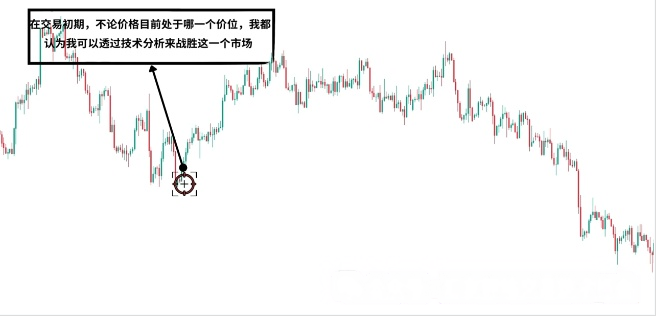
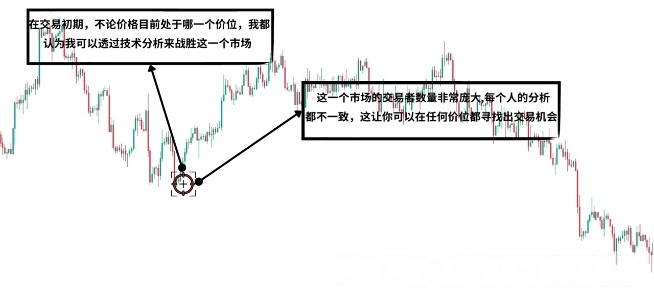
But there are too many traders in the market, and everyone's analysis logic is different.
You can casually draw a Fibonacci retracement.
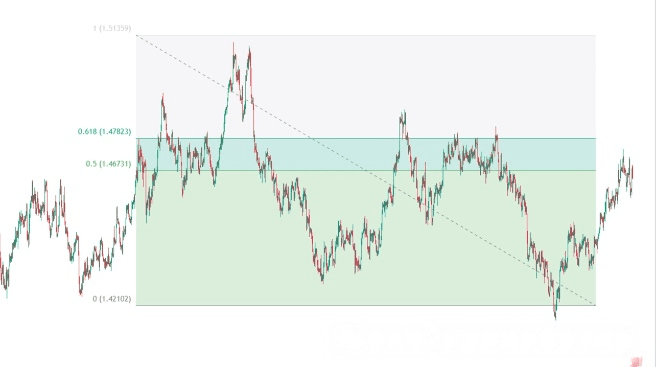
You can always find traces of price reactions. But such trading lacks consistency, leading to long-term losses.
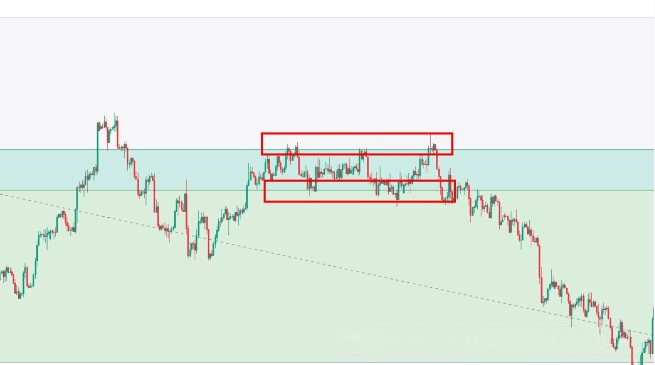
To beat the market, you must be different from the majority: only trade at a few high-quality key levels, maintaining consistency in your analysis.
My current approach is:
Set strict rules for trading strategies: For example, how to draw support and resistance levels, what signals count as valid entries, how to set stop-loss and take-profit—each step has clear standards, never based on feelings.
Only wait for the price to reach key levels: If it hasn't reached the support/resistance levels or supply/demand zones I've drawn, I won't even look, just filter it out.
Mechanical execution: Enter the market as long as it meets the rules, give up if it doesn't, don't get entangled, and don't be greedy.
This way, I don't waste time on ineffective market movements. One hour a day is enough to filter all varieties, only seizing high-certainty opportunities.
Reason 3: Focusing on things outside of trading can actually improve trading performance.
Trading is very important, but it is by no means the entirety of life. Diversifying your focus onto other things can actually make your trading smoother.
I now allocate my time to fitness, spending time with family, and developing side businesses.
Fitness not only trains the body but also cultivates rational thinking in the brain—when your body is well, you won't be anxious while analyzing the market, allowing you to make clear decisions.
Maintain other sources of income outside of trading: Trading income is unstable, and relying entirely on it for living can create immense pressure when facing losses—worrying about unpaid bills will lead you to act hastily in trading and make wrong decisions. With other sources of income, you'll be able to execute strategies calmly.
Cultivate hobbies: Detach from the market to relax the brain, which can lead to discovering more key information during reviews, avoiding falling into the trap of 'the observer is confused.'
When you stop focusing all your attention on trading, you won't be led by short-term fluctuations. You just need to set a 'price alarm' and wait for the price to reach key levels before entering, mechanically executing your strategy—this consistency is the core of long-term profits.
In conclusion: The core of efficient trading is 'less but better.'
Trading is not about 'the more you do, the more you earn,' but rather 'doing it right earns more.' The essence of trading 7 hours a week is to refuse ineffective efforts and only seize high-value opportunities.
Trust your analysis, set your stop-loss and take-profit, and then let go; don't frequently stare at the market.
Set strict trading rules, only trade at key levels, and filter out low-quality signals.
Balance trading and life; maintaining a peaceful mindset is key to long-term stable profits.
The ultimate goal of trading is to achieve freedom in time and wealth. If you are staring at the market all day, losing your life in the process, even if you earn money, you lose the meaning of trading. I hope you all learn to trade 'a bit lazier,' using the least amount of time to earn the most money, enjoying the freedom that trading brings, rather than being bound by it.
The above is the trading experience shared by Yan An today. Many times, you lose many money-making opportunities due to your doubts. If you don't dare to boldly try, engage, and understand, how will you know the pros and cons? You have to take the first step to know how to take the next step. A cup of warm tea, a piece of advice; I am both a teacher and your talkative friend.
Acquaintance is fate, while understanding is separation. I firmly believe that if fate brings us together, we will meet even across a thousand miles; if we part, it is destiny. The journey of investment is long, and temporary gains and losses are just the tip of the iceberg. Remember that even the wisest will have their oversights, and the foolish may have their gains. Regardless of emotions, time will not stop for you. Pick up your worries and stand up to continue moving forward.
The martial arts secrets have been shared with you; whether or not you can make a name for yourself in the world depends on yourself.
These methods are definitely worth saving; many friends who find them useful can share them with more people around them who trade coins. Follow me to learn more valuable insights into the coin market. Having been through the rain, I am willing to hold an umbrella for the leeks! Follow me; let's move forward together in the coin market!


