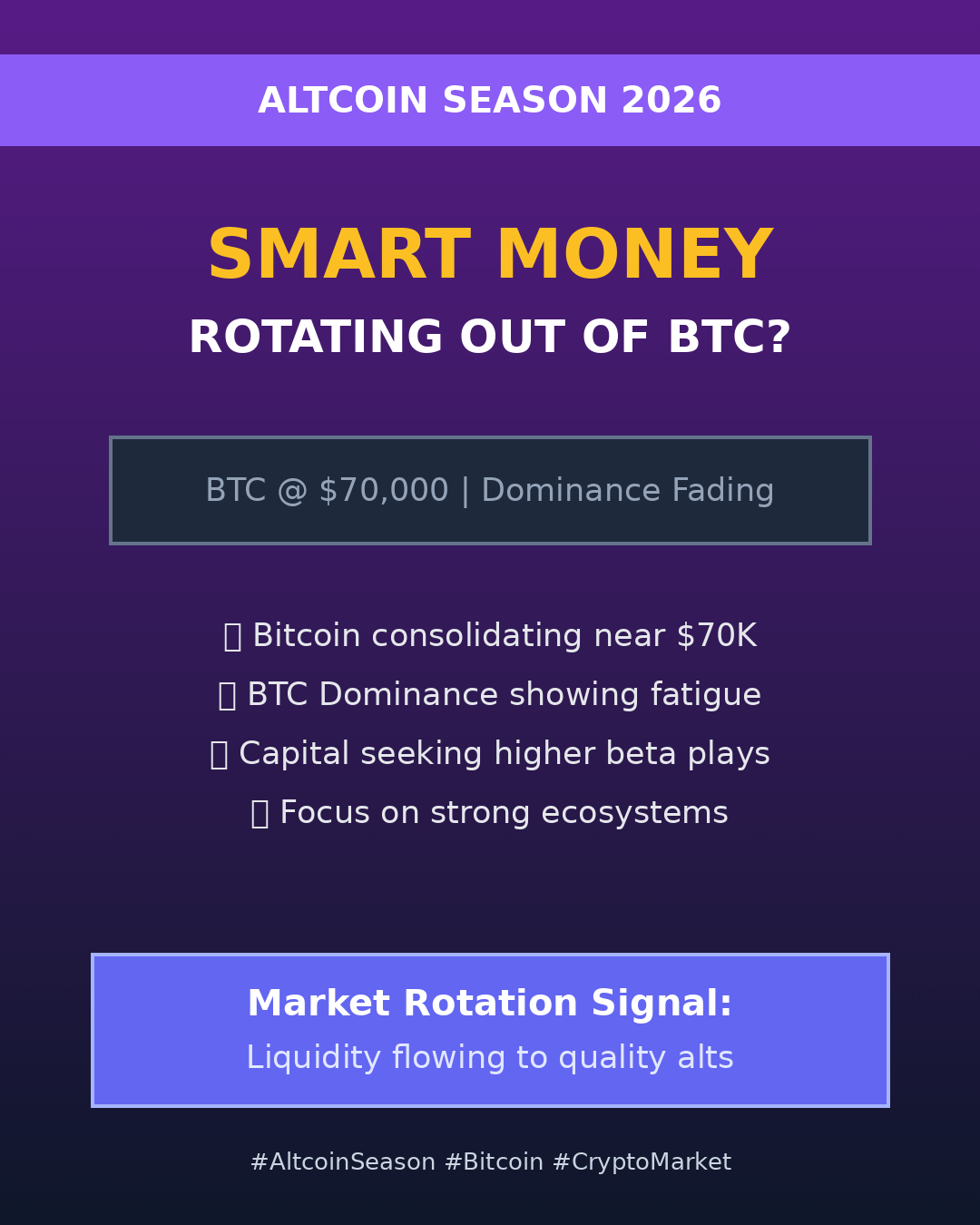
 As Bitcoin consolidates near the $70,000 level in early 2026, market structure is quietly shifting beneath the surface. While BTC remains the anchor of the crypto market, its dominance (BTC.D) has begun to show signs of fatigue after an extended period of capital concentration. Historically, such phases—where Bitcoin stabilizes after a major trend while dominance rolls over—have often preceded meaningful altcoin rotations rather than broad market sell-offs. Smart money typically does not exit crypto entirely during these periods; instead, it reallocates risk toward assets with higher relative upside.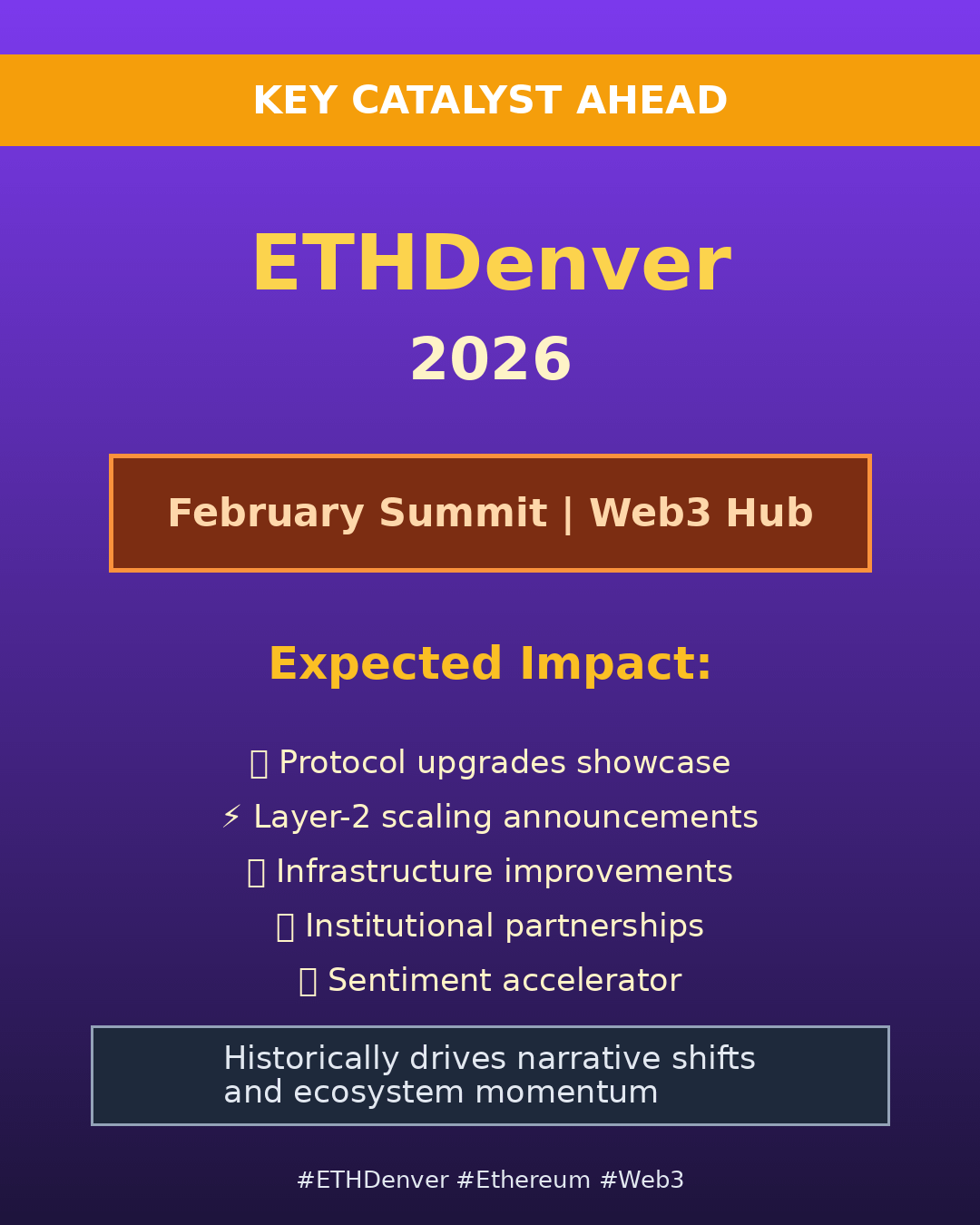
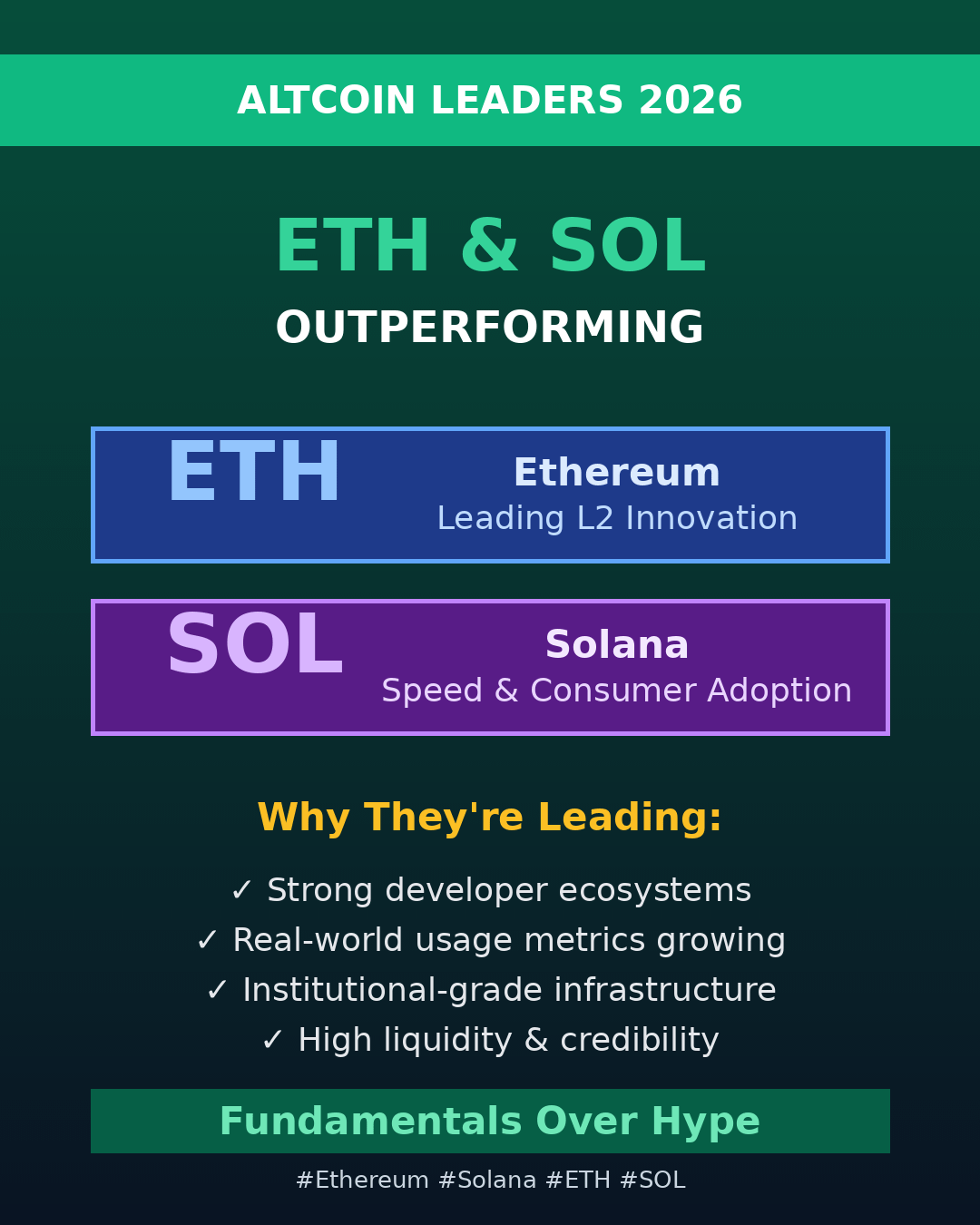
This is exactly the environment many traders and institutions are watching now. Bitcoin’s price stability provides a risk-on backdrop, while diminishing dominance suggests capital is seeking higher beta opportunities. Importantly, this rotation is not indiscriminate. The market is no longer rewarding speculative narratives alone; instead, liquidity is flowing toward altcoins with strong ecosystems, active developer bases, and clear catalysts. This dynamic explains why Ethereum (ETH) and Solana (SOL) are leading performance tables while many lower-quality tokens lag behind. The so-called “green light” for altcoins does not mean Bitcoin is losing relevance—it means Bitcoin has done its job as the primary liquidity engine, allowing capital to rotate outward as confidence stabilizes.
February 2026 adds another critical layer to this setup through key ecosystem milestones, most notably the ETHDenver 2026 summit, which has become one of the most influential developer and institutional convergence points in the crypto calendar. Historically, ETHDenver has acted as both a sentiment and narrative accelerator, showcasing upgrades, rollups, infrastructure improvements, and real-world adoption use cases that reinforce Ethereum’s role as the settlement layer of Web3. With Ethereum already outperforming the broader market, the anticipation around protocol-level innovation, Layer-2 scaling advancements, and institutional tooling is strengthening the case for continued relative strength. At the same time, Solana’s outperformance reflects a different but equally compelling thesis: speed, cost efficiency, and consumer-facing adoption. SOL’s ecosystem has matured significantly, moving beyond recovery narratives into sustained usage across DeFi, NFTs, payments, and on-chain applications. The market is responding to tangible metrics—transaction growth, developer activity, and improving reliability—rather than hype. When Bitcoin dominance eases during consolidation, capital tends to rotate first into large-cap altcoins with liquidity and credibility, not fringe assets. This is why ETH and SOL are acting as early beneficiaries of the potential altcoin season signal. If this rotation continues through February’s milestones, it may confirm that 2026’s altcoin cycle is being driven less by speculation and more by selective, fundamentals-based capital deployment. In that sense, the current market is not asking whether Bitcoin is finished—it is asking whether the next phase of growth will be defined by platforms building the next layer of crypto’s real economic activity.#MarketRally #USIranStandoff #BitcoinGoogleSearchesSurge #RiskAssetsMarketShock #BitcoinGoogleSearchesSurge #WhenWillBTCRebound