

Unlike many blockchain projects that were born with the goal of circumventing traditional financial regulations, @Dusk Network has chosen a completely different path from the outset. Founded in 2018 by a team with deep expertise in cryptography and financial infrastructure, the project's objective is not to disrupt regulatory frameworks, but to modernize financial market infrastructure in a way that regulators and financial institutions can actually adopt. Dusk was designed from the ground up as a public Layer 1 blockchain capable of supporting the issuance and circulation of regulated assets without exposing sensitive information.
A core characteristic of traditional blockchains is extreme transparency—every transaction and account balance is fully visible to the public. While this radical transparency may work in open networks and retail scenarios, it fundamentally conflicts with how real-world financial markets operate. Financial institutions cannot function in a system where trading positions, counterparties, and transaction sizes are permanently public. Dusk's central philosophy is that privacy should not be an optional add-on feature, but a native attribute of blockchain—carefully designed so that confidentiality and auditability can coexist rather than oppose each other.
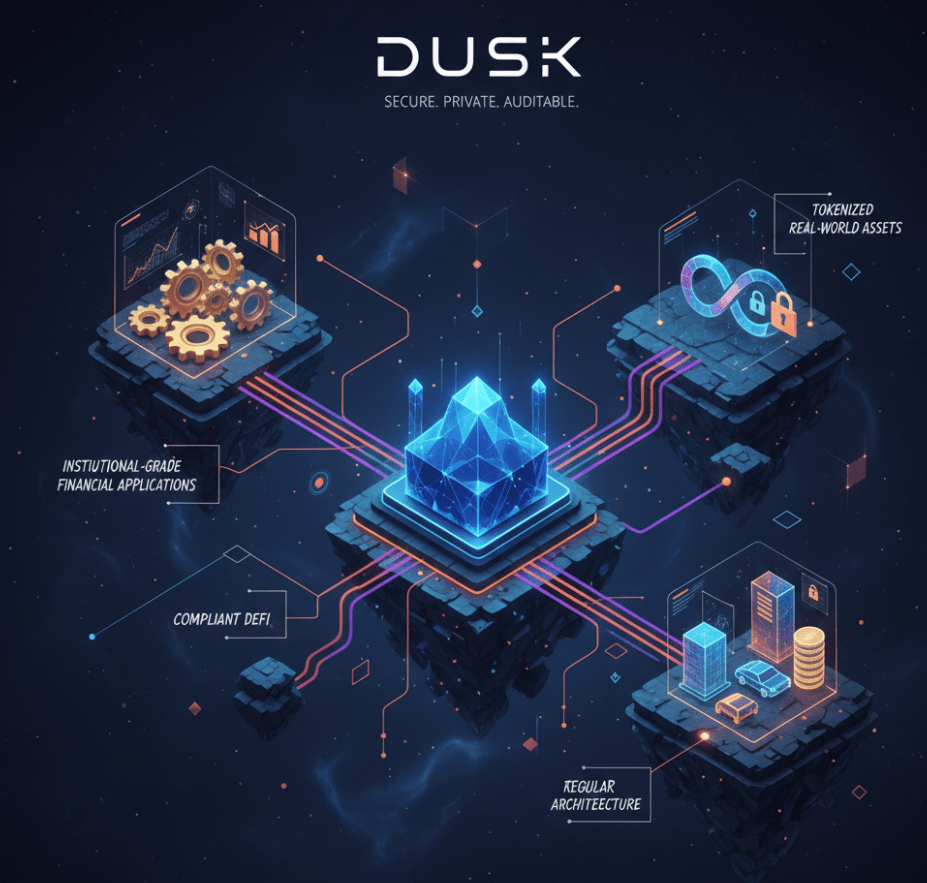
Dusk aims to solve the longstanding tension between privacy and compliance. In regulated financial systems, regulators must be able to audit transactions, enforce KYC and AML rules, and ensure assets flow only among qualified participants. At the same time, market participants need to maintain high levels of confidentiality regarding ownership, pricing, and trading strategies. Dusk balances these competing demands through a built-in 'selective disclosure' mechanism at the protocol level. Transactions remain encrypted from the public view, but can be verified and disclosed when necessary to auditors or regulators. This enables real-world assets like stocks and bonds to be tokenized on a public blockchain without violating legal obligations or exposing trade secrets. Dusk does not force a choice between permissioned databases and fully transparent blockchains, but instead proposes a third path: a public network with built-in financial privacy capabilities.
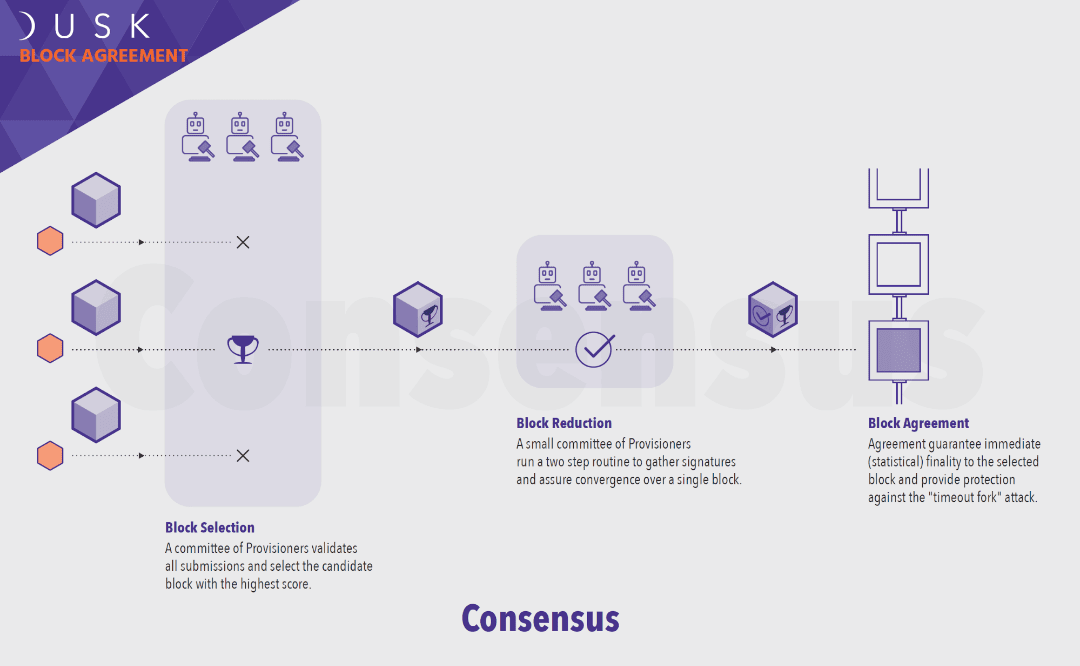
In terms of technical architecture, Dusk adopts a modular design, emphasizing institutional-grade reliability and stability. Its core settlement and consensus layer, called DuskDS, is responsible for transaction finality, security, and data availability, connecting various execution environments to the main ledger. The reference client, Rusk, is written in Rust and handles network communication, consensus mechanisms, and state management—reflecting the project's commitment to robustness over rapid experimentation. The consensus mechanism is based on a succinct proof-of-stake model called Succinct Attestation. In this model, randomly selected block proposers generate blocks, a committee verifies them, and another committee confirms them. Once a block is finally confirmed, it becomes irreversible—critical for financial settlements requiring legal certainty.
Another significant feature of Dusk is its ability to support both transparent and private transactions within the same network. Users are not forced to choose between complete openness or complete privacy. Through native contracts, everyday or low-value transactions can follow a transparent path, while sensitive transactions are completed via encryption. This flexibility closely mirrors real-world financial needs, as institutions often seek a balance between public disclosure and private execution. On top of the settlement layer, Dusk supports multiple smart contract environments. In addition to the WebAssembly virtual machine optimized for the underlying layer, the network provides full Ethereum compatibility through DuskEVM. This allows developers to deploy Solidity contracts with minimal modification, while still benefiting from Dusk's advantages in privacy and compliance.
Dusk's privacy capabilities go beyond simple value transfers. The network introduces a framework specifically designed for confidential financial logic, enabling the issuance and management of regulated securities on-chain while adhering to traditional market rules. Ownership caps, voting rights, dividend distributions, and transfer restrictions can all be enforced on-chain, while account balances and identity information remain private to the public. Zero-knowledge proofs play a crucial role, allowing participants to prove compliance without revealing sensitive information. For example, investors can demonstrate eligibility to vote or trade without disclosing their identity or full asset holdings to the entire network. In the future, Dusk plans to launch an identity layer, enabling users to selectively prove attributes such as residence or investor qualifications, further minimizing unnecessary data exposure.
The DUSK token forms the economic and security foundation of the entire system. Initially issued as ERC-20 and BEP-20 tokens, the initial supply was 500 million, with the total supply gradually approaching 1 billion over decades through a long-term release mechanism. This gradual issuance is designed to reward validators maintaining network security while avoiding excessive inflation. Validators (called provisioners) participate in consensus by staking DUSK and earn block rewards and transaction fees. Unlike many blockchains with harsh penalty mechanisms, Dusk handles misconduct by reducing a validator's influence rather than directly destroying tokens—a gentler, more predictable risk model that better aligns with institutional expectations. All network operations require payment of DUSK-based gas fees, directly linking token value to actual usage demand. As network adoption grows, transaction fees and staking rewards are expected to gradually replace inflation as the primary incentive sources.
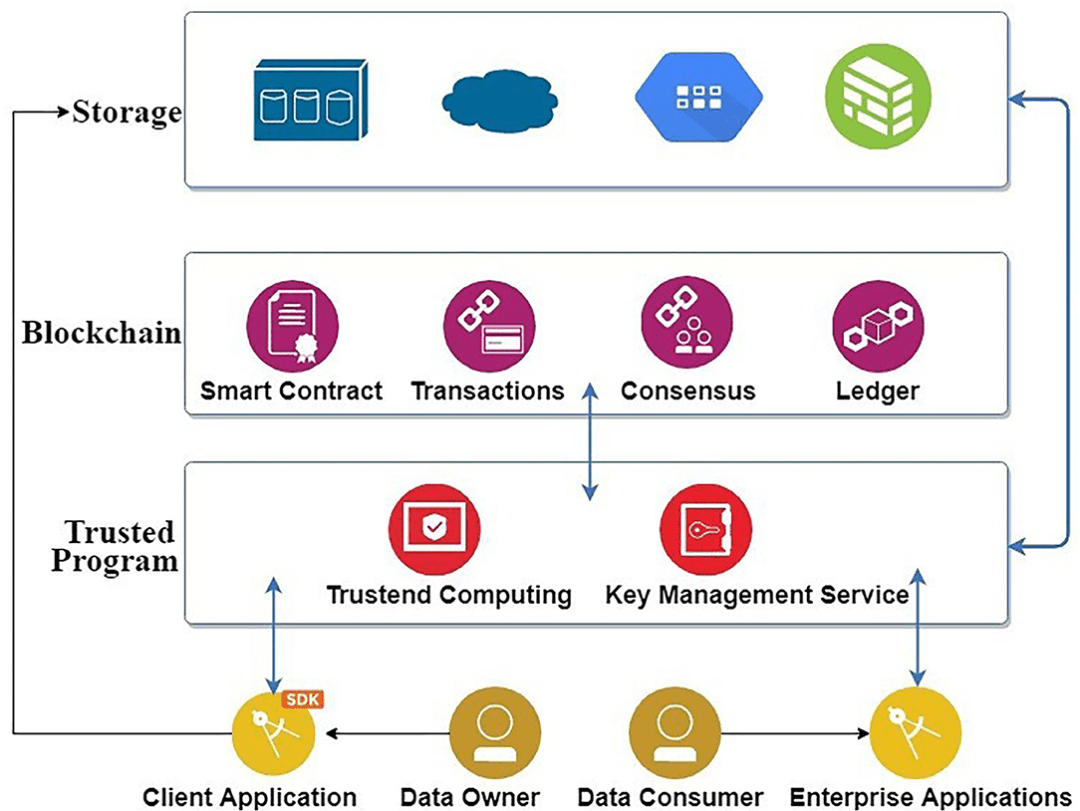
Although Dusk is a standalone blockchain, it has not chosen a closed development path. Through Ethereum compatibility, Dusk has attracted a large pool of developer resources and, via partnerships, integrated into the broader Web3 ecosystem. A key collaboration is with Chainlink, whose interoperability tools and data standards are used to connect Dusk with other blockchains and real-world data sources. These integrations enable assets issued on Dusk to be transferred across chains and allow smart contracts to directly use verified market data. For regulated finance—highly dependent on accurate pricing and cross-platform settlement—this connectivity is critical.
Dusk's philosophy finds concrete application in the real world. One of the most important examples is its collaboration with NPEX, a regulated exchange in the Netherlands. NPEX focuses on SME financing and plans to use Dusk as its underlying infrastructure to enable on-chain issuance and trading of securities, offering instant settlement and built-in compliance mechanisms. Such projects demonstrate how blockchain can transition from experimental technology to genuine market infrastructure. Dusk has also partnered with several European market operators and custodians, further indicating that tokenized assets are gradually integrating into the mainstream financial system. In terms of liquidity, DUSK is listed on major exchanges like Binance, but the project's long-term success will depend more on actual institutional adoption than speculative trading.
Of course, Dusk also faces real-world challenges. Privacy-preserving technologies are inherently complex and computationally expensive, placing strict demands on performance during scaling. Moreover, even privacy tools designed for compliance may attract additional scrutiny from regulators. Furthermore, competition in the blockchain space for regulated assets is intensifying, with different projects making trade-offs between openness, control, and decentralization. Financial institutions themselves adopt new technologies slowly, requiring time to build trust and verify long-term stability.
Looking ahead, Dusk's future prospects are closely tied to the tokenization of real-world assets and the expansion of institutional-grade DeFi. As regulatory frameworks like Europe's MiCA gradually take effect, blockchains that natively support compliance without sacrificing efficiency may gain a significant advantage. Dusk's strategy is understated and does not rely on hype or consumer trends, but rather focuses on building infrastructure that can quietly replace parts of traditional financial systems once trust is established. If regulated markets continue exploring blockchain as a settlement layer, Dusk's advocated 'auditable privacy' model may not only be valuable but essential. The coming years will determine whether this regulation-first, cautious approach can evolve into the foundational layer of digital finance. But for now, Dusk is more concerned with long-term durability than short-term visibility.
