
Data has quietly become the most powerful resource in the world. It fuels artificial intelligence, shapes markets, determines narratives, and influences decision-making across governments, enterprises, and individuals. Yet despite its importance, most people have very little visibility into where their data lives, who controls it, or how it is being used.
For decades, we have relied on centralized systems to store, manage, and distribute data. These systems promise convenience and performance, but they come with hidden costs: opaque decision-making, censorship risk, single points of failure, and a complete lack of user control. Even today, as blockchain technology promises decentralization, many systems quietly drift back toward centralization as they grow.
Walrus was built to break that cycle — not just at launch, but permanently.
🌐 Decentralization Is Easy to Start, Hard to Maintain
Launching a decentralized network is one thing. Keeping it decentralized as it scales is an entirely different challenge.
As networks grow, incentives often shift. More users mean more value. More value attracts larger operators. Larger operators accumulate more stake, more influence, and eventually more control. Over time, decision-making consolidates, and the network begins to resemble the centralized systems it was meant to replace.
This is the scalability paradox of decentralization.
Walrus does not ignore this problem. Instead, it treats decentralization as a design constraint, not an assumption.
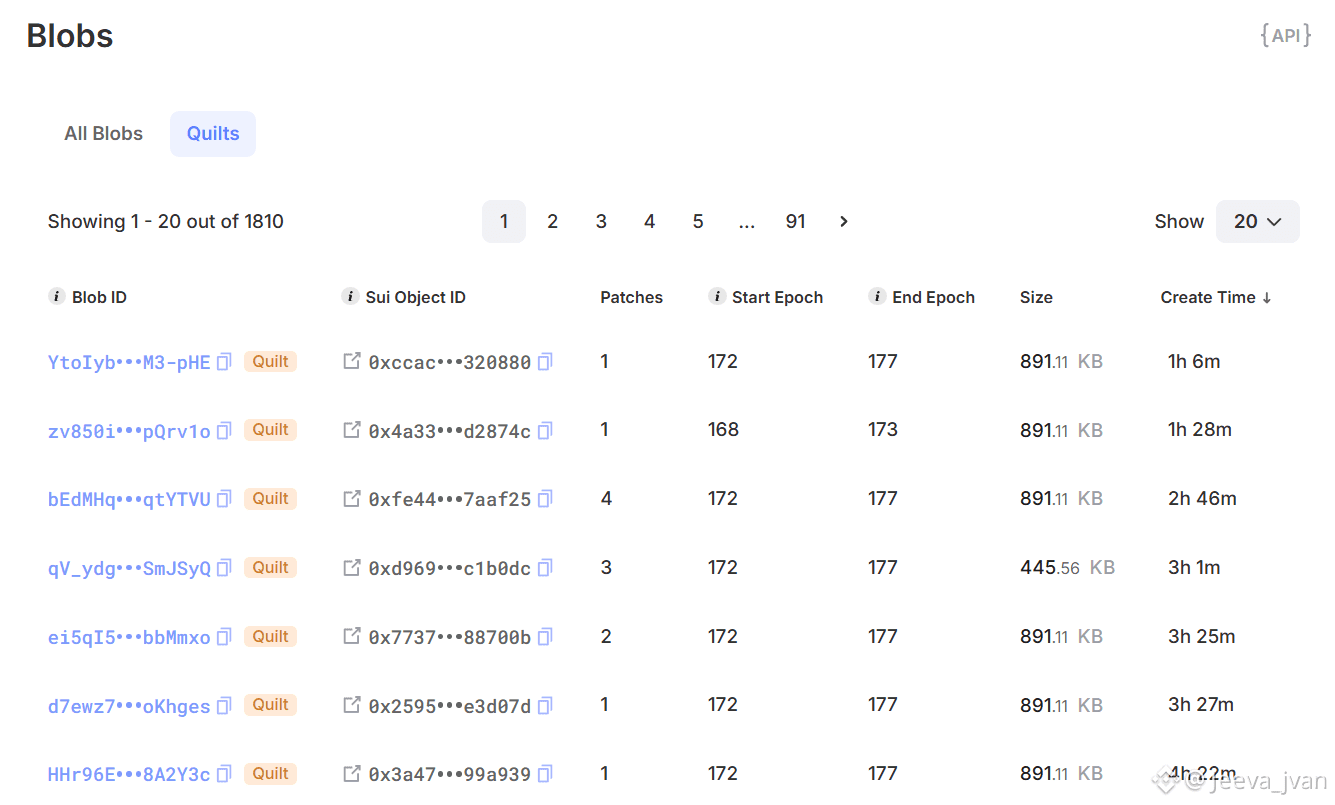
🧠 Walrus Takes a Fundamentally Different Approach to Data
At its core, Walrus is a decentralized data storage and availability protocol designed to ensure that no single entity can control data access, storage, or censorship.
Rather than storing full datasets in one place, Walrus splits data into fragments and distributes them across many independent storage nodes. This eliminates single points of failure and ensures that data remains available even during outages, attacks, or node churn.
But decentralization is not only about where data is stored — it’s also about who has power over the network.
⚖️ How Walrus Prevents Centralization at Scale
1️⃣ Distributed Stake, Distributed Power
In Walrus, token holders delegate WAL to independent storage nodes. This delegation mechanism naturally spreads stake across many operators instead of concentrating power in a few large entities.
No single operator can decide what data is accepted, rejected, or removed. Censorship becomes economically and technically infeasible.
2️⃣ Performance-Based Rewards, Not Reputation
Walrus rewards nodes based on verifiable performance, not size, brand, or reputation.
Uptime, reliability, and honest participation determine rewards. A smaller node that performs consistently can earn just as much as — or more than — a large operator. This keeps the network competitive, fair, and decentralized over time.
3️⃣ Accountability Through Slashing
Nodes that behave dishonestly or perform poorly are penalized.
Slashing is not symbolic — it directly impacts stake. This creates a strong economic incentive to remain honest and discourages attempts to centralize control or exploit the network.
In Walrus, trust is not assumed. It is continuously earned.
4️⃣ Resistance to Coordinated Power Grabs
Rapid stake movements come with penalties. This prevents coordinated attacks, sudden governance manipulation, or last-minute power shifts during critical moments such as votes or network upgrades.
This design choice ensures that influence is built over time, not seized opportunistically.
5️⃣ Collective Governance at the Protocol Level
Key parameters of the Walrus network are governed collectively by token holders.
As the ecosystem grows, decision-making remains distributed. The protocol evolves through participation, not top-down control. This ensures that Walrus remains aligned with its community rather than drifting toward centralized authority.
🛡️ Decentralization as a Resilience Strategy
Decentralization is often framed as ideology. Walrus treats it as infrastructure resilience.
A truly decentralized system must:
Survive outages without disruption
Resist censorship by design
Continue functioning during attacks
Scale without consolidating power
Walrus is engineered to meet all four requirements simultaneously.
By aligning incentives with honest behavior and long-term participation, Walrus creates a system where staying decentralized is the most economically rational choice for both operators and users.
🔮 Why This Matters for the Future of Data
As AI, machine learning, and digital economies continue to grow, data integrity and provenance will matter more than ever. Trustless systems are no longer optional — they are foundational.
The real question is not whether decentralization is important.
The real question is whether today’s decentralized systems will remain decentralized tomorrow.
Walrus answers that question with intention, design, and economics.
By ensuring that no single entity can control data, governance, or incentives, Walrus lays the groundwork for a future where users:
Control their data
Verify its origins
Decide who can access it
Share in the value it creates
🐋 Final Thoughts
Walrus is not just another storage protocol. It is a long-term commitment to decentralized data infrastructure — built to scale without compromise.
In a world where data determines power, Walrus ensures that power remains distributed.
And that is what makes Walrus fundamentally different.

