

Most blockchains that claim to target finance begin with the same assumption: liquidity comes first, regulation later. Execution speed, low fees, and composability are treated as the core primitives, while compliance is framed as something that can be layered on once adoption arrives. Dusk takes the opposite approach. It starts with the premise that regulated markets are structurally different from open DeFi and that infrastructure must be designed accordingly from day one.
This distinction matters because capital does not move symmetrically across financial systems. Retail liquidity can tolerate experimentation. Institutional capital cannot. Pension funds, exchanges, custodians, and regulated issuers operate under fixed legal obligations that cannot be bypassed by technical cleverness. Any blockchain that fails to account for this reality will remain peripheral to serious financial activity.
Dusk’s architecture reflects a deliberate acceptance of that constraint.
Rather than optimizing for radical transparency, the network treats privacy as a functional requirement. In traditional markets, transaction confidentiality is not optional. Positions, settlement flows, and investor identities are protected by default, with disclosure occurring only under defined regulatory conditions. Public blockchains invert this model by exposing everything permanently. For regulated assets, that exposure is not merely inconvenient; it is disqualifying.
Dusk addresses this through privacy-preserving smart contracts and selective disclosure mechanisms. Transactions can be validated without broadcasting sensitive information, while still allowing authorized verification when required. This is a critical nuance: privacy here is not anonymity. It is controlled visibility, aligned with how regulated finance already operates.
Compliance is treated with similar realism. Regulated assets carry obligations: KYC, AML, reporting, auditability, and jurisdictional controls. Many networks attempt to externalize these responsibilities to applications or intermediaries. Dusk embeds compliance logic into the protocol layer itself, reducing reliance on off-chain enforcement. That design choice makes regulated issuance technically feasible without recreating centralized gatekeepers.
The result is infrastructure that can support tokenized securities, not just speculative tokens.
This positioning becomes clearer when examining Dusk’s alignment with European market structure. Rather than avoiding regulation, the project engages directly with licensed entities and regulated workflows. Tokenized securities issuance, compliant settlement, and privacy-preserving trading are not theoretical goals; they are the explicit use cases the network is being built to support. That focus naturally slows development compared to retail-first chains, but speed is not the relevant metric here. Credibility is.
From a market perspective, this also reframes how DUSK should be interpreted. Liquidity and price action alone do not capture the network’s progress. More relevant indicators include integration with regulated exchanges, deployment of compliant smart contract frameworks, and the operational readiness of privacy-preserving settlement. These are binary thresholds rather than gradual adoption curves. Once crossed, they unlock categories of capital that were previously inaccessible.
It is also important to understand what Dusk is not trying to be. It is not positioning itself as a universal execution layer for all DeFi activity. It is not competing for meme-driven attention cycles. Its architecture is intentionally opinionated, favoring legal certainty, confidentiality, and institutional usability over maximal openness. That trade-off narrows its addressable audience but deepens its relevance to the participants that matter most for real-world asset adoption.
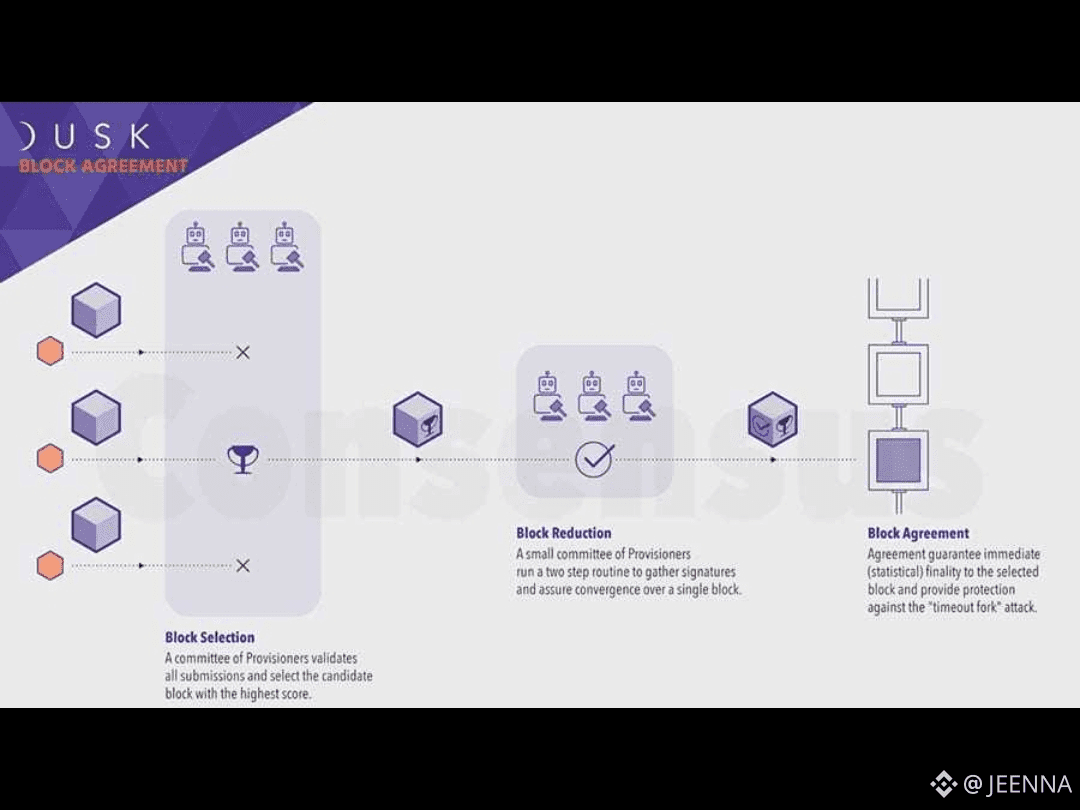
If tokenization of regulated assets expands meaningfully over the next decade, infrastructure like Dusk becomes foundational rather than optional. Markets cannot migrate on-chain without privacy, compliance, and enforceable settlement guarantees. These are not ideological preferences; they are operational requirements. Dusk’s strategy acknowledges this reality and builds accordingly.
Whether that future materializes at scale remains an open question. But if it does, the networks that survive will not be those that moved fastest. They will be the ones that were structurally compatible with the financial system they sought to integrate.
Dusk is clearly betting on that outcome.
