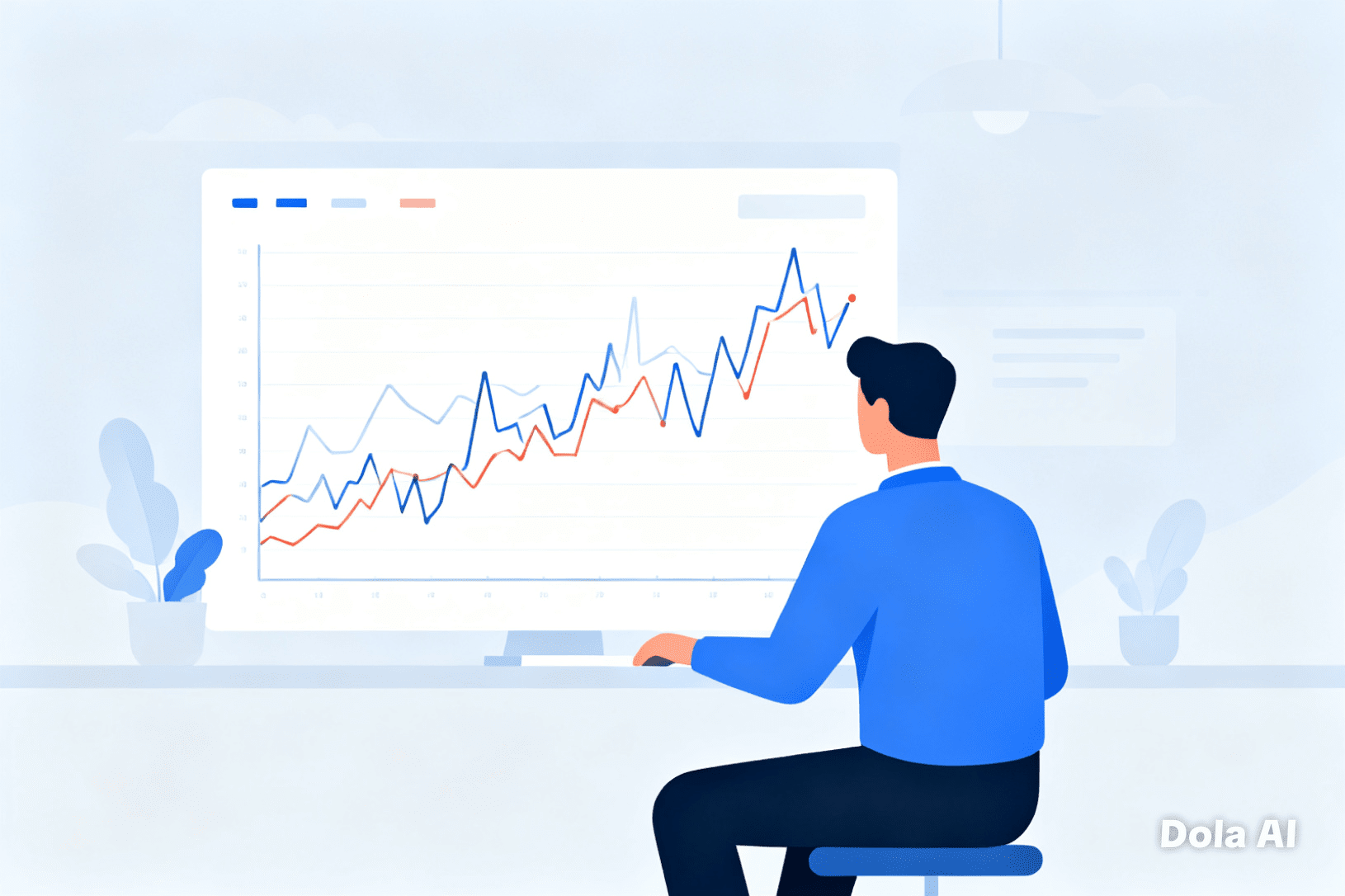
There is a phase in a trader's journey when the chart is no longer quiet.
It is crowded.
Lines clash, indicators contradict each other, and heads are in chaos.
Ironically, it is in that phase that many people feel themselves 'getting smarter'.
In fact, often it is just becoming more confused.
Over-analysis is as dangerous as recklessness.
One jumps without thinking.
The other thinks without ever jumping.
Micro teaching is here to cut through those two extremes.
One Chart is Enough
In micro teaching, we do not open five timeframes at once.
Does not compare ten indicators.
Does not chase certainty.
One chart.
One context.
One hypothetical decision.
Not because the market is that simple, but because human thoughts need to be simplified.
Many trading mistakes do not occur due to lack of information, but rather too many voices in the head.
Structure is more honest than decoration
Price moves, but it leaves a trace. That trace is called structure.
Support and resistance are not magical lines. They are just the market's collective memory—where people used to hesitate, fear, be greedy, or panic.
When the price returns to that area, old emotions often resurface, even though the actors are different.
That’s why, a single line of structure is often more honest than three conflicting indicators.
Structure does not promise results. It only shows where reasonable risks are to be discussed.
When There Are Too Many Indicators
Indicators are created to help, not to lead.
Yet many traders completely surrender decisions to indicators, then wonder why doubts never disappear.
One indicator says buy.
Others say wait.
The third says the market is overbought.
In the end, it is not the entry that is taken, but the anxiety.
In micro teaching, indicators may exist, but only as confirmation, not the main compass.
If without indicators we still do not know what we are looking at, the problem is not with the indicators—but with the way of reading the market.
Reading, Not Guessing
The chart does not ask to be guessed.
It does not care about our opinions.
It is not impressed by our flight hours.
The chart only asks for one thing:
to be read patiently.
Read as a series of human decisions.
Read as an unfinished story.
Not as a puzzle that must be answered quickly.
Micro teaching trains that.
Not to always be right,
but to know when we are wrong.
And in the market, that awareness is far more expensive than predictions.
Cover
One chart.
One decision.
Not to limit capability,
but to clear the noise.
Because a calm trader
is usually not the one with the most tools, but the one with the least noise in their head.
Happy trading and hopefully useful