
Over the past few days I spent some time looking into @Fabric Foundation , and the project feels quite different from many Web3 infrastructure initiatives I usually read about. Most blockchain projects talk about scalability, throughput, or faster execution layers. Fabric seems to be exploring something slightly different — how decentralized ecosystems coordinate interactions between participants.
While reading about the architecture, the idea that kept appearing was the concept of a coordination layer. Instead of trying to replace blockchains or build another execution environment, Fabric appears to focus on structuring how different actors interact inside decentralized systems.
In growing ecosystems where users, protocols, and automated systems operate at the same time, interactions can become complex very quickly. From what I understood, Fabric tries to organize these interactions in a more structured way rather than leaving them completely uncoordinated.
Another part of the ecosystem that caught my attention while exploring the project is $ROBO. Within the Fabric framework, $ROBO seems to function as a participation and signaling mechanism inside the network. Instead of simply acting as a transactional token, it represents engagement and activity within the ecosystem.
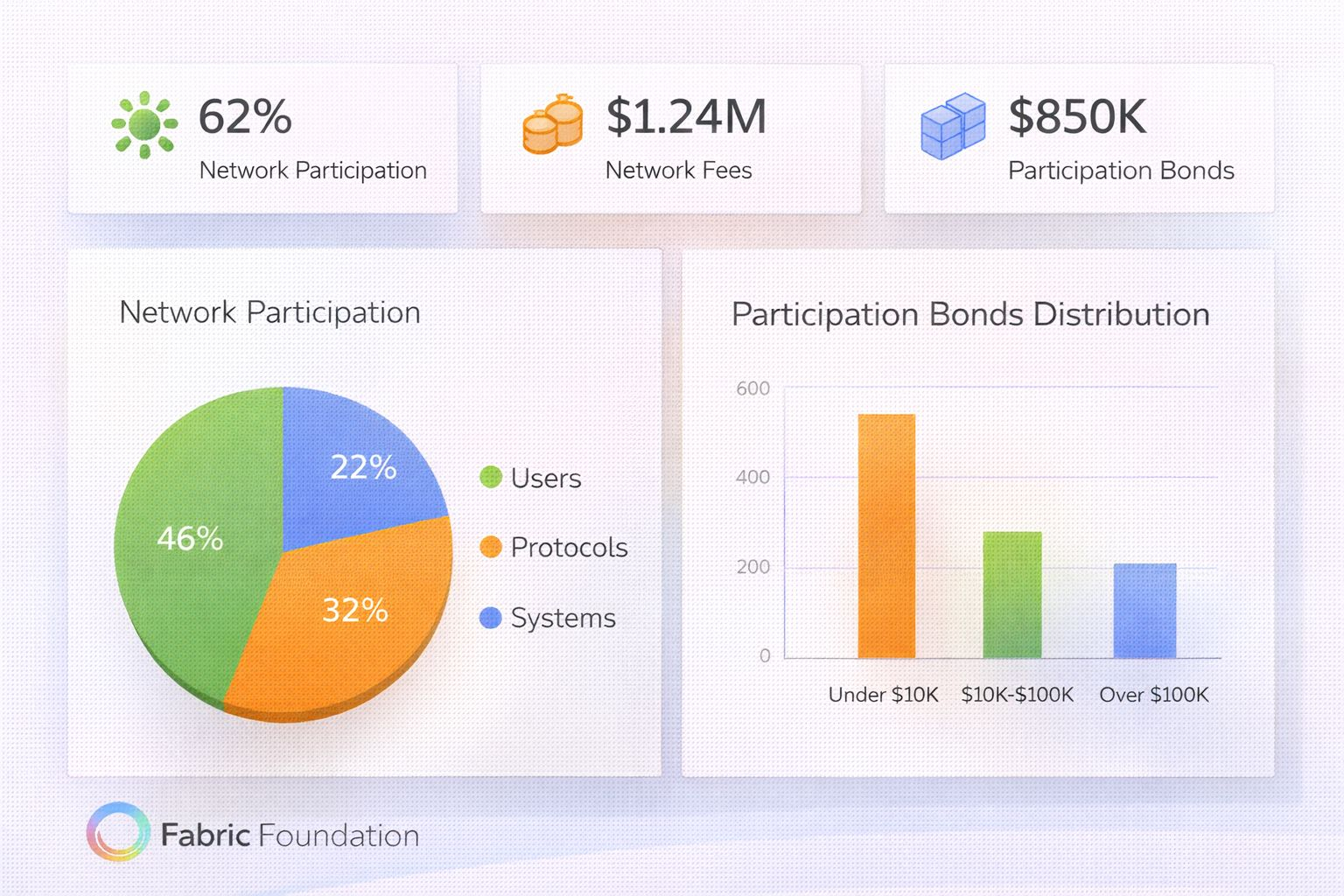
While researching the project, I also noticed that Fabric has recently been getting more attention after the $ROBO token launch and exchange listings earlier this year. The launch marked a significant milestone for the ecosystem and brought more visibility to the project’s coordination-focused approach.
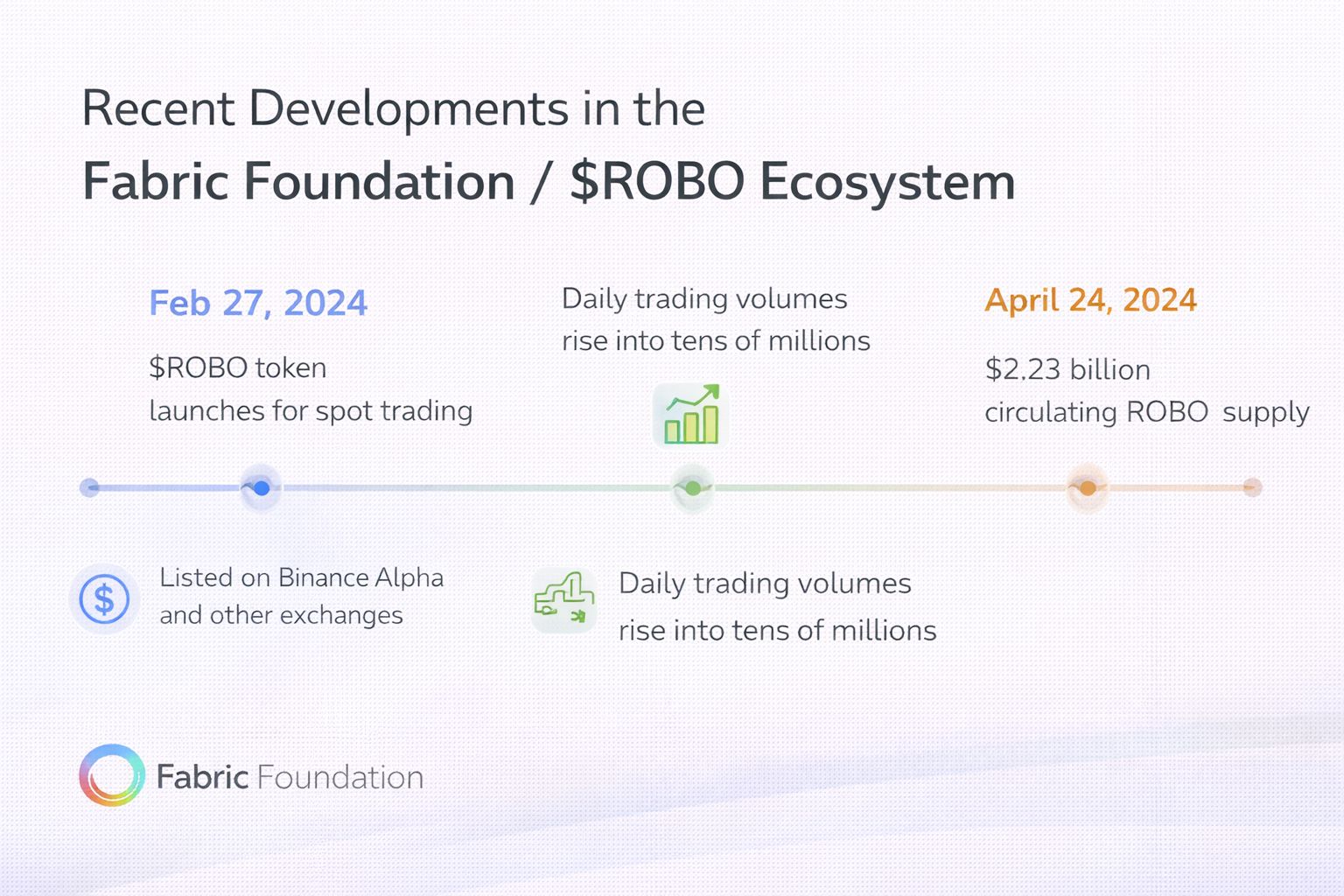
Market activity around the token has also increased, which suggests that the ecosystem is gradually moving from concept discussions toward broader participation.
For a project that focuses on coordination between participants, seeing growing engagement around the token is an interesting signal.
What stood out most to me after exploring Fabric Foundation is the overall direction of the project. Instead of competing with traditional infrastructure layers, Fabric appears to focus on organizing interactions between participants inside decentralized environments.
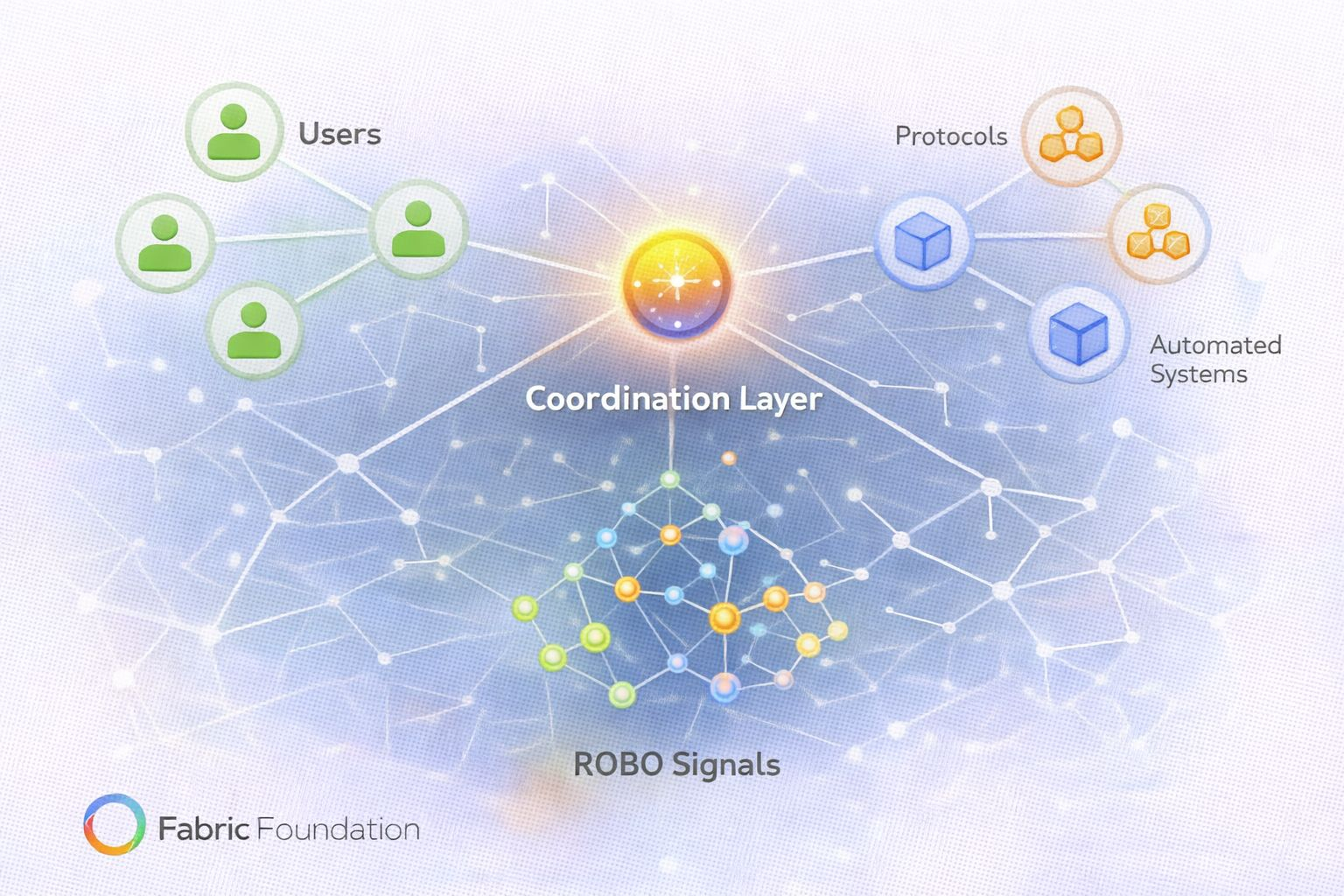
As Web3 ecosystems continue to expand and automated systems become more active, coordination between participants may become just as important as scalability or execution speed.
From what I observed while looking into the project, Fabric is exploring how this coordination layer might work in practice.
It will be interesting to see how this idea evolves as the ecosystem grows and more participants interact within the network.