
In recent weeks, attention has focused on the publication of more than 3 million pages of investigative materials from the U.S. Department of Justice, detailing the connections between a convicted sex offender and the late Jeffrey Epstein and leading figures in the cryptocurrency industry. Below is a clear definition of individuals and organizations associated with Bitcoin, blockchain, and cryptocurrency that appear in the recently released documents.
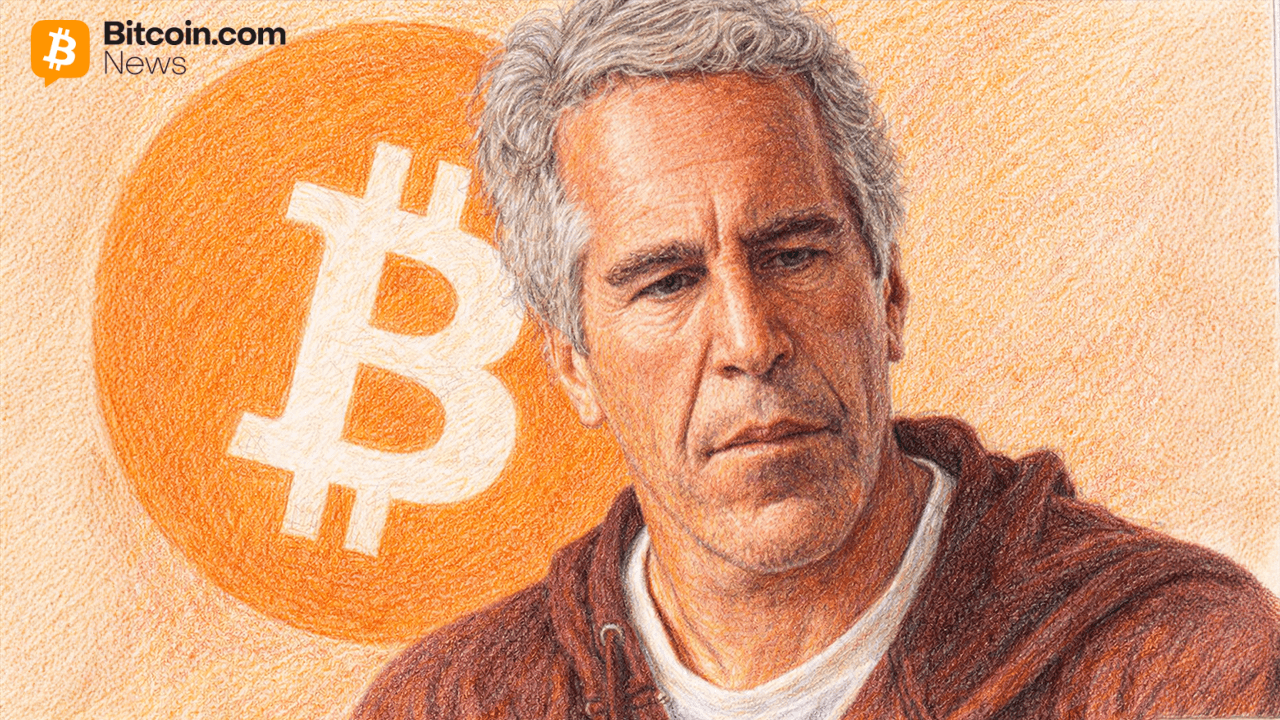
In recent days, specific individuals and companies connected to the cryptocurrency industry have drawn increased attention, mentioned in documents related to Jeffrey Epstein. The latest set of documents is extensive, and to date, a significant number of individuals associated with bitcoin, cryptocurrencies, and blockchain appear in the files for various reasons.
This report presents a direct investigation of the mentioned individuals, identifies the involved persons or companies, and describes the context in which each of them appears in Epstein's documents.
Brock Pierce
Brock Pierce is a former child actor who starred in 'The Mighty Ducks,' who later became an entrepreneur in the cryptocurrency space, co-founder of Tether, a stablecoin company, and venture firm Blockchain Capital. His name appears in 1794 records in the files, and emails indicate that Pierce offered Epstein 'distribution' in a funding round and also arranged a meeting with Coinbase's management. According to records, he remained in contact with Epstein at least until 2018.
Fred Ehrsam
Fred Ehrsam was a co-founder of Coinbase, one of the first major cryptocurrency exchanges in the U.S. Emails contained in Epstein's files show that Pierce attempted to coordinate with Ehrsam the investments proposed by Epstein. The documents do not reflect direct correspondence between Ehrsam and Epstein, although Coinbase's investments were ultimately made through a company in the Virgin Islands known as IGO LLC. Ehrsam's name appears in 14 records in Epstein's files.
Coinbase
Coinbase is the largest cryptocurrency exchange in the U.S., and the files indicate that Epstein reportedly invested $3 million in the company's Series C funding round in 2014. Coinbase is mentioned 265 times in the documents, and reports indicate that Epstein sold at least half of his stake in 2018.
Brian Armstrong
Brian Armstrong is a co-founder and CEO of Coinbase. An email found in the files shows Armstrong writing to investors in February 2016. Armstrong is mentioned in 17 results in the Department of Justice's files. This email, addressed to investors rather than Epstein, appeared in the files because Epstein received forwarded updates for investors regarding his stake in Coinbase.
Jeremy Rubin
Jeremy Rubin is a computer scientist and bitcoin developer who helped launch MIT's Digital Currency Initiative (DCI). He corresponded with Epstein for years, acting as a broker for cryptocurrency projects seeking funding, including DCI. In 2018, Rubin proposed potential investments to Epstein in Layer 1, a bitcoin mining company, and other cryptocurrency ventures. Rubin's name appears in Epstein's files 726 times.
Joy Ito
Joy Ito is a Japanese entrepreneur and former director of MIT Media Lab. Correspondence between Ito and Epstein indicates that Epstein donated over $800,000 to MIT, and that part of these 'donations' went to support the Digital Currency Initiative, which Ito described as 'the main base and source of funding' for research in bitcoin; DCI, in turn, helped fund developers. Ito also collaborated with Epstein to create Kyara Investments III LLC to invest in Blockstream, and later stepped down from his positions after his relationship with Epstein became public. Ito is mentioned in the files 8101 times.
Adam Back, Austin Hill, and Blockstream
Adam Back and Austin Hill co-founded Blockstream, a company that develops infrastructure for bitcoin. Emails released by the Department of Justice show that MIT Media Lab director Joy Ito arranged for Epstein to make a $500,000 early-stage investment in Blockstream through a joint fund. Messages indicate that Back and Hill were invited by Epstein to a meeting near his island, and Hill exchanged correspondence with him regarding the company's technology. Later, Back stated that Blockstream understood that Epstein was merely a limited partner in Ito's fund and that the fund subsequently sold its shares. Blockstream is mentioned 44 times, Hill 530 times, and Back in 19 results.
Brad Stevens
Brad Stevens is a managing partner at Blockchain Capital. He appears in emails discussing instructions for a $3 million bank transfer invested by Epstein in Coinbase. Stevens is mentioned in six different results in Epstein's files.
Michael Saylor
Michael Saylor is the founder of MicroStrategy (now Strategy) and a well-known proponent of bitcoin. His name appears ten times in Epstein's files, but there is no direct correspondence between the two men. However, publicist Peggy Sigal mentioned Saylor in an email to Epstein in 2010 after a gala event.
Vitalik Buterin
Vitalik Buterin is a co-founder of Ethereum. It is unknown if he interacted with Epstein, but his name appears in the files five times. His name is mentioned only indirectly in an email from Masha Drokova (Masha Bukhter), a venture investor of Russian origin, in which she praises the young blockchain developer as 'better than Vitalik.'
Jason Calacanis
Jason Calacanis is a business angel and host of the 'All-In Podcast.' In June 2011, Epstein sent Calacanis an email requesting to 'get in touch with the Bitcoin guys.' Calacanis replied that he would 'find their information,' noting that early Bitcoin developers were 'crazy fans of open source' who were not focused on building a business. He offered to introduce Epstein to Gavin Andresen and Amir Taaki, although Andresen declined the meeting. Calacanis is mentioned 51 times in Epstein's files.
Gavin Andresen
Gavin Andresen is a well-known software developer who became the lead developer of bitcoin's source code after being chosen as Satoshi Nakamoto's successor in 2010 and held that position until the 'block size war.' Emails from June 2011 indicate that Epstein's literary agent and associate John Brockman contacted Andresen to arrange a meeting with Epstein. Andresen ultimately declined, and the former bitcoin developer is mentioned in 31 records in the files.
Brian Bishop
Brian Bishop is a bitcoin developer known for his work on advanced cryptographic protocols. In July 2018, he sent Epstein an email requesting to invest in a genetic engineering project called 'designer baby.' Blockstream co-founder Austin Hill introduced Bishop, and Jeremy Rubin vouched for him. Bishop is mentioned 66 times in Epstein's files.
Bitmain
Bitmain is one of the largest manufacturers of application-specific integrated circuits (ASIC) used for mining bitcoins. Emails indicate that in 2018, Jeffrey Epstein was offered the chance to invest in Bitmain, although the correspondence does not confirm that he ultimately invested in the mining company. Rubin vouched for Bitmain, and emails discussed allocating $3 million, but there is no evidence that investments were made. The name Bitmain appears in Epstein's files 54 times.
Ripple
Ripple is a technology company that develops the Ripple payment protocol and the XRP ledger, focusing on real-time gross settlement systems and money transfers. The documents describe a 2013 proposal in which Epstein's firm, Southern Trust Company, was to serve as a foundational gateway for Ripple in the Caribbean. The files indicate that Epstein expressed interest in using XRP to move capital between his international accounts with reduced regulatory friction. The partnership was not fully realized, and Ripple is mentioned in the database 172 times.
Stellar
Stellar is a decentralized open-source blockchain network. When Jed McCaleb left Ripple to found Stellar in 2014, both projects sought academic credibility through MIT Media Lab. The files include emails from Joy Ito to Epstein requesting recommendations on which of the enterprises should be 'supported' more. In a response from May 2014, Epstein wrote that the non-profit structure of Stellar 'is better for image and facilitates moving money under the guise of charity,' while Ripple 'is better for actual banking connections.' Stellar appears in the records several hundred times, although there are also mentions of Stellar Cosmeceuticals, which is unrelated to the blockchain network.
Gratitude America Ltd.
Gratitude America was one of Epstein's main charitable organizations. It is reported that it was used to issue 'quarterly payments' to bitcoin developers, including specific checks written to Rubin in 2016. This organization is mentioned in the files 2929 times.
Jed McCaleb
Jed McCaleb is a prolific programmer and entrepreneur, founder of eDonkey2000 and the Mt. Gox exchange, as well as a co-founder of Ripple. After leaving Ripple, he founded Stellar Development Foundation (XLM). McCaleb is mentioned in the files as a central figure in connection with early 'crypto philanthropy.' Emails from 2014 indicate that Joy Ito introduced McCaleb to Epstein, and documents suggest that Epstein sought to position himself as a strategic advisor during McCaleb's transition from Ripple to Stellar. McCaleb is mentioned twice.
Madaras Virza
Madaras Virza is a researcher at MIT Media Lab and co-founder of Zcash. He is a primary co-author of the paper 'Zerocash,' which laid the cryptographic foundation for the Zcash protocol. Recent files include email correspondence between Virza and Epstein from 2015 and 2016. Records indicate that Virza sent Epstein tax documentation relating to income received from the Zcash project and also mention a 'gift package' delivered to Epstein's Manhattan residence containing several books on bitcoin and cryptography. Virza is mentioned in 126 records.
Epstein's files indicate that Jeffrey Epstein sought to enter the emerging cryptocurrency networks through investments, donations, and strategic acquaintances. The names listed above illustrate how he used his connections to approach advanced technology sectors. 'Bitcoin' is mentioned in over 1500 records, 'blockchain' 624 times, and 'cryptocurrency' in 301 separate files.
These files have become the subject of intense public and media scrutiny, with lawmakers, journalists, and industry observers analyzing millions of pages to understand how Epstein forged relationships in technology, science, and finance. The scale of the disclosures has sparked a new discussion about transparency, due diligence, and reputational risk in the cryptocurrency sector, particularly in cases where early-stage investments and charitable funding intersect with influential research institutions.
At the same time, inclusion in Epstein's records or connection to them is not, by itself, evidence of wrongdoing, awareness of improper conduct, or participation in any criminal activity. Many names appear due to forwarded emails, indirect mentions, proposed introductions, or unsuccessful discussions of investments. The documents reflect contacts or mentions in historical records, but do not, by themselves, define the intentions, awareness, or accountability of the individuals or organizations mentioned.
#MarketTurbuence , #Сryptomarketnews
There is a lot of news. The news can be quite diverse. There are many changes in the financial and cryptocurrency markets. But our subscribers have the opportunity to stay informed about all the major market changes!!!
Enjoy your viewing!


