
Vanar Chain positions itself as a Layer 1 blockchain built for an intelligence driven era, where data is not simply stored but transformed into usable economic value. The network combines a fixed low cost execution layer with semantic memory, reasoning engines, autonomous agents, and workflow orchestration. Instead of competing purely on raw transaction speed or speculative narratives, Vanar focuses on turning blockchain infrastructure into a system that can remember, interpret, and act.
At a market price around 0.006202 with steady daily volume, the ecosystem shows resilience during broader market fluctuations. From what I see, the real story is not short term price action but how the modular intelligence stack connects gaming, payments, compliance, and brand economies into one operational framework.
I find it interesting that Vanar does not market itself as the fastest chain in existence. Instead, it emphasizes structured execution and real application layers that aim to solve deeper Web3 limitations.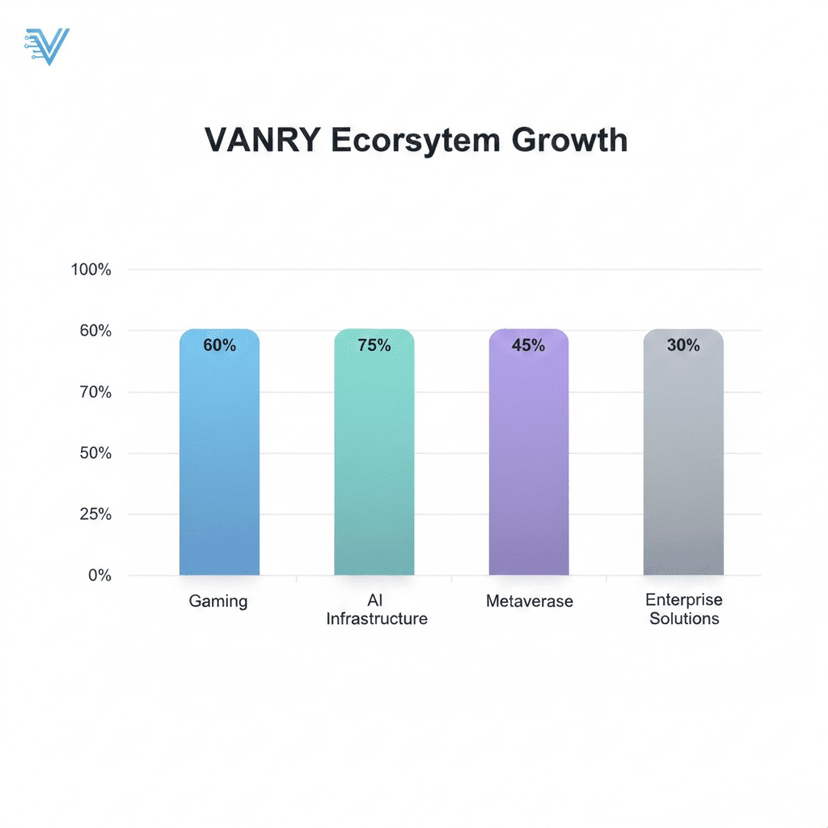
Neutron Semantic Memory and the End of Stateless Applications
One of the most distinctive elements inside Vanar Chain is Neutron, a semantic compression system that reduces large unstructured datasets into compact on chain objects known as Seeds. These Seeds can compress information up to five hundred times while preserving contextual meaning.
Traditional blockchains often rely on external storage solutions, which can introduce fragility and fragmented data access. Here, contextual information is embedded directly on chain, allowing artificial intelligence components to reason over permanent records without needing centralized infrastructure.
For example, in a gaming environment, a player asset can contain historical performance data, ownership lineage, and rarity attributes all inside one compressed Seed. In enterprise settings, a property deed or production certificate can be tokenized with compliance documentation embedded in the same structure.
What stands out to me is the shift from stateless smart contracts toward memory aware systems. Instead of resetting context after each transaction, applications can evolve through accumulated data.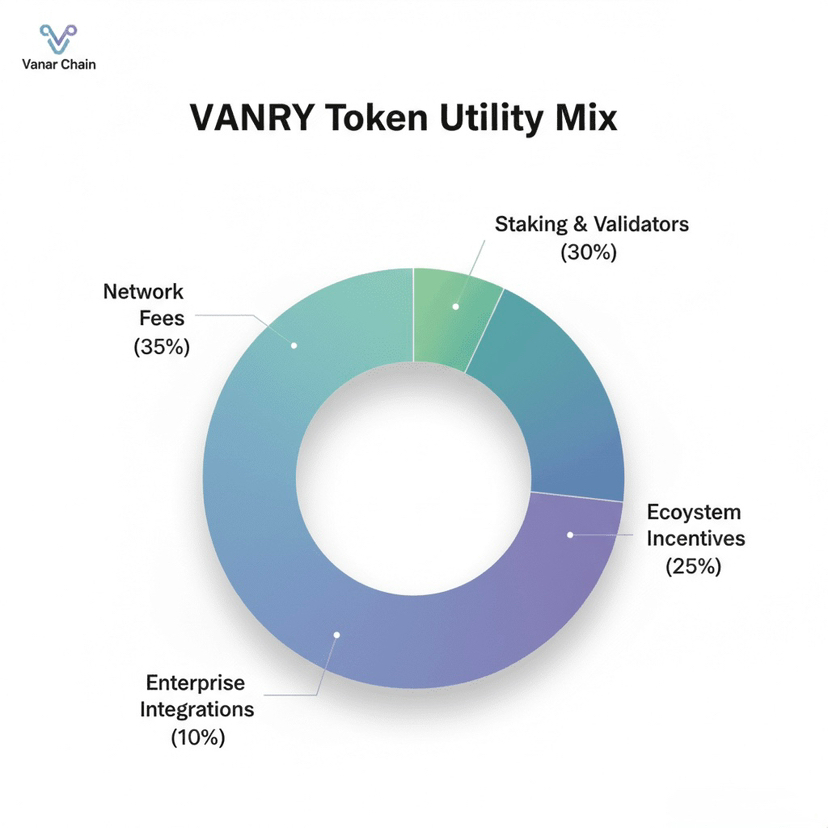
Modular Intelligence Stack from Memory to Execution
Vanar Chain organizes its infrastructure into a layered intelligence model.
The execution layer provides EVM compatibility with approximately three second block finality and predictable low transaction costs. On top of this sits Neutron memory, which stores compressed contextual data. Kayon reasoning enables structured logic evaluation across jurisdictions and rule sets. Axon agents introduce autonomous multi step decision making. Flows orchestration connects these elements into complete production workflows.
This layered approach forms a closed intelligence loop. Data is stored, interpreted, acted upon, and coordinated within one ecosystem.
From my perspective, this integrated design differentiates Vanar from projects that offer only isolated components such as compute power or model hosting. Here, memory, reasoning, and execution coexist natively.
VANRY as a Usage Driven Utility Token
The VANRY token evolves beyond basic gas usage. With the introduction of subscription tiers for AI tools, token demand links directly to memory compression, reasoning calls, and workflow automation.
Tiered access structures allow developers and enterprises to choose capacity levels based on operational scale. A percentage of subscription payments is burned, another portion supports validators and stakers, and the remainder funds ecosystem growth.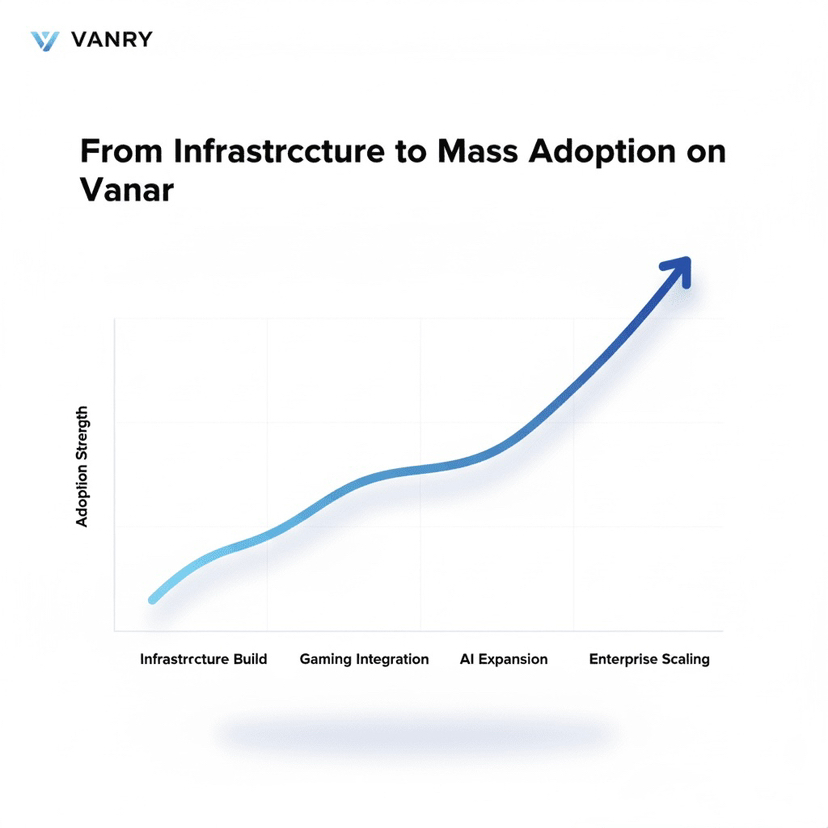
I see this as a shift toward service based token economics. Instead of relying solely on transactional throughput, recurring intelligence usage creates ongoing demand. If enterprise and gaming adoption expands, this structure could strengthen sustainability over time.
Gaming and Entertainment as Adoption Engines
Vanar leverages entertainment to drive large scale user engagement. Through the VGN Network and metaverse integrations, gaming becomes an accessible entry point into Web3 infrastructure.
Wallet abstraction and social login reduce onboarding friction. Fixed low transaction costs allow high frequency in game actions without economic strain. AI driven personalization can tailor experiences dynamically, potentially improving retention.
From my view, gaming serves as a practical testing ground for the broader intelligence stack. If millions of players interact daily with memory driven assets and AI workflows, the infrastructure proves itself under real load conditions.
PayFi and Real World Asset Integration
Beyond entertainment, Vanar extends into payment finance and tokenized real world assets. Integration with fiat gateways allows settlement across multiple currencies. Workflow automation can handle invoice reconciliation, dividend distribution, and compliance reporting.
Tokenization pipelines enable structured assets such as renewable energy projects or real estate holdings to be digitized with embedded regulatory logic. Instead of manual reconciliation, automated reasoning processes verify compliance before execution.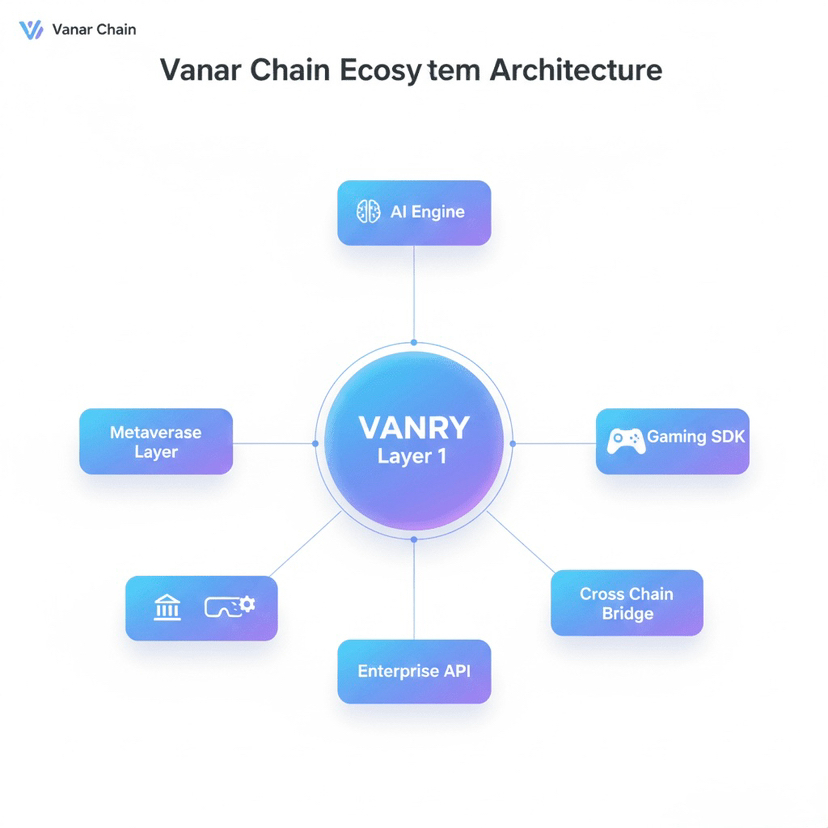
I think this part of the roadmap may ultimately determine long term relevance. Gaming can attract users, but enterprise adoption creates deeper economic roots.
Scalability and Security Foundation
Following major protocol upgrades, node participation has expanded and transaction reliability remains high. The network maintains predictable costs and consistent performance metrics.
Future cryptographic upgrades aim to incorporate post quantum resistance, preparing infrastructure for evolving security landscapes. For institutional participants, this type of forward planning can be important when evaluating long term infrastructure risk.
From what I observe, reliability and structured governance appear prioritized over aggressive performance marketing.
Long Term Vision Toward 2030
Looking ahead, Vanar Chain outlines a trajectory where AI subscriptions expand, governance mechanisms mature, and user growth increases across gaming and enterprise sectors.
If adoption scales into the tens or hundreds of millions of users, the intelligence stack may evolve into a foundational Web3 service layer rather than a niche ecosystem.
Personally, I think the real question is whether modular intelligence infrastructure becomes a standard expectation for future blockchains. If that shift happens, Vanar’s architecture may prove ahead of its time.
For now, the project presents a quiet but technically ambitious path. Instead of racing for headlines, it builds layered systems designed to remember, reason, and automate. In an industry often dominated by noise, that steady approach might be its strongest advantage.
