
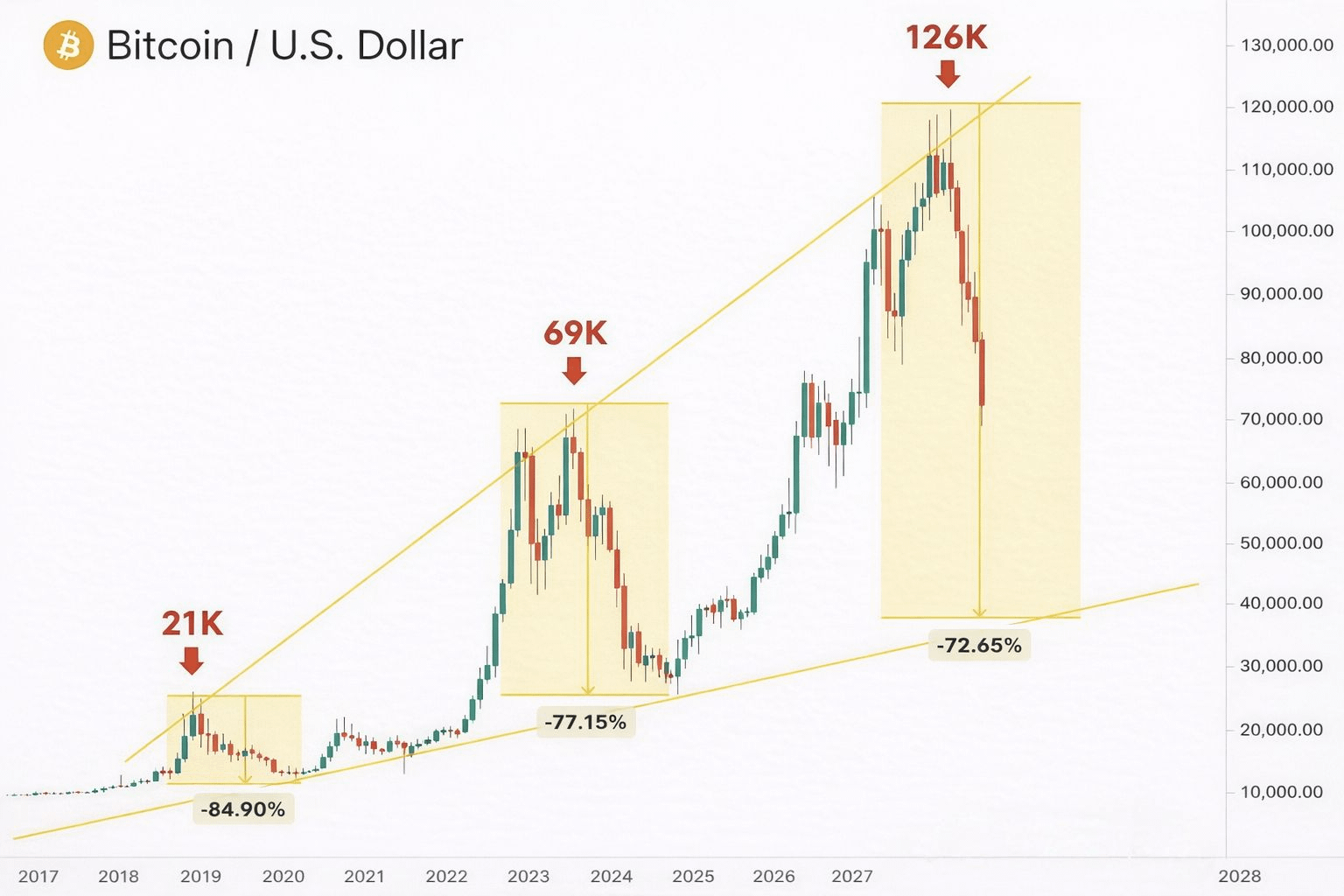
History doesn’t change in Bitcoin—the numbers just get bigger. 🌊
In 2017, Bitcoin peaked near $21,000 and fell over 80%. In 2021, it topped $69,000 and dropped ~77%. In this current cycle, after hitting $126,000, we've already seen corrections exceeding 70%.
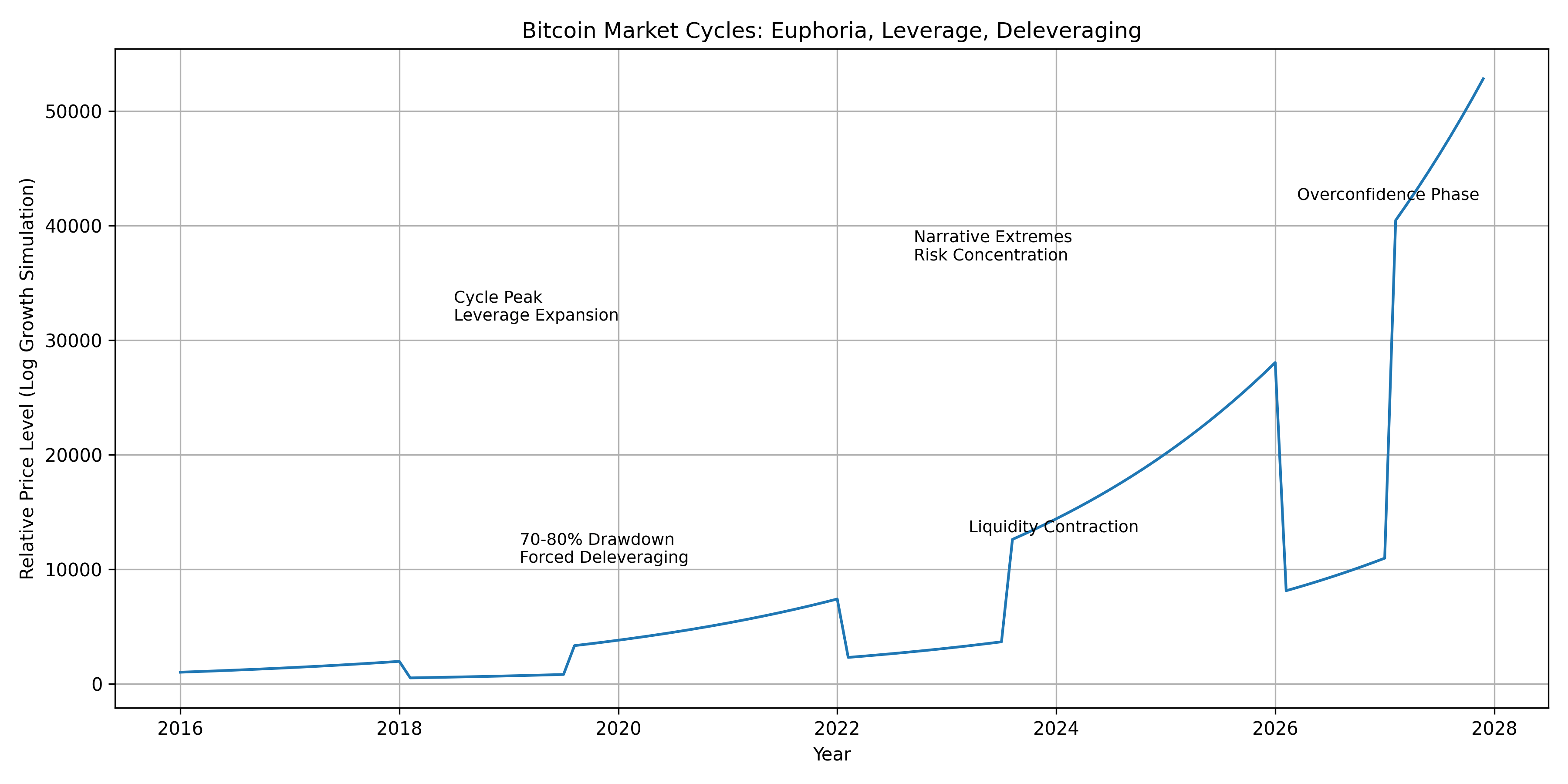
Each time, the narrative feels "new." People say, "This cycle is different." 🛑 But zoom out, and the structure is painfully familiar:
Parabolic Rise 🚀
Euphoria ✨
Overconfidence 😎
Brutal Reset 📉
🧠 The Psychology of the Crash
Bitcoin is a fixed-supply asset in a liquidity-driven world. When liquidity expands, FOMO drives price past logic. When it tightens, forced selling takes over. Volatility isn't a flaw; it’s a feature of scarcity. 💎
Most people don't lose money because Bitcoin crashes—they lose because they behave incorrectly during the crash.
 🛡️ Your Survival Toolkit
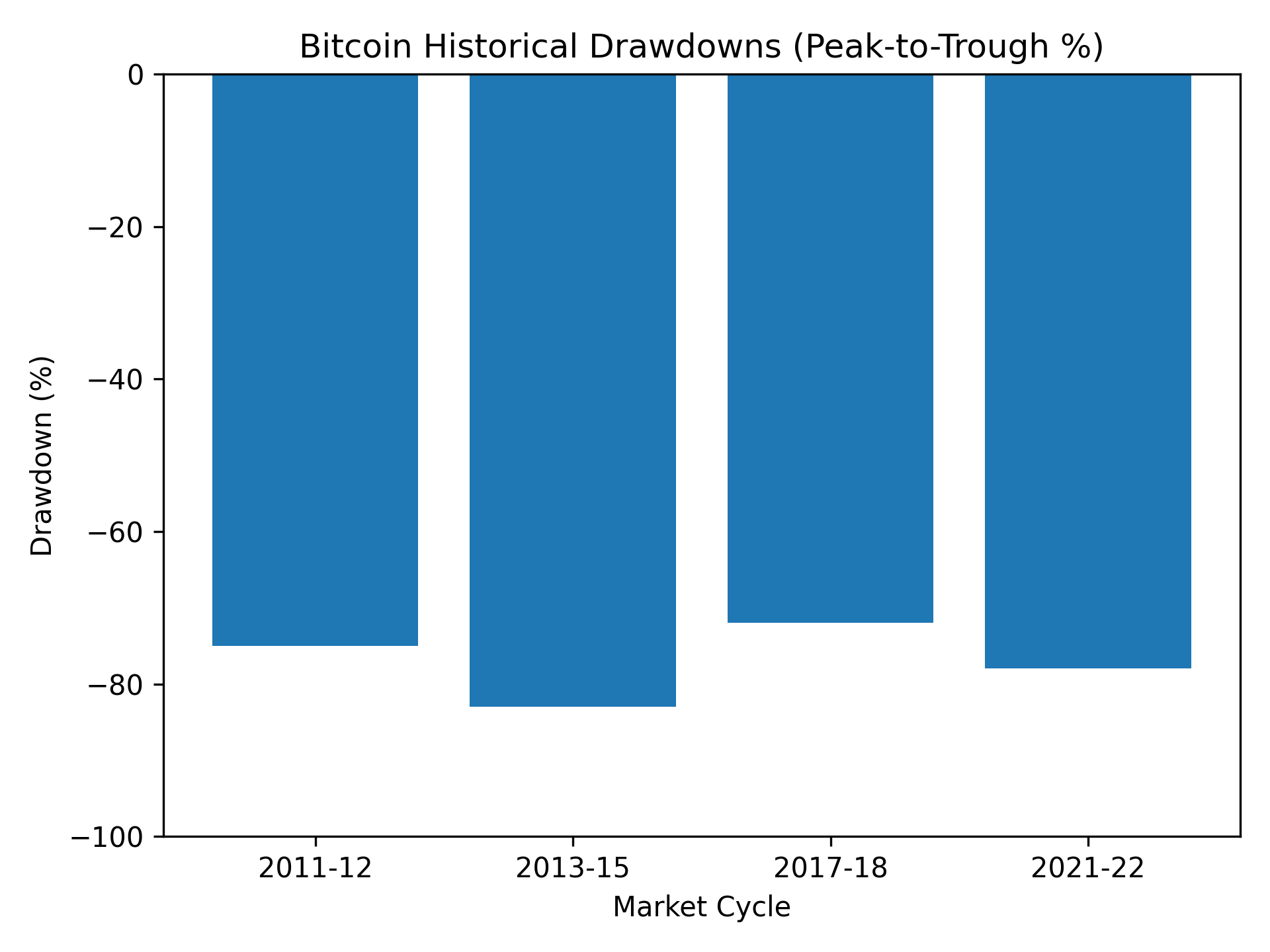
To survive the 70–80% drawdowns that are historically "normal," you must engineer your discipline:
Reduce Leverage Early: If a 50% move wipes you out, your position is a gamble, not an investment. ⚠️
Size Your Positions: Never allocate more than you can handle losing 70% of psychologically.
Build Liquidity: Keeping cash/stables on hand reduces panic and provides optionality. 💵
Study Liquidity, Not Just Charts: Watch macro cycles and interest rates—they drive the "rhythm" of the market.
 🚫 Avoid the Existential Trap
In 2018, they said it was over. In 2022, they said institutions were leaving. Every bottom is dominated by fear. 😱
Ask rational questions:
Is the network fundamentally weaker? 🌐
Has adoption reversed? 📉
Or is this just a cyclical deleveraging? 🔄
🎯 Final Thought
The market transfers wealth from the impatient to the patient—but only if that patience is backed by risk control. Holding blindly isn't a strategy; it’s passivity.
Survival is engineered. Plan your exit before the euphoria, and plan your entry before the blood hits the streets. 🩸✍️
