
I’ve been noticing something lately while scrolling through crypto feeds at night. Not charts, not launches, not even airdrop rumors. The conversation itself is changing. A few years ago every discussion was about speed, TPS, and fees. Then it shifted to DeFi yields, then NFTs, then Layer 2 wars. Now a different question keeps appearing in my mind. What if blockchains are no longer just reacting to users, but beginning to anticipate them?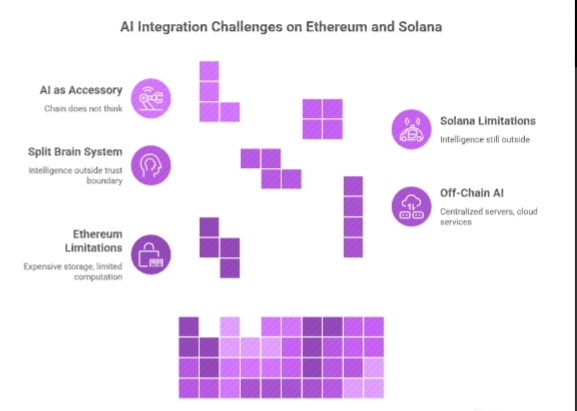
It sounds philosophical, but I think the industry is quietly moving in that direction.
For a long time, blockchains behaved like calculators. You input a transaction, the chain processes it, and that’s it. They waited for instructions. They never adapted, never interpreted context, never assisted. You had to understand wallets, gas, approvals, bridges, and half a dozen small risks every time you interacted with anything.
Most people in crypto got used to this friction. We normalized confusion.
What stands out to me recently is that some newer architectures are trying to remove that burden from the user instead of teaching the user to live with it. That is where Vanar Chain caught my attention, not because of marketing or hype, but because the direction feels different.
I’ve noticed that many blockchains focus on making developers powerful. Vanar feels like it is trying to make users comfortable.
Those two goals sound similar, but they are actually opposite approaches.
Traditionally, using crypto feels like operating machinery. You double check addresses, you calculate gas, you panic when a transaction stalls. Every action requires awareness and responsibility. The chain reacts to you. If you make a mistake, the system simply obeys.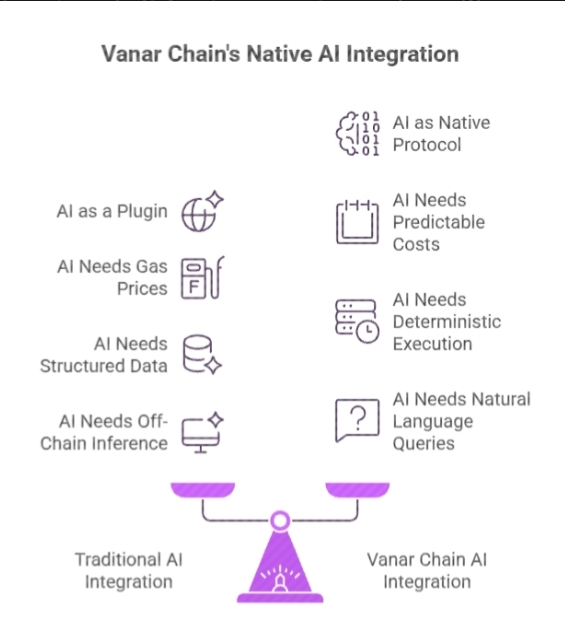
From what I’ve seen, Vanar’s direction is closer to software that helps you rather than software that waits for you. Things like abstracted interactions, simplified transaction handling, and built in logic layers are not just convenience features. They change the relationship between the user and the blockchain.
This is where things get interesting.
The moment a blockchain starts reducing decision fatigue, it begins to resemble an assistant instead of a ledger.
Think about how we use the internet today. Most people do not understand TCP/IP, DNS resolution, or encryption handshakes. They open an app and it just works. Crypto has not reached that stage yet. Even experienced users still hesitate before signing a transaction.
I’ve personally had moments where I paused at a wallet prompt longer than I care to admit. You start questioning everything. Is this approval unlimited? Is this contract safe? Is this the right network?
The technology works, but the experience demands mental effort.
Vanar’s direction seems to revolve around minimizing that cognitive load. Not by hiding blockchain mechanics entirely, but by reorganizing how they surface to the user. Instead of asking users to learn blockchain behavior, the chain tries to align itself with user behavior.
It sounds subtle, but it’s actually a big conceptual shift.
Most chains optimize performance metrics. Faster finality, lower fees, higher throughput. Those are engineering achievements, but they do not automatically create adoption. Regular users rarely care about TPS numbers. They care whether an interaction feels stressful.
From what I’ve seen across Web3 apps, stress is the real barrier.
People do not leave crypto because it is expensive. They leave because it is mentally exhausting.
This is why the idea of a thinking blockchain makes sense to me. Not artificial intelligence in the literal sense, but adaptive infrastructure. Systems that anticipate mistakes, guide interactions, and reduce the number of decisions a user must consciously make.
I compare it to the evolution of smartphones. Early phones gave you tools. Modern phones predict what you want to do next. Suggestions, autofill, background syncing. The device does not just execute commands anymore, it assists behavior.
Vanar feels closer to that philosophy than to the traditional blockchain model.
I’ve also noticed how this approach changes developer design. When infrastructure supports smoother interactions, developers stop building defensive interfaces. Instead of warning messages everywhere, they can design normal applications. The user experience becomes closer to Web2, but ownership remains Web3.
That middle ground is probably where adoption actually lives.
There is also a psychological layer here that people rarely talk about. Trust in crypto is not just security. It is confidence. When users feel uncertain during an action, they assume risk even if the system is safe. A smoother interaction increases perceived safety.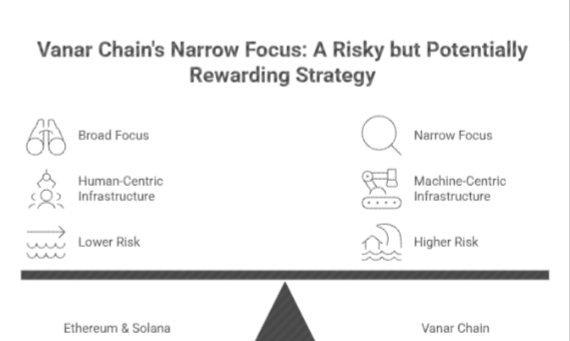
I’ve seen friends hesitate to mint NFTs simply because the wallet confirmation looked intimidating. Nothing was actually dangerous, but perception mattered more than reality.
If blockchains start handling complexity internally, that fear slowly disappears.
Another thing I find interesting is how this direction aligns with the broader tech world. Everywhere you look, systems are moving toward contextual computing. Apps predict searches, recommend actions, and simplify decisions. Crypto cannot remain purely mechanical while the rest of technology becomes adaptive.
Otherwise it will always feel like a tool for specialists rather than a network for everyone.
Vanar seems to be positioning itself around that idea, that infrastructure should support human behavior instead of forcing humans to learn infrastructure.
I’m not saying this guarantees success. Crypto history is full of good ideas that never gained traction. But philosophically, this feels closer to what mass adoption actually requires. Not more complexity hidden behind tutorials, but less complexity existing in the first place.
For years we tried onboarding guides, explainers, and educational threads. Maybe the problem was never education. Maybe the problem was expecting users to become semi engineers just to use a financial network.
If the chain itself reduces that requirement, the barrier changes completely.
I also think this changes how we evaluate projects. Instead of asking how fast it is, we might start asking how natural it feels. That sounds subjective, but user comfort is measurable through behavior. People return to systems that do not drain mental energy.
Crypto adoption might not come from one killer app. It might come from one environment where users stop feeling cautious every time they click confirm.
The more I think about it, the more I realize blockchains have always been reactive machines. They execute perfectly but they never guide. If networks begin assisting interactions, even in small ways, they shift from infrastructure to experience.
And experience is what people actually remember.
I don’t know if Vanar will be the chain that proves this model works. The market decides those things in unpredictable ways. But I do feel the industry is approaching a turning point where usability matters more than raw innovation.
For a long time crypto asked users to adapt to it. The next phase might be crypto adapting to users.
That idea makes me oddly optimistic.
Not because it promises price action or fast growth, but because it suggests maturity. Technology eventually stops showing off its complexity and starts hiding it. When that happens, normal people finally start using it without thinking.
Maybe the future of blockchain is not a faster chain.
Maybe it is a quieter one.
