
Cryptocurrencies like Bitcoin and Ethereum are often misunderstood by the general public because of their price volatility, complex technology, and association with speculative trading. But a specific segment of the crypto world — stablecoins — holds real potential to make digital money more practical, trustworthy, and easy to understand for everyday users. When governments step in with clear rules and oversight, these digital tokens may bridge the gap between traditional finance and the broader public’s understanding of crypto.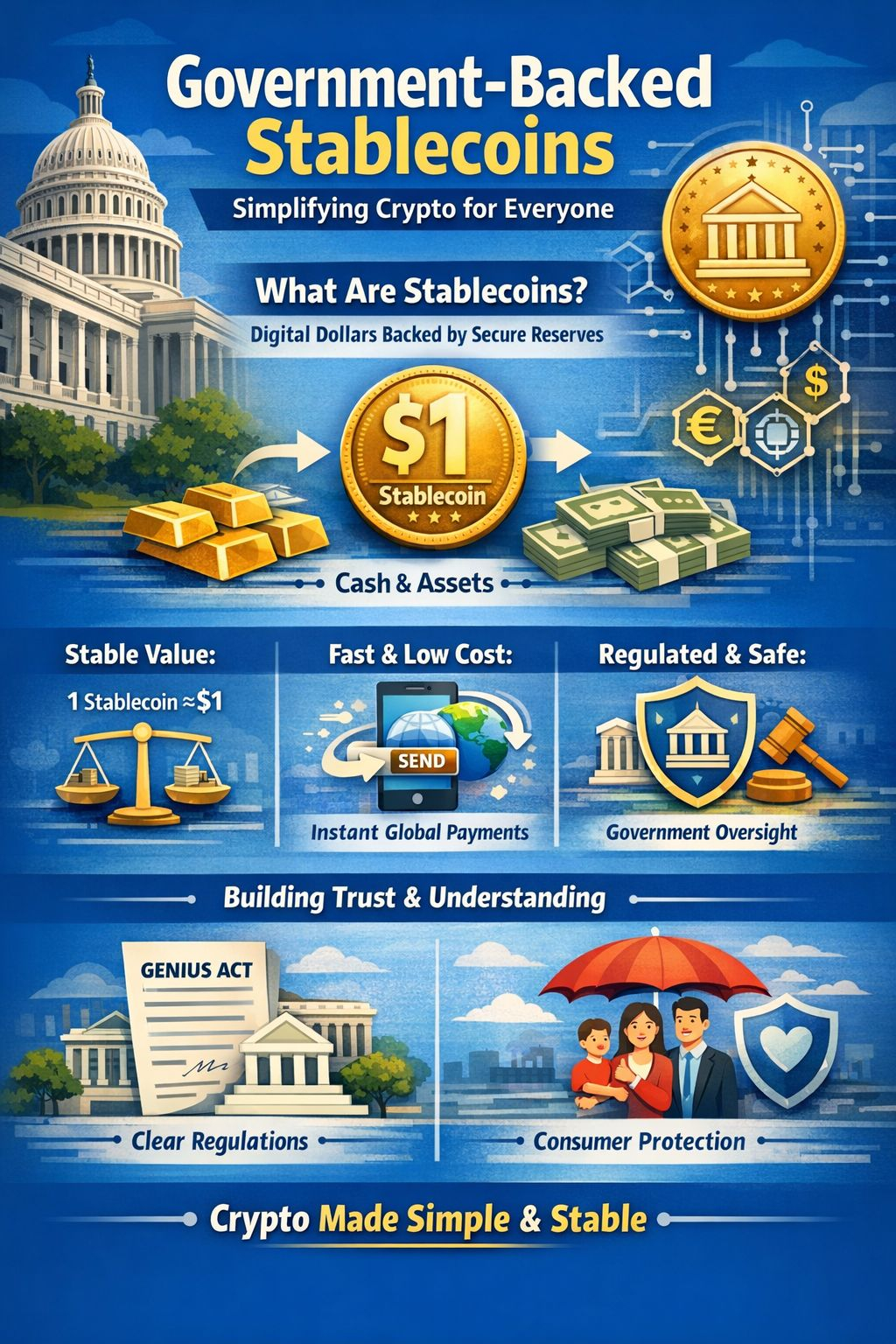
What Are Stablecoins? A Simple Explanation
At their core, stablecoins are digital currencies designed to maintain a stable value by pegging their price to a real-world asset — most commonly a national fiat currency like the U.S. dollar. Unlike volatile cryptocurrencies, stablecoins aim to remain at a fixed value (e.g., 1 token ≈ $1) by backing each unit with reserves of cash or other liquid assets.
This stability makes them easier to grasp: similar to holding dollars or euros but in a digital token form that can move on a blockchain.
Why Stablecoins Make Crypto More Understandable
1. Value Predictability Reduces Confusion
One of the biggest barriers to public adoption of cryptocurrencies is volatility — prices frequently swing wildly, making them confusing and unsuitable for everyday transactions. Because stablecoins aim to stay tied to something familiar (like the dollar), people can readily understand and trust their value.
2. Faster, Cheaper Transactions Than Traditional Systems
Stablecoins can enable near-instant payments anywhere in the world, 24/7, with lower fees than traditional banking transfers. This simplicity resonates with users once they realize moving money could become as easy as sending a text message.
3. A Bridge Between Traditional Finance and Cryptocurrencies
Governments view stablecoins as a way to link the old and new financial worlds. Regulators in multiple jurisdictions are embracing frameworks that treat stablecoins as regulated payment instruments, not speculative assets — reducing uncertainty for users.
Such regulation helps people see stablecoins not as “crypto weirdness,” but as digital money comparable to bank deposits or e-money.
Where Government Action Matters Most
Clear Legal Frameworks Build Trust
In 2025, the United States passed the GENIUS Act, the first major law that sets standards for stablecoin issuers — requiring full backing with high-quality liquid assets, regular public reserve disclosures, and anti-money-laundering compliance.
This kind of transparent, rule-based system reassures everyday users that stablecoins are safe and understandable — similar to how people trust banknotes because governments back them.
Consumer Protection Encourages Mainstream Use
One key reason for regulation is consumer protection. Before clear rules existed, some stablecoin issuers lacked adequate reserves or transparency, increasing risk for users. Government standards improve confidence, making it easier for people to adopt digital money without fear of sudden losses.
Risks Remain — But Awareness Helps Users Make Better Decisions
Stablecoins aren’t risk-free. Regulators and institutions like the Bank for International Settlements warn that if they’re poorly backed or unregulated, they could still cause financial instability or be misused.
Yet with government regulation, transparency, and public education, these digital tokens could become a gateway for millions to learn about blockchain technology, decentralized finance, and digital payment systems — without the intimidation of price swings or complex technical barriers.
Conclusion: Education Through Practical Use
Government-backed stablecoins don’t just aim to stabilize digital money — they offer a practical entry point for everyday users into the broader crypto ecosystem. By combining familiar value (like dollars) with the efficiency of blockchain and clear regulatory safeguards, stablecoins can transform crypto from a niche investment topic into a usable financial tool that even non-tech savvy people can understand and trust.
#Binance #BinanceSquareFamily #MarketSentimentToday $BTC $ETH $XRP


