
Vanar is one of those chains that makes more sense when you stop looking at it like “just another L1” and start looking at it like a product company trying to onboard normal people. Most blockchains are built around crypto-native habits: wallets, gas, bridges, and constant friction. Vanar’s pitch, from day one, has leaned toward the opposite direction—consumer-first experiences tied to gaming, entertainment, digital ownership, and now broader narratives like PayFi, RWA, and AI-style infrastructure.
The most important part is this: Vanar isn’t trying to win a theoretical debate about who has the best tech. It’s trying to win attention and usage from people who don’t care about blockchains at all. If that goal is real, then the chain’s token can’t be decorative. It has to be operational. That’s where VANRY comes in.
Think of VANRY as the network’s operating token—the one that keeps the chain alive in practice, not just on paper. Its value isn’t supposed to come only from hype or exchange trading; it’s supposed to show up in the boring, repeatable actions that happen when a real ecosystem runs: transactions, application interactions, securing the network, and decision-making.
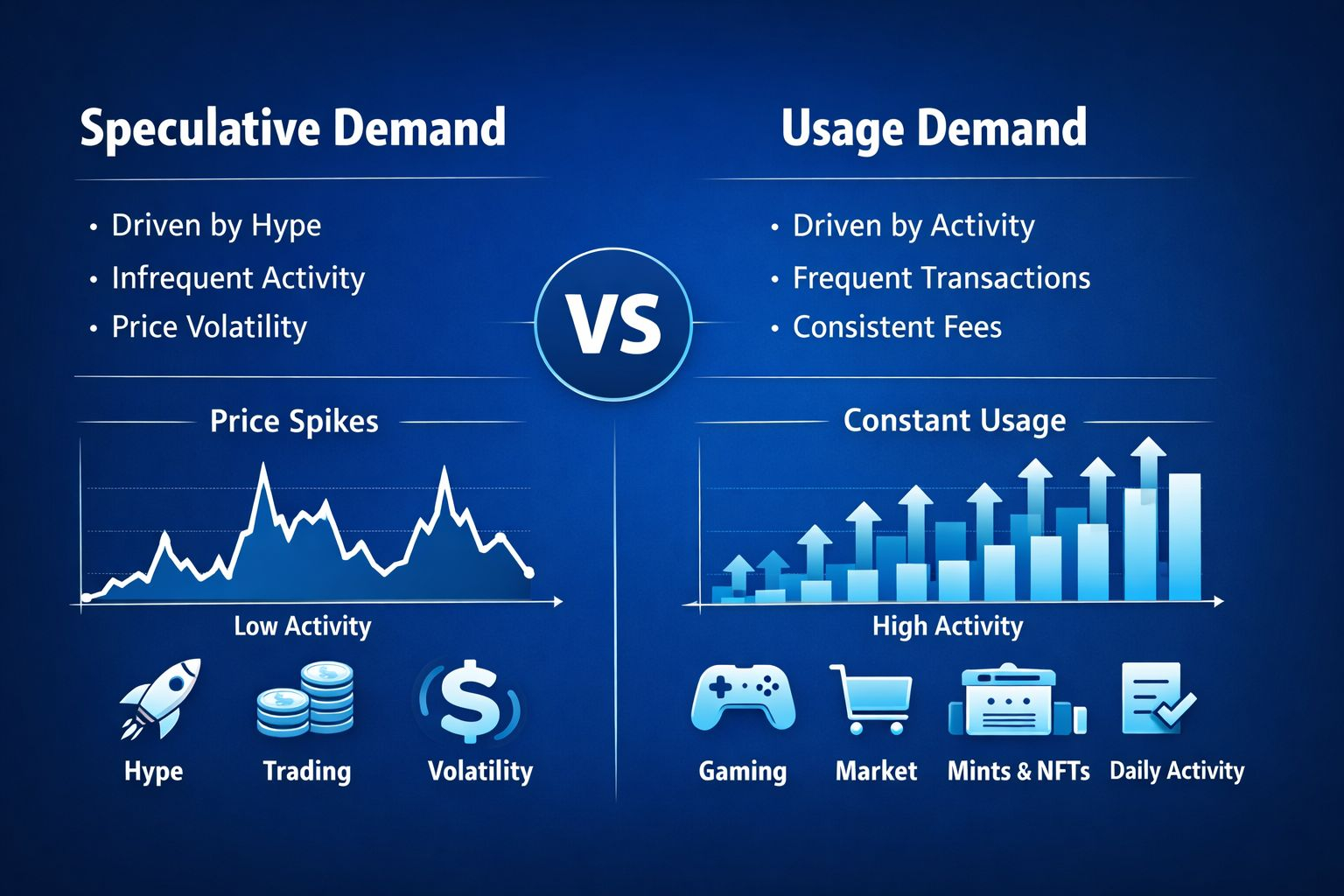
The most direct utility is fees. If you do anything on Vanar—transfer assets, interact with smart contracts, use an application—you need to pay network fees, and VANRY is the token associated with that role. This is the cleanest form of demand because it doesn’t require belief. It requires activity. When a chain becomes useful, people buy the token because they need to do things. That’s the difference between “speculative demand” and “usage demand.” In a consumer-heavy world like gaming or entertainment, fee demand can become more consistent because apps generate a lot of repeated interaction. It’s not one transaction a week; it’s constant updates, trades, mints, claims, and micro-actions.
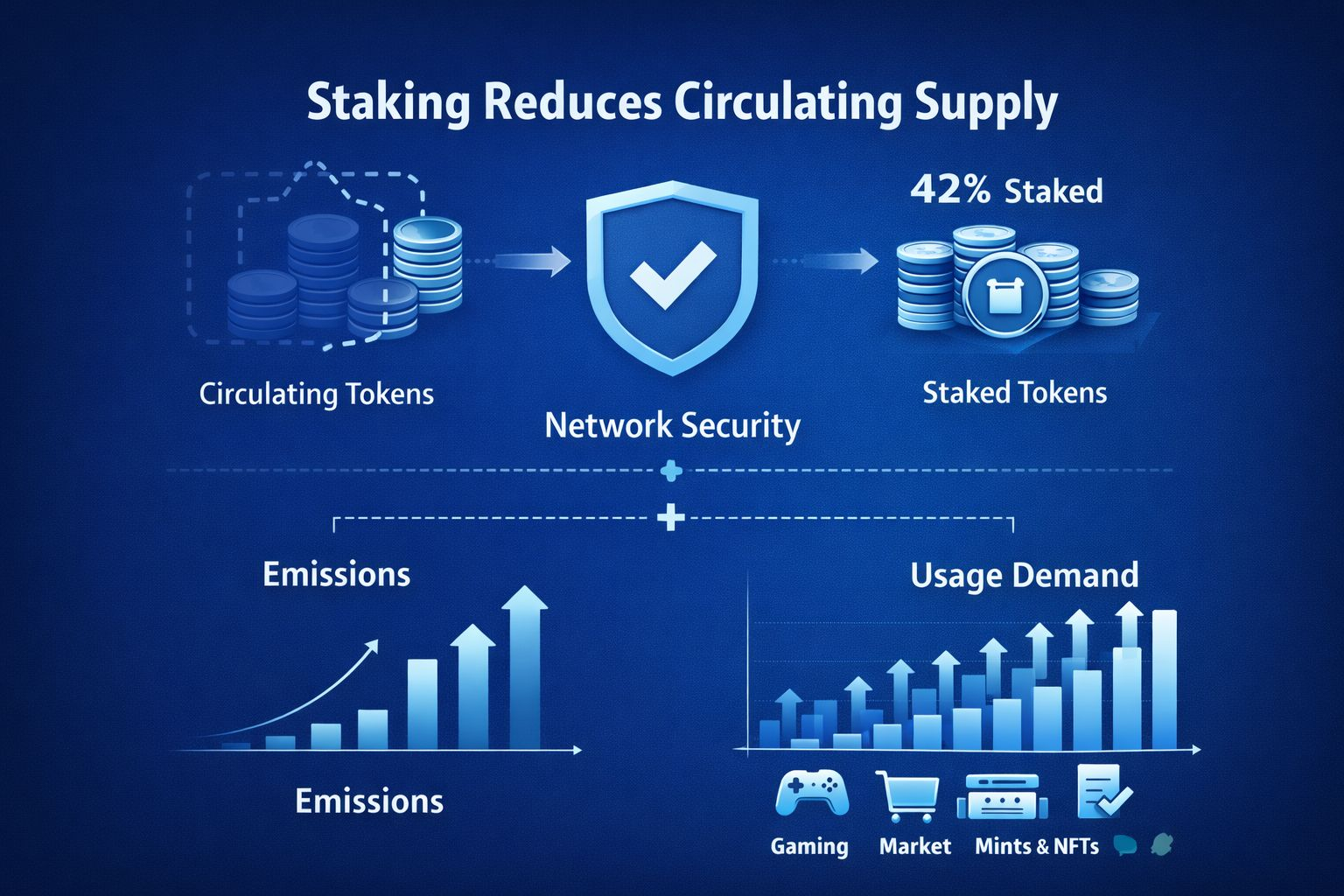
Then there’s staking, which is where VANRY becomes more than “fuel.” Staking is the mechanism that ties holders to the security of the network. When people stake, they’re locking VANRY to support validation and network stability. In real terms, staking does two things at once: it gives the network a security backbone, and it reduces liquid supply because staked tokens aren’t instantly tradable. That doesn’t automatically mean price goes up—nothing in crypto is automatic—but it does change the behavior of the market when a meaningful portion of tokens stays bonded to the network rather than floating freely.
Staking also matters because security isn’t a “nice to have.” If Vanar wants to host anything serious—payments, RWAs, brands, digital ownership systems—then network credibility matters. The bigger the value settled on a chain, the bigger the incentive for attackers, and the stronger the reason for staking to remain attractive. So VANRY’s staking utility is basically the chain’s long-term trust anchor, assuming the validator model and incentives remain healthy.
Another layer of utility is smart contract operations—the idea that VANRY isn’t only something you use to move coins, but something tied to running applications on the chain. This is where most people underestimate consumer blockchains. Consumer apps don’t behave like simple finance tools. They generate constant onchain events: marketplace purchases, asset evolution, in-game crafting, rewards, identity checks, inventory updates, ownership transfers, and more. If Vanar succeeds in becoming a real home for these kinds of apps, VANRY becomes part of the application economy because the chain’s execution layer depends on it. That kind of usage is usually what turns a chain from “active sometimes” to “alive every day.”
Governance is another utility often mentioned for VANRY—meaning token holders can participate in how the network evolves. Governance is valuable, but it only becomes truly meaningful when decisions actually matter and the ecosystem isn’t purely top-down. If governance is active and influential, then VANRY becomes a lever for long-term stakeholders who want a say in upgrades, parameters, incentives, and direction. In crypto, control is a kind of value, but governance only becomes a strong pillar when the system is mature enough that people care deeply about how it’s managed.
Now the part people avoid talking about: supply and distribution, because utility can be strong but token economics can still shape how the market behaves. VANRY is widely listed with a maximum supply around 2.4 billion, and its distribution is closely linked to the historical migration from TVK to VANRY (commonly described as a 1:1 swap), with additional allocation for validator rewards, development, and community incentives. The human takeaway isn’t “good” or “bad”—it’s practical. A large legacy-holder base means price behavior often carries history: some holders are committed to the vision, while others treat rallies as exit windows. This isn’t unique to Vanar; it’s what happens anytime a token transitions into a new identity.
Validator rewards as a major allocation also tells you something: the network is designed to bootstrap and sustain security over time through emissions and incentives. That’s normal for L1s. The actual question becomes: does usage demand grow enough to balance or outpace that emission flow? If yes, the token can feel increasingly “earned” by real activity. If no, even good tech can struggle because the market is fighting a constant supply stream without a matching sink.
So where does VANRY demand realistically come from? Not fantasies—real mechanisms. It comes from people using applications and paying fees. It comes from staking participation as the network grows and needs stronger security. It comes from builders who deploy and operate on the chain. And if governance becomes meaningful, it comes from long-term stakeholders who want influence and stability. In short, VANRY’s utility is structured like an engine token, not a trophy token.
The cleanest way to say it is this: VANRY’s utility makes sense if Vanar becomes a habit. If Vanar becomes the chain where consumer apps actually run smoothly—where users don’t feel the blockchain, and builders don’t fight the chain—then VANRY becomes the fuel and security layer of something real. If Vanar stays mostly narrative, VANRY behaves mostly like a market asset. That’s the fork every L1 faces. The utility is there on paper, but the real proof is always the same: daily usage that doesn’t need hype to survive.
