


In the blockchain world, the real challenge is not building advanced technology, but transforming real usage into steady and predictable demand. Vanar Chain is quietly shifting from a feature-driven network into a true utility ecosystem where the value of its token is tied directly to real, repeatable usage. This marks a powerful and rare strategy in Web3.
Instead of relying on speculation, trading activity, or one-time transactions, Vanar is moving its core products such as myNeutron and its AI stack into subscription-based access powered by VANRY. This makes the token essential for continuous usage rather than just a gas or reward token. VANRY becomes part of the product lifecycle itself.
Subscription-First Model: A New Economic Structure
Traditional blockchain tools often offered free core services with optional fees. Vanar reverses this logic by embedding paid AI functionality directly into the protocol layer. Products like myNeutron, a semantic memory and reasoning engine, are evolving into recurring subscription services priced in VANRY.
This addresses a major Web3 weakness: unpredictable usage leads to unpredictable token demand. Subscriptions create consistent, measurable demand, turning the token into a real economic utility rather than a speculative asset.
The approach mirrors cloud computing. Businesses budget monthly for storage, compute, and APIs. Similarly, Vanar enables developers to pay in VANRY for memory indexing, reasoning workflows, and AI query cycles creating predictable economic activity on-chain.
Why Subscriptions Can Stabilize the Network
Subscription billing strengthens token demand while increasing product stickiness. Projects using Vanar’s AI must maintain scheduled payments, generating continuous demand independent of market sentiment or trading cycles.
This mirrors Web2 SaaS models. Once a company integrates a billing engine or CRM, payments continue as long as the service delivers value. When builders embed myNeutron or Kayon AI into analytics, automation, or reasoning workflows, VANRY becomes a required operational resource not an optional cost.
This also aligns with enterprise needs. Regulated sectors prefer predictable and traceable costs. Subscription billing in VANRY provides clear and budgetable pricing compared to volatile gas fees or sporadic network usage.
Extending Utility Beyond a Single Chain
Vanar’s AI layer is not designed to remain isolated. Roadmap signals suggest Neutron will expand across ecosystems, allowing external chains to leverage its compressed semantic data while Vanar acts as the settlement layer.
This could introduce cross-chain demand for VANRY. Developers from other ecosystems may pay in VANRY to anchor memory layers or settle AI-driven workflows. In this model, Vanar evolves beyond a single Layer1 into an AI infrastructure provider serving multiple chains.
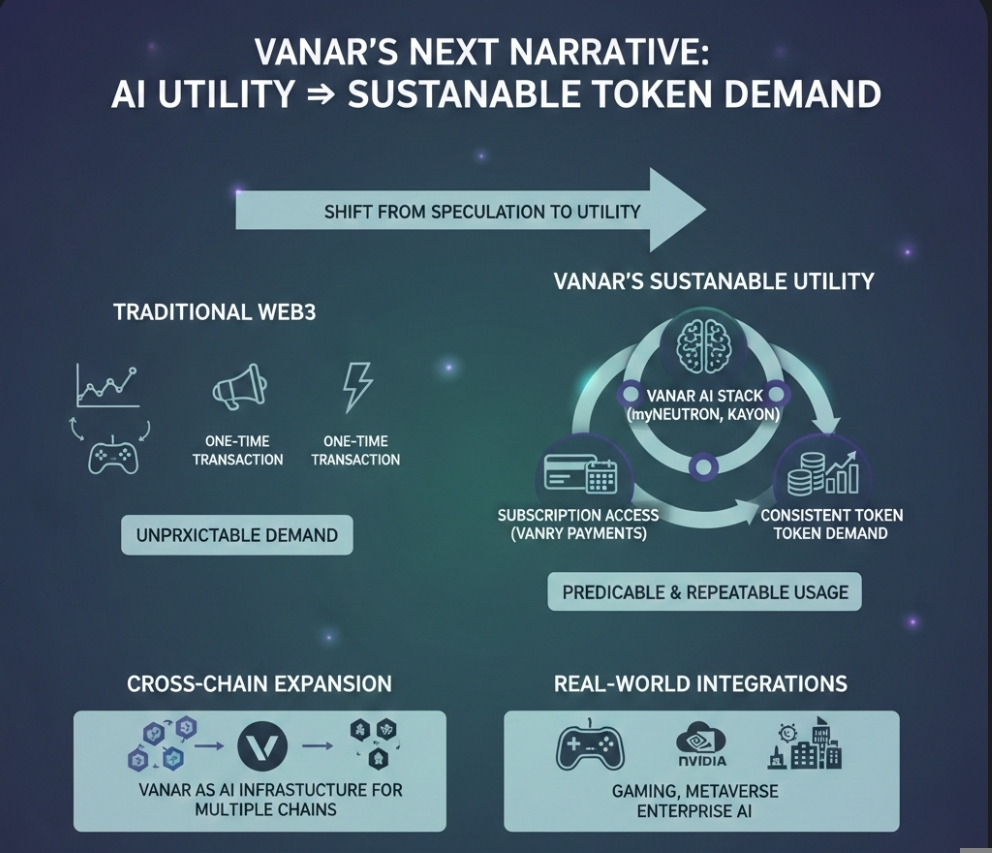
Cross-ecosystem utility is far more powerful than competing solely as a smart contract platform.
Strategic Integrations and Expanding Real-World Utility
Vanar’s growth is not limited to partnerships headlines. Support from NVIDIA Inception strengthens AI tooling and enhances the platform’s capability for developers building advanced AI applications.
At the same time, Vanar continues expanding across gaming, metaverse environments, AI experiences, and real-world digital economies. From AI services to in-game microtransactions and immersive environments, token demand is distributed across multiple sectors making the ecosystem more resilient and less dependent on any single use case.
Utility Over Speculation
Many Layer1 tokens rely heavily on trading hype a fragile foundation that shifts with market sentiment. Vanar takes a different path. Through subscription billing and real product usage, the network generates repeatable, organic token demand.
This mirrors traditional technology platforms where revenue is driven by real customer needs rather than speculation. It may lack dramatic hype, but it is fundamentally strong and economically sustainable.
Challenges Ahead
Subscription economics only work when products deliver real value. If AI tools do not help developers save time, improve decisions, or generate measurable outcomes, recurring payments become a burden. Vanar must prove its AI infrastructure is worth the cost.
Technical maturity, strong documentation, predictable developer experience, and smooth billing UX are critical. On-chain subscription systems must be transparent, with clear dashboards, invoicing, and integration support.
Scale is another key factor. Sustainable token demand requires a large base of paying users and applications. This depends on onboarding, education, and ecosystem growth not just technology.
Conclusion: A Shift Toward Sustainable Utility
Vanar’s transition toward subscription-driven AI utility represents a new blockchain narrative. Instead of relying on hype cycles, the project is building a system where token demand is directly tied to repeatable product usage similar to modern software platforms.
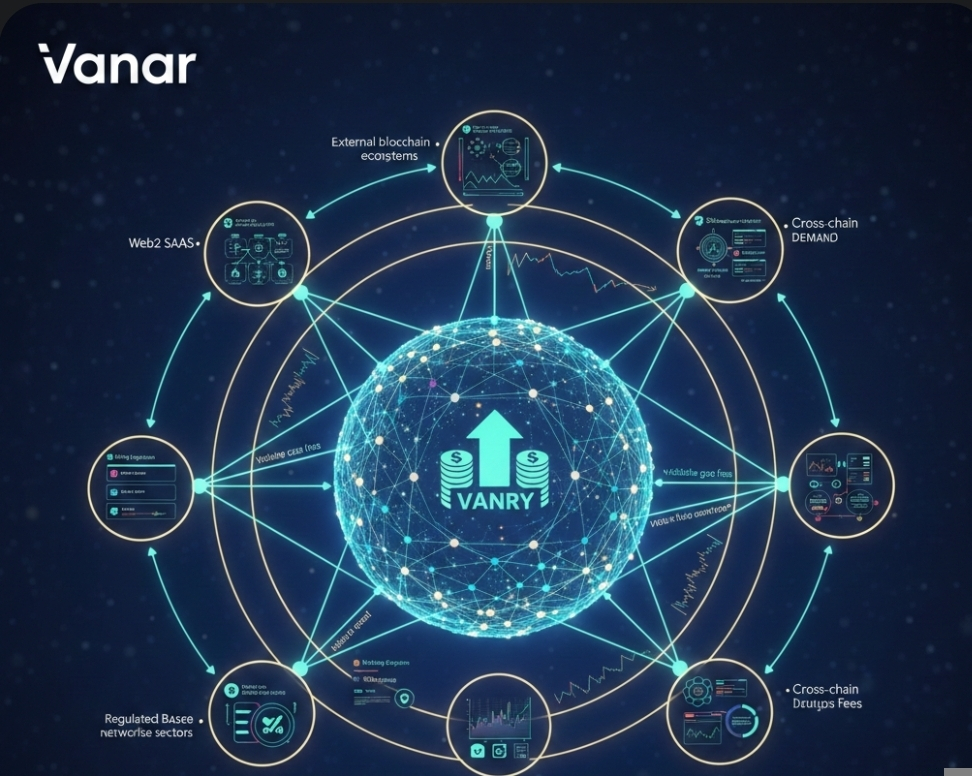
This shift transforms VANRY into a working utility token used consistently by builders and businesses because it powers essential services within their operations. If executed successfully, Vanar could move beyond being just another Layer1 and become a foundational AI infrastructure layer for the broader Web3 economy.
