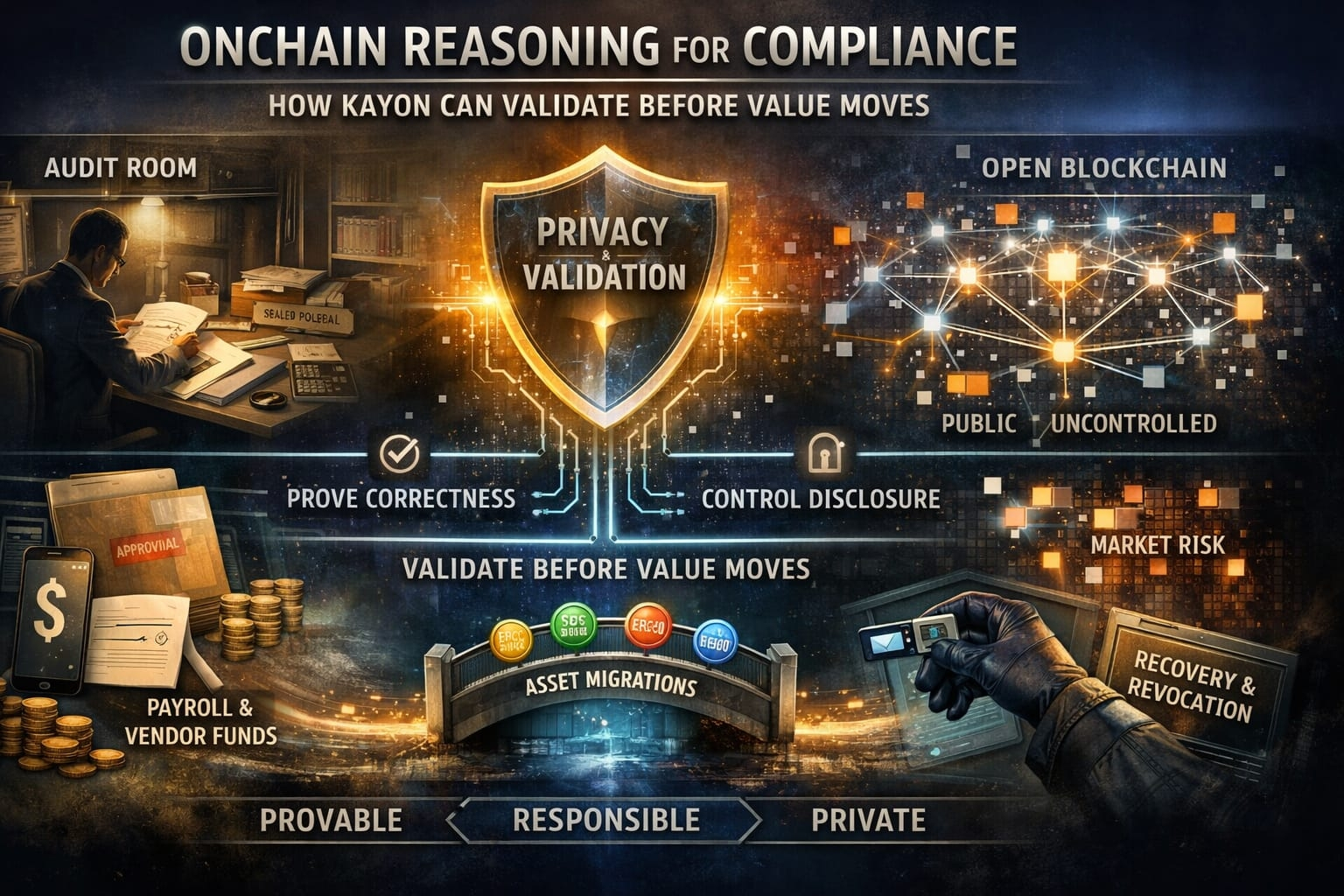
02:11 in the office. It’s pitch dark except for that sliver of light under the door. One person’s still awake—not because they’re gunning for Employee of the Year, but because someone has to make the numbers add up. The bank doesn’t care if you’re exhausted. On the second screen, a dashboard glows: settlement queue, signer status, pending approvals. These panels look boring, until they suddenly aren’t. There’s a tiny discrepancy in the treasury reconciliation. Maybe it’s rounding. Maybe not. It’s so specific it feels intentional. Just a few units missing from a routed batch—not enough to set off alarms, but enough to knot your stomach. You refresh the page, twice, like that’ll fix it. It doesn’t. The room stays quiet, but your trust doesn’t.
In meetings, people toss around “adoption” like it’s a place you reach if you talk about it loud enough. In operations, adoption gets real when money turns into wages. When payroll has to hit on a Tuesday because rent’s due on Wednesday. When a vendor contract carries late fees, spelled out in plain English. When client obligations don’t care about excuses—just timestamps. That’s where all the slogans die off. Not because anyone’s against them, but because real-world responsibilities don’t leave any space for that kind of talk.
Here’s the hard truth: public isn’t the same as provable. Public means anyone can see it. Provable means you can defend it. Visibility is easy. Defensibility takes work. Grown-up systems don’t want you to show everything—they want you to prove you acted right, and do it in a way that stands up when someone questions it. Sometimes privacy isn’t a bonus. Sometimes it’s the law. Sometimes it’s in the contract. Sometimes it’s just the only responsible move. But auditability? That’s non-negotiable. You don’t get to swap it for convenience. If you try, the network stops feeling safe and starts feeling risky—and you spend your time making excuses instead of building trust.
Most blockchains treat transparency like it’s the answer to everything. Folks outside operations think if everyone can see everything, the truth sorts itself out. People inside know better. Too much transparency messes things up in new ways. Salaries turn into office gossip. Vendor relationships get weaponized by strangers. Client positioning gets reverse-engineered from your regular transactions. Trading intent leaks, markets move against you, and you don’t just lose money—you lose trust, partners, and time. Suddenly, every decision needs explaining twice: first to your team, then to everyone watching.
So here’s the design challenge: can a ledger know when to share and when to keep quiet, but still stay accountable? Not in theory, but in that sharp moment when someone asks for proof and you need to deliver—without tearing your business open for the world.
That’s where Kayon’s idea kicks in. Not just a feature—a discipline. Validate before value moves. Run all the checks before the point of no return. Confirm compliance before the transaction leaves the room. Not after it’s hit the chain. Not after the funds are gone. Not when you’re left trying to explain why “we didn’t notice” is supposed to be good enough. In the real world, the best incident is the one that never even hits the statement.
And you can’t validate by just exposing everything, either. This isn’t a public park. It’s more like an audit room—a sealed folder on a table. Inside’s everything that matters: approvals, the authorization chain, limits, rule references, timestamps, exception notes, accounting treatment. It’s complete, consistent, rules-based, and it stands up under scrutiny. But the folder doesn’t sit open for anyone to flip through. It only opens for the right people—auditors, regulators, compliance—when it’s time. That’s not secrecy. That’s controlled disclosure. That’s how grown-ups manage sensitive data without sacrificing accountability.
So, Phoenix private transactions? Think audit-room logic, written right onto the ledger. The goal isn’t to hide actions from the system—it’s to keep the system from turning every move into permanent public rumor. You can still prove things were done right. You can show the sealed folder to the people who need to see it. But you don’t broadcast the details to the whole world, forever. You keep confidentiality, but you enforce it: validity proofs that don’t leak more than the verifier actually needs.
Because confidentiality without enforcement is just a promise. And promises are always the first thing to break under pressure.
And pressure always shows up in the same places: bridges, migrations, key rotations, manual approvals, human checklists, late-night signers. Those moments when one tired person tries to do the “small safe thing”—