What Binance RLUSD Integration on XRPL Really Means
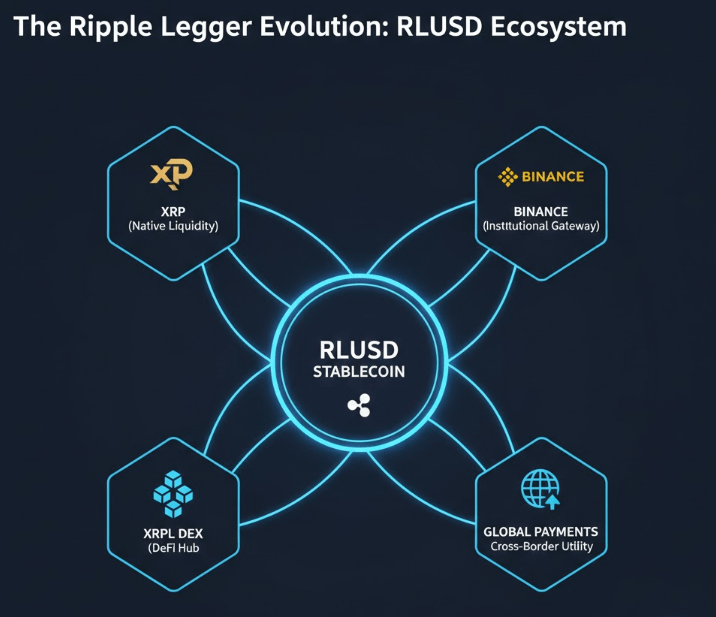
Binance has officially integrated Ripple’s RLUSD stablecoin on the XRP Ledger (XRPL), just weeks after first listing it on Ethereum. At first glance, this might look like just another exchange update but for the XRP ecosystem, it’s a meaningful step forward.
Let’s break down why this matters.
From Ethereum to XRPL Expanding Access
RLUSD was initially listed on Binance via the Ethereum network. Now, with XRPL integration completed and deposits open, users can interact with RLUSD directly on the XRP Ledger as well.
Currently, RLUSD exists on two networks:
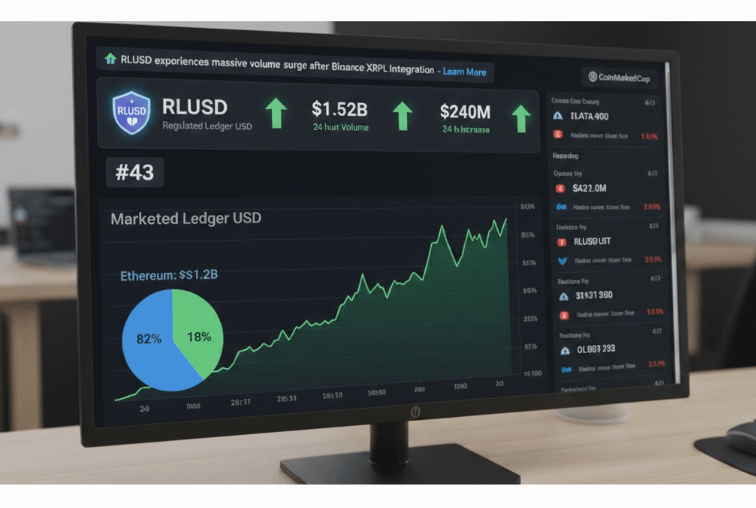
Ethereum – holding nearly $1.2 billion of the total supply
XRPL – accounting for around $250 million
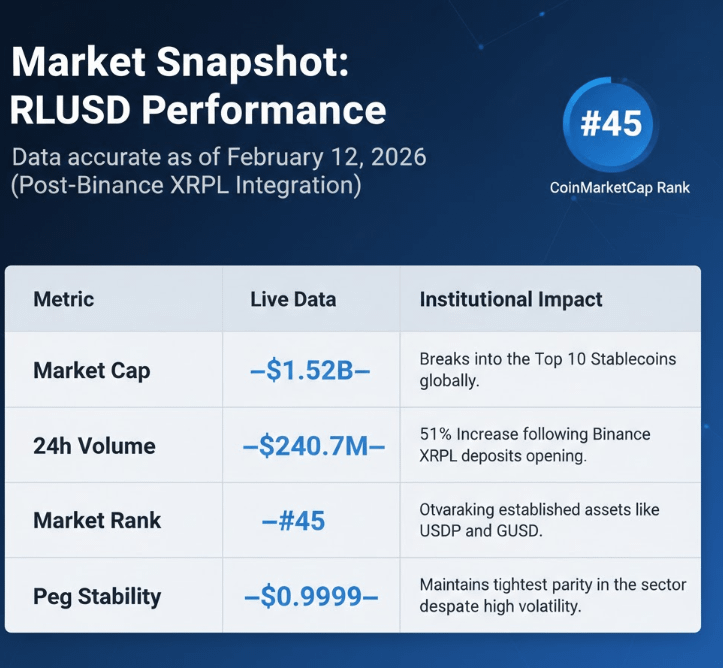
Total market cap – approximately $1.5 billion
This dual-network presence gives users flexibility. Ethereum offers deep liquidity and DeFi infrastructure, while XRPL provides faster settlement times and lower transaction costs something XRP supporters have long highlighted.
Ripple also plans to expand RLUSD to Ethereum layer-2 networks such as Base, Optimism, Unichain, and Ink, through its Wormhole partnership. That suggests multi-chain scalability is part of the long-term strategy.
Trading Activity Is Picking Up
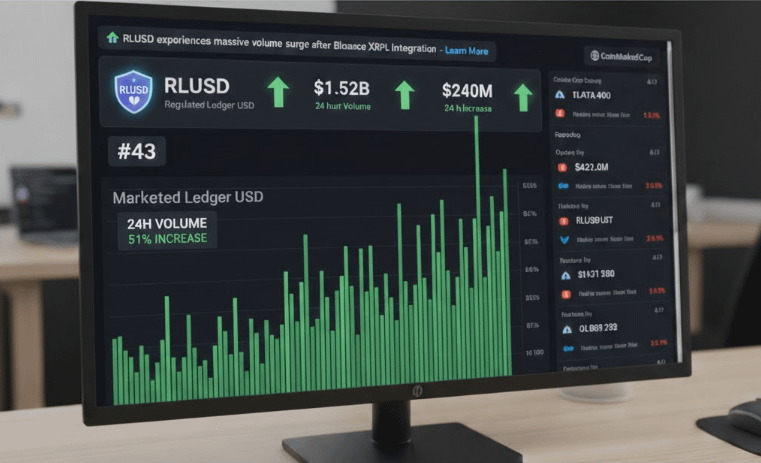
Since the Binance XRPL integration, RLUSD has recorded a 22% increase in 24-hour trading volume, reaching about $200 million.
That’s significant because stablecoin growth isn’t just about market cap — it’s about usage. Higher trading volume often signals growing adoption, improved liquidity, and broader market confidence.
RLUSD currently ranks as the 45th largest crypto by market cap, which is notable for a relatively new stablecoin competing in a space dominated by USDT and USDC.
Why XRPL Support Matters
An XRPL validator described Binance’s move as a “massive door opener” for the XRP ecosystem. Here’s why:
It increases stablecoin liquidity directly on XRPL.
It strengthens the utility of XRP-based infrastructure.
It connects Ripple’s ecosystem more deeply with major exchange liquidity.
For the XRP community, timing is also symbolic. The integration happened around XRP Community Day, where Ripple CEO Brad Garlinghouse reiterated that both XRP and RLUSD are central to Ripple’s payments and custody strategy, even calling XRP the company’s “North Star.”
That messaging reinforces the idea that RLUSD isn’t replacing XRP — it’s designed to complement it.
Regulatory Tailwinds?
Another interesting development is that the CFTC recently expanded eligible payment stablecoin collateral on derivatives markets to include those issued by national trust banks.
Ripple has already received conditional approval for its trust charter. If finalized, RLUSD could potentially fall under this regulatory category which may strengthen its institutional positioning.
In a market where regulation often shapes adoption, that’s worth watching.
Bigger Picture: What This Signals
Binance integrating RLUSD on both Ethereum and XRPL suggests something broader:
Stablecoin competition is heating up.
Multi-chain strategy is becoming the norm.
Exchanges are moving quickly to support ecosystem-native assets.
XRP infrastructure is gradually becoming more integrated into global liquidity venues.
For everyday users, this means more options, faster transfers on XRPL, and potentially deeper liquidity across networks.
For the XRP ecosystem, it signals growing alignment between Ripple’s products, exchange infrastructure, and regulatory strategy.
And in crypto, alignment often matters more than hype.