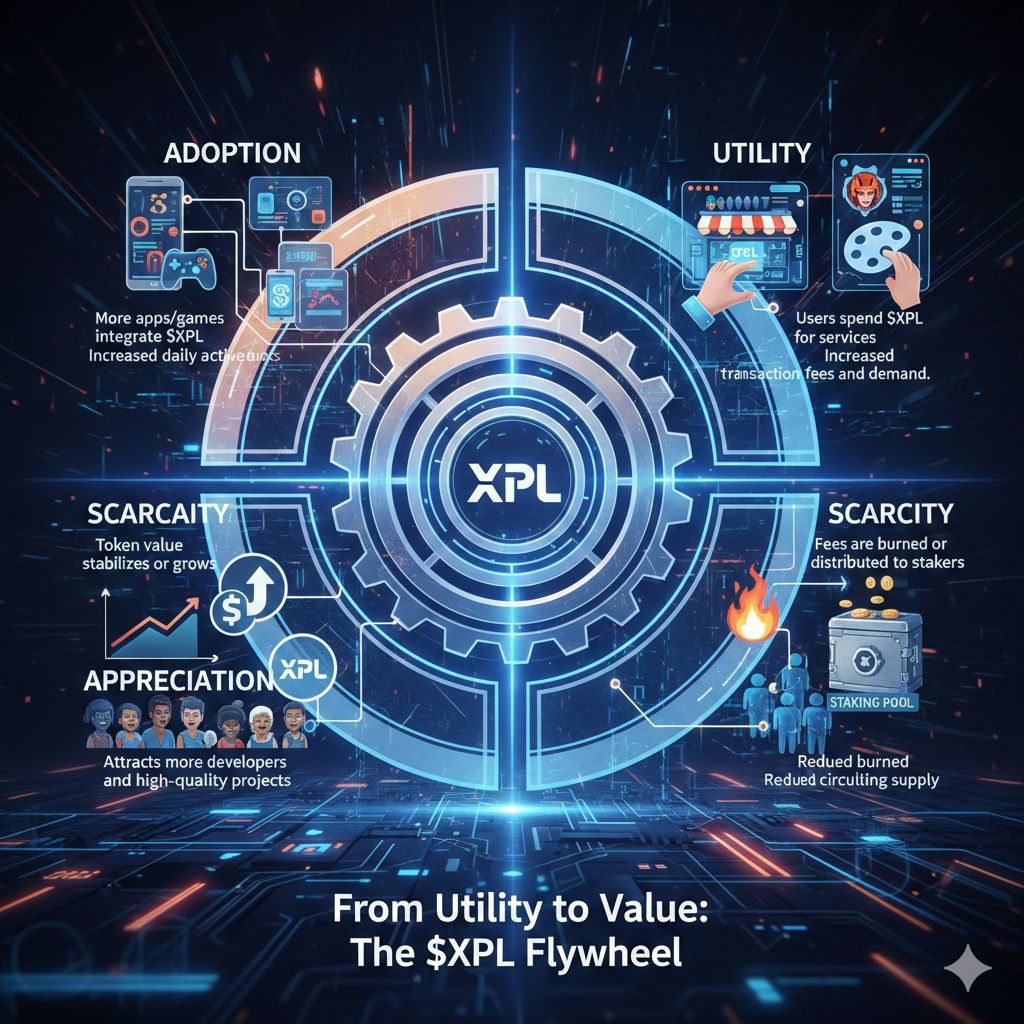
In the world of decentralized finance, the shift from speculative hype to sustainable growth is marked by a single metricand that is Stable Usage. For the XPLA ecosystem, the $XPL token serves as the fundamental fuel for a digital economy. Unlike assets that rely solely on market sentiment, XPL derives its strength from consistent, utility-driven activity that creates a direct path to value accrual.
The primary driver of this value is the Velocity Reduction Effect. In a purely speculative market, tokens change hands rapidly, leading to high volatility. However, as stable usage increases—through in-game purchases, NFT minting, or platform services—a significant portion of the $XPL supply is consistently engaged in functional tasks. This "locked utility" naturally reduces sell pressure, as users prioritize holding the token to access the ecosystem's benefits rather than liquidating for short-term gains.
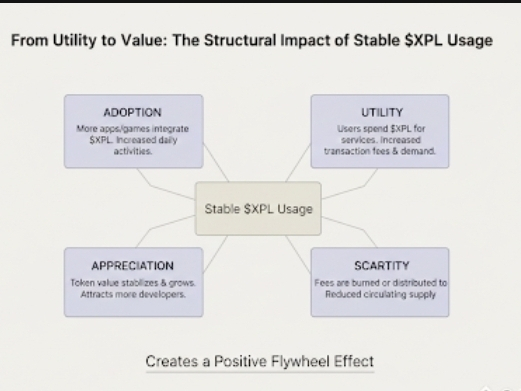
Furthermore, stable usage triggers a powerful Deflationary Feedback Loop. Every transaction within the network generates fees that can be strategically managed to benefit holders. Whether the protocol uses these fees to buy back XPL from the open market or "burns" them to permanently reduce the total supply, the result is the same: increasing scarcity in the face of steady demand. When the total supply of XPL decreases while the necessity for its use remains high, the fundamental value of each remaining token is structurally reinforced.
This creates what is known as the Flywheel Effect. Increased adoption leads to higher transaction volume, which generates more protocol revenue. This revenue is then channeled back into the ecosystem or used to reward stakers, who remove even more tokens from the circulating supply to secure the network. This cycle transforms XPL from a simple digital asset into a productive one—where the actual work performed on-chain directly translates into long-term financial stability for the community.