
If you look at $SOL supply dynamics from launch until today, one thing becomes very clear: both the total supply and the circulating supply have steadily increased over time.
That’s important.
#solana operates with an inflationary token model, meaning new SOL is continuously issued through staking rewards and validator incentives. While this mechanism helps secure the network and incentivize participation, it also introduces ongoing supply expansion into the market.
Why does that matter?
Price is driven by supply and demand. When supply grows, demand must grow at an equal or faster rate just to maintain price stability. If demand slows while new tokens continue entering circulation, it can create structural sell pressure — especially during weaker market conditions.
This doesn’t make SOL a bad asset. In fact, inflationary models are common among Layer 1 networks in their growth phase. However, it does mean long-term holders should understand:
The current inflation rate and how it trends over time
The percentage of tokens staked vs. liquid
Unlock schedules and validator emissions
Whether network adoption is outpacing supply growth
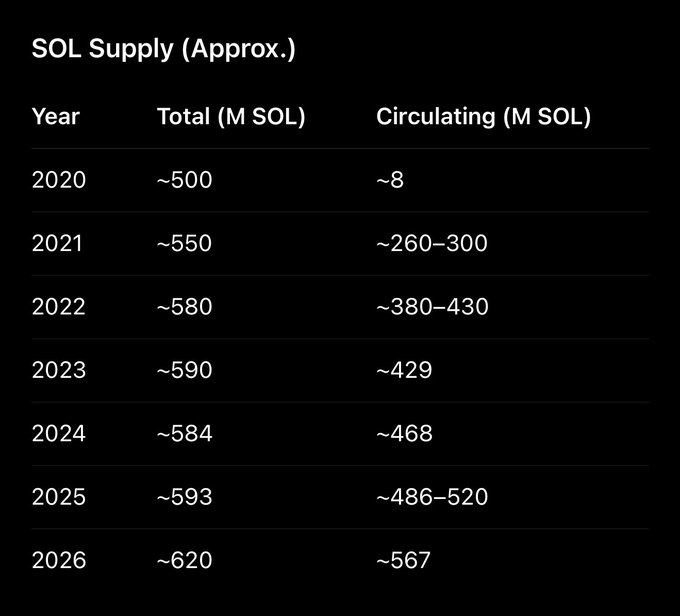
For long-term investors, tokenomics matter just as much as ecosystem growth. Always factor in circulating supply expansion and inflation mechanics when evaluating long-term upside potential.
Fundamentals aren’t just about tech — they’re also about how the token itself behaves over time.
