
Right now, $XRP is trading around the $1.40 zone on the 1-hour timeframe, and the structure is quietly becoming interesting. On the surface, it looks like a simple short-term recovery. But when you break it down technically, you start to see early signs of momentum attempting to shift.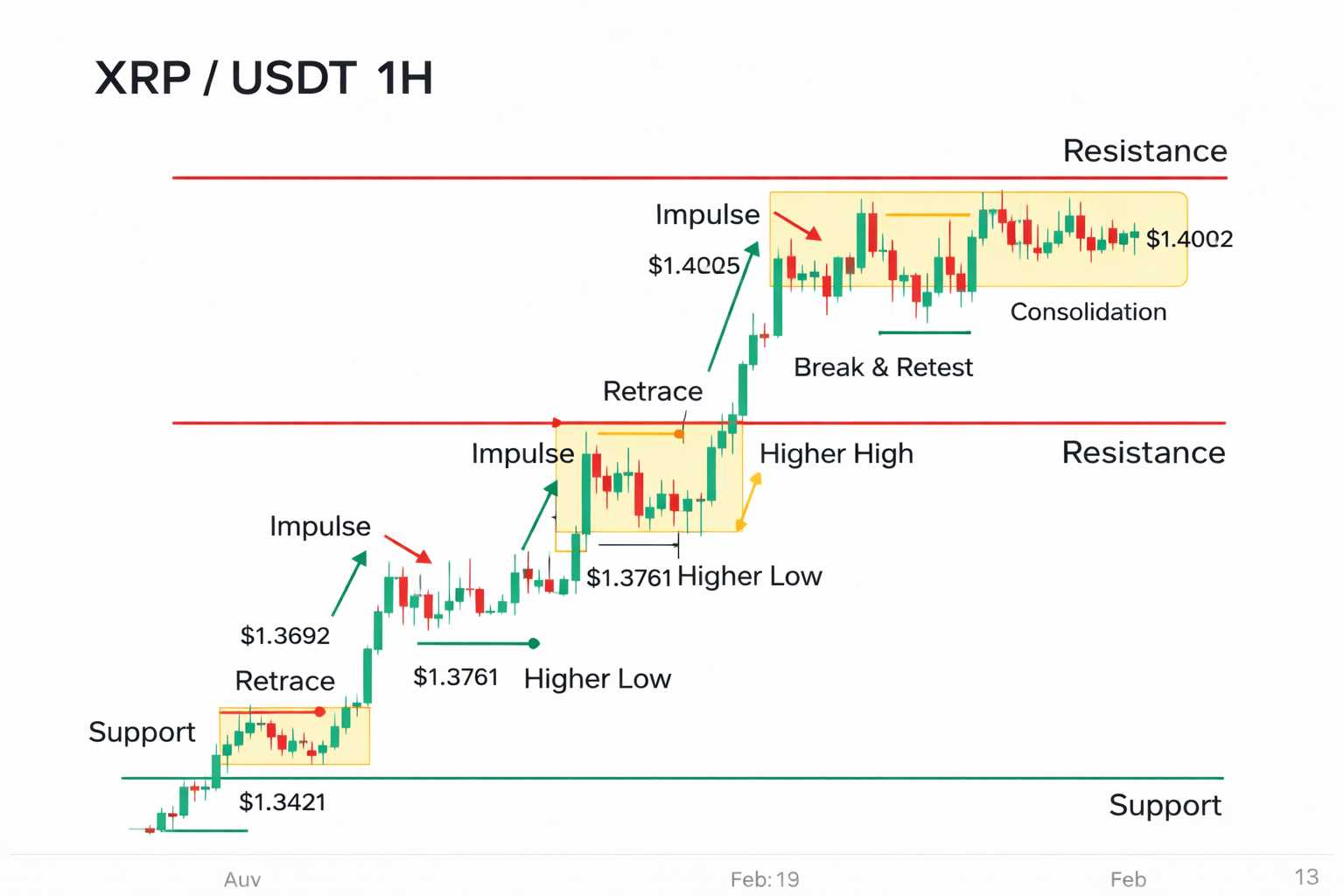
Price recently bounced from the $1.34 area and is now reclaiming short-term moving averages. The MA(7) is curling upward, MA(25) is flattening, and price is attempting to push toward the longer MA(99), which often acts as dynamic resistance in corrective phases. At the same time, MACD is crossing into positive territory, and histogram bars are expanding — signaling improving short-term momentum.
Now, here’s where education matters.
Short-term momentum shifts do not automatically equal trend reversals.
On lower timeframes, relief rallies are common — especially after sharp drops. The key question is whether this bounce can build structure: higher lows, sustained volume, and a break above key resistance.
Right now, XRP is testing an early resistance zone around $1.40–$1.41. If this level gets rejected with volume fading, it could simply be a corrective move inside a broader consolidation. If price holds above it and builds a higher base, then momentum may extend further.
This is where traders often make mistakes.
They see green candles and assume breakout. They see MACD turning positive and assume new trend. But indicators confirm what price has already done — they do not predict what it will do.
The first lesson here is understanding timeframes.
The 1-hour chart shows short-term momentum. The daily chart determines structural direction. Always align lower timeframe entries with higher timeframe context. If the daily trend remains weak, aggressive long exposure on short-term signals carries more risk.
Second lesson: moving averages are dynamic tools, not magic lines.
Price reclaiming MA(7) and MA(25) suggests short-term strength. But MA(99) overhead may act as resistance. Markets often stall at longer moving averages before choosing direction.
Third lesson: MACD shows momentum, not certainty.
Positive histogram expansion indicates buyers are stepping in. But momentum can fade quickly if volume does not support continuation.
Now let’s talk about what to do if the market turns against you.
If XRP fails to hold above $1.40 and drops back toward $1.34 support, do not panic. Instead, assess structure. Does it form a higher low? Or does it break previous support decisively?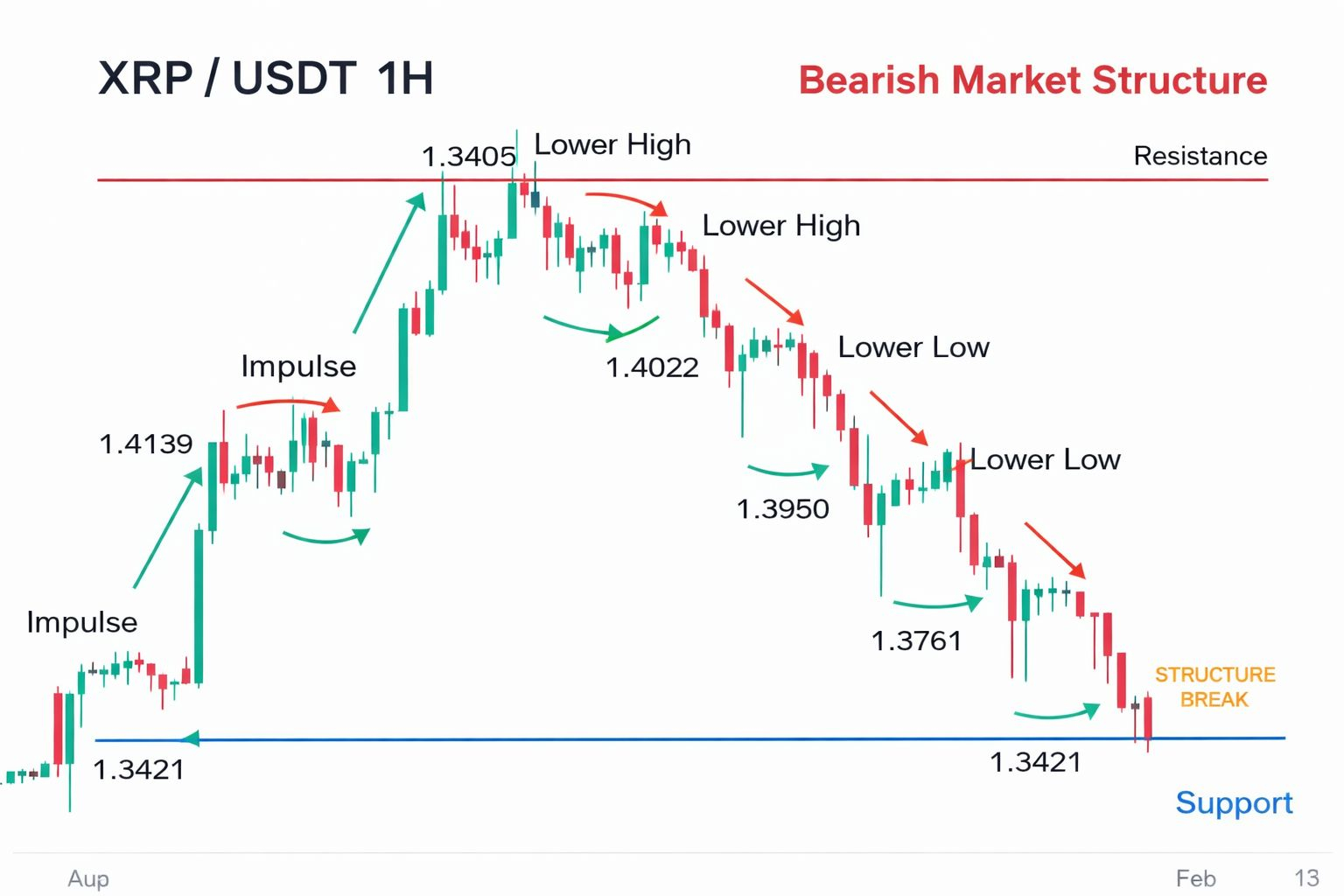
If key support breaks:
Reduce leverage immediately.
Do not average down blindly.
Reassess your thesis before adding exposure.
Leverage is the fastest way to turn manageable corrections into permanent losses.
If you are trading short-term:
Always define invalidation before entry.
If you enter near $1.40, know where you exit if structure fails.
Never enter without predefined risk.
If you are investing longer-term:
Position sizing matters more than entry precision.
Never allocate capital that would emotionally destabilize you if price drops 30–50%.
Another educational point is liquidity and volume.
Volume spikes during breakouts are more reliable than breakouts on weak volume. Right now, volume appears moderate. For a sustained move, participation must increase.
Now zoom out psychologically.
When markets bounce after weakness, traders experience relief. Relief often turns into premature optimism. That’s when risk management fades.
Ask yourself:
Is this structural accumulation or just short-term relief?
Is macro liquidity supportive right now?
Is broader crypto sentiment improving or still fragile?
Education means asking better questions before increasing exposure.
If markets go bad again, your survival plan should already exist.
Lower correlated exposure.
Diversify across assets.
Keep part of your capital liquid.
Avoid emotional decision-making during volatility spikes.
One of the biggest mistakes during uncertain phases is overtrading. Every small candle looks like opportunity. That behavior increases fees, increases stress, and reduces clarity.
Strategic patience often outperforms constant action.
Here’s my balanced view:
XRP is showing short-term signs of life. Momentum is attempting to shift. But it’s still within a broader structure that requires confirmation. A true structural shift requires sustained higher highs and higher lows — not just a one-hour bounce.
The opportunity, if it exists, will not disappear in a single candle. Real breakouts give multiple confirmations.
Your job isn’t to predict the next candle.
Your job is to manage risk so that if you’re wrong, the loss is small — and if you’re right, the gain compounds.
The strongest traders are not the ones who guess direction perfectly. They are the ones who survive wrong calls without emotional damage.
Markets reward preparation, not excitement.
Right now, $XRP is at a short-term inflection point. Whether it becomes continuation or rejection depends on structure, volume, and discipline.
And your success depends less on what XRP does — and more on how you respond when it does it.
