🔥Imagine opening your crypto app one day and seeing thousands of Bitcoin suddenly appear in your wallet — worth millions of dollars.
For a short, wild moment in February 2026, hundreds of users on Bithumb (one of South Korea's biggest crypto exchanges) thought they had won the lottery.
But it wasn't real Bitcoin, and it wasn't a hack. It was one of the most expensive typos in history.
In February 2026, one of South Korea’s largest cryptocurrency exchanges — Bithumb — experienced an incident that briefly created what looked like over $40 billion worth of Bitcoin inside its system.
There was no hack.
There was no blockchain exploit.
There was no secret minting of BTC.
🕵️It was a human mistake.
🙈A Typo.
🔥Worth 620,000 BTC
Its called "The Fat Finger Syndrome " and it is not the first time its happening. There were cases in the Fiat Market and Crypto Market, too.
The difference is that when this happens in a bank, their transactions and verifications take up to 2-3 days, and by then the mistake is caught, while in crypto this happens in seconds, so if the mistake is not caught right away, it is harder to return the money.
And it exposed something deeper about how centralized exchanges actually work.

What Actually Happened
Bithumb was running a small promotional event — a “Random Box” giveaway.
The intended reward was minor:
about 2,000 Korean won (~$1.40) per user.
Instead, due to an internal configuration error, the reward type was set to Bitcoin (BTC).
The result?
The exchange’s internal ledger credited users with enormous BTC balances — totaling roughly 620,000 BTC across accounts. On paper, that equated to more than $40 billion at the time.
These were not real Bitcoin on the blockchain.
They were internal accounting entries — numbers inside Bithumb’s database.
But inside a centralized exchange, internal balances are enough to trade.
And that’s where the real damage began.
These weren't real Bitcoin moved on the blockchain.
They were just numbers updated in Bithumb's own internal computer records ,their Ledger.. The exchange didn't actually have that much Bitcoin to send.
They were "phantom" or "ghost" balances — call them ghost coins or fake BTC, but the demage they did was very real !
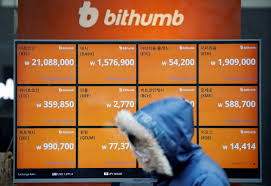
How “Fake” Bitcoin Became Real Money
This is the part that unsettles people.
On a centralized exchange:
Trading happens inside the company’s internal ledger.
Coins don’t move on-chain for every transaction.
The system simply updates balances between users.
So when users suddenly saw massive BTC balances, some acted fast.
They placed sell orders.
Other users — unaware of the glitch — bought that BTC using real Korean won.
The exchange matched those trades internally:
Seller’s BTC balance decreased
Seller received real fiat in their account
Buyer received the BTC balance
For about 20–35 minutes, the system processed these trades normally.
Before the issue was frozen:
~86 users managed to sell around 1,788 BTC
Estimated realized value: $9–13 million
The fiat those sellers received was real.
Once Bithumb reversed the phantom BTC balances, buyers were left exposed — and the exchange had to absorb the losses.

This Wasn’t a Hack. It Was a Structural Reality.
Many people ask:
“How can an exchange allow more Bitcoin to exist than it actually holds?”
The answer is uncomfortable but simple:
Centralized exchanges operate on trust and internal accounting.
They do not verify on-chain reserves before every trade.
That would make trading far too slow.
Instead, they rely on internal risk controls, monitoring systems, and operational safeguards.
When one of those safeguards fails — even briefly — trades can execute based on incorrect internal data.
So, again , I ask :
⁉️🤔❓How Could People Sell These Fake Coins?
👉 This is the part that confuses everyone — and it's scary.
Crypto exchanges like Bithumb let users trade inside their own system without always moving real coins right away.
- When a user saw the huge fake balance, they could quickly place a sell order on Bithumb's trading page (e.g., selling BTC for Korean won).
- Another real user (a buyer) would match that order and pay with their own real money or crypto.
- The exchange just updated the numbers in its notebook:
- Seller's fake BTC goes down → Seller gets real won in their account.
- Buyer's real money goes to the seller.
- The seller could then withdraw that real won to their bank — fast!
In those 20–35 minutes before Bithumb noticed and froze everything:
- About 86 users sold roughly 1,788 BTC worth $9–13 million.
- Those sellers got real money.
- The buyers who paid real money for the fake BTC ended up with worthless balances once the error was reversed.
- Bithumb had to cover the missing $9+ million with its own funds (no user losses from the reversal, but innocent buyers lost out during the chaos).
It caused a brief flash crash on Bithumb — Bitcoin's price dropped 16–17% on their platform while staying normal everywhere else.
South Korea's regulators are investigating, and the exchange is chasing the sellers to return the money (under "unjust enrichment" laws — you can't keep something given by clear mistake).
🤔How Is This Even Possible?
Centralized exchanges work on trust:
- They keep a private ledger of what everyone "owns."
- Trading happens instantly inside that ledger for speed and convenience.
- They don't always check "do we really have this much Bitcoin?" before every internal trade (that would be too slow).
- One wrong setting or typo in a promo tool can create fake supply — and people can trade it until the mistake is caught.
Real Bitcoin lives on the public blockchain — nobody can just add extra there. But on an exchange, your balance is just a promise from the company... until it's not.
The Real Risk: Human Error
I’ve said this for years:
User mistakes are the hardest risk to defend against.
Not hackers.
Not blockchain bugs.
Not market volatility.
Humans.
One wrong dropdown selection.
One misconfigured promotion tool.
One unchecked deployment.
In high-speed financial systems, that is enough.
You can build layers of automation, alerts, and multi-signature approvals — and major exchanges do — but no system is immune to operational error.
Why This Doesn’t Happen Everywhere, All the Time
Most large exchanges today implement multiple layers of protection designed specifically to prevent this type of event from escalating:
Pre-trade price band validation
Abnormal balance change detection systems
Credit and withdrawal limits tied to real reserves
Multi-approval workflows for promotional payouts
Circuit breakers for extreme volatility
Real-time reconciliation between internal balances and cold storage holdings
In many cases, abnormal credits would trigger automated freezes within seconds.
The fact that Bithumb’s incident lasted long enough for trades to clear suggests that at least one risk-control layer either failed or was not configured tightly enough.
That’s not unique to crypto. It’s a feature of any fast-moving financial system.
Could This Be Used to Manipulate Markets?
In theory, exploiting internal accounting errors could create temporary distortions — especially in thin order books.
But there are limits:
Phantom balances cannot exist on the blockchain.
They are confined to the exchange where the error occurs.
Cross-exchange arbitrage quickly exposes mispricing.
Regulators can pursue unjust enrichment claims.
On-chain movements remain traceable.
This wasn’t someone secretly printing Bitcoin.
It was a localized internal ledger malfunction.
I understand all this, but still THIS IS A DANGEROUS VULNARIBILITY that can be used for market manipulation even if this time it was clearly simple mistake.
The Bigger Lesson
Crypto markets often appear chaotic.
But this incident wasn’t about blockchain weakness.
It was about centralized infrastructure.

When you trade on a centralized exchange, you are not interacting directly with the blockchain.
You are interacting with a company’s database.
That database must be perfectly configured.
And when it isn’t — even briefly — the results can be dramatic.
The Bithumb glitch will likely be remembered not as a $40 billion loss, but as a reminder of something simpler:
In markets powered by automation and leverage,
human error scales instantly.
And that is the risk no system can ever completely eliminate.
😅 I wonder what would @CZ say now about the Gold vs BTC debate, his argument that gold is harder to verify as real compared to BTC.
💰People kept posting how gold can be mixed with other metals so you cant verify its purity so easy as oposed to btc that was "REAL without a shadow of a doubt".
🪙Well, I think this case just casted the shadow.
👉 No real BTC was created, but very real money was made from those fake BTC coins sold, even if it was for 15 minutes.
⁉️The trust issues of the users who lived through this -they probably never will look at crypto the same.
🎯Stay Safe, stay vigilant ! Dont touch what is not yours, its not worth to lose your reputation for a one quick chance of scaming !
#BitcoinGoogleSearchesSurge #BTCVSGOLD