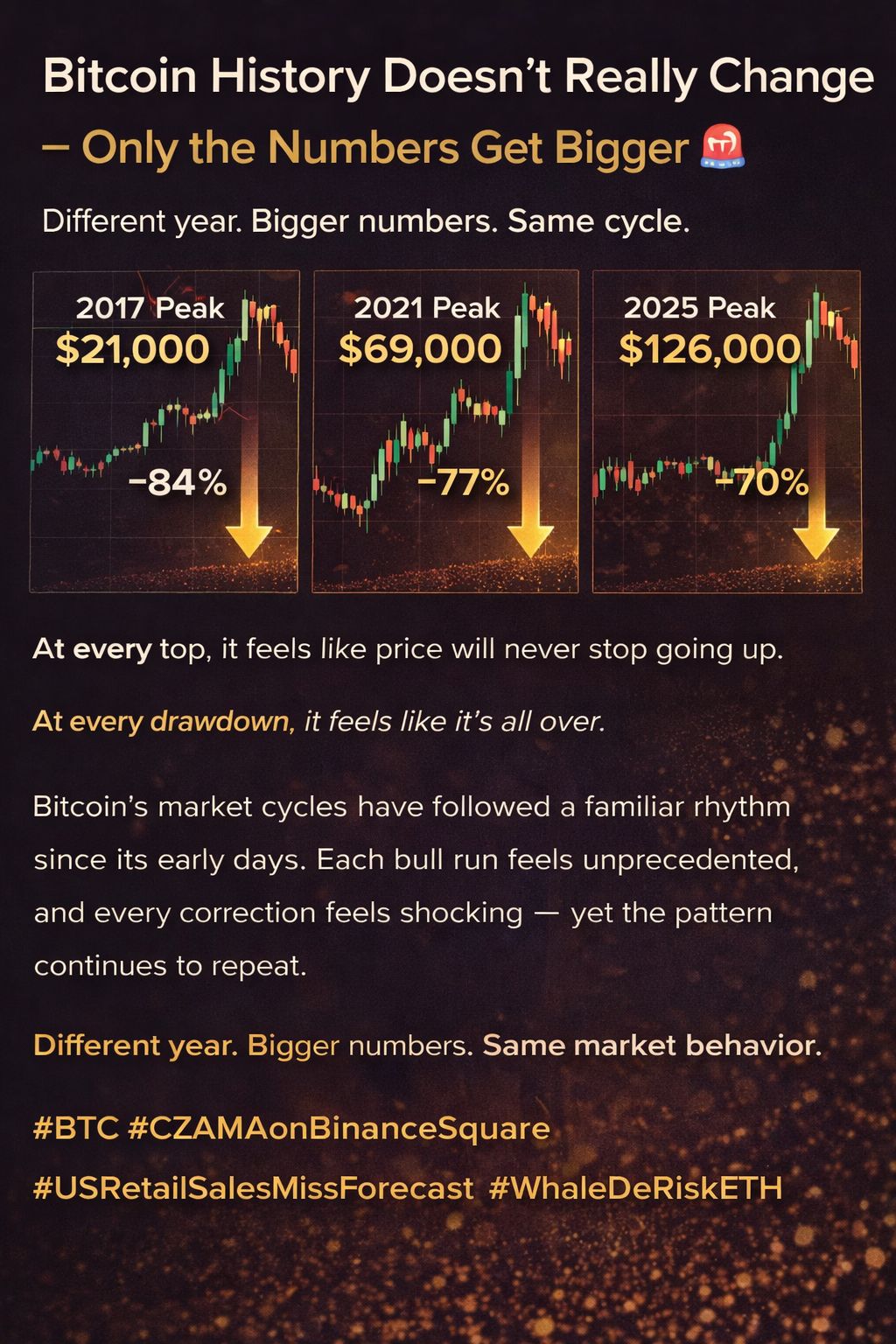
Bitcoin’s market cycles have followed a familiar rhythm since its early days. Each bull run feels unprecedented, and every correction feels shocking — yet the pattern continues to repeat.
In 2017, Bitcoin surged to nearly $21,000, capturing global attention before suffering a brutal 84% correction, shaking out late buyers and cooling speculation across the market.
Four years later, history echoed. In 2021, BTC climbed to a new all-time high near $69,000, driven by institutional adoption, mainstream coverage, and retail FOMO. But the euphoria faded again, and the market corrected roughly 77%, reminding investors how volatile the asset remains.
Now in 2025, Bitcoin pushed even higher, reaching around $126,000 before entering another deep retracement — already down more than 70% from the peak. Once again, optimism at the top shifted quickly into fear and uncertainty during the downturn.
At every cycle peak, investors believe prices will rise indefinitely. Momentum feels unstoppable, narratives strengthen, and new participants flood in expecting easy gains.
Then the correction comes.
Sentiment flips. Headlines turn negative. Doubt replaces excitement, and many start questioning whether the market will ever recover.
Yet over time, Bitcoin has historically followed the same emotional and structural cycle: expansion, euphoria, correction, recovery — and eventually, a new high.
The years change. The price levels grow larger. Market participation expands. But the psychological cycle remains remarkably consistent.
Different year. Bigger numbers. Same market behavior.
$BTC #CZAMAonBinanceSquare #USRetailSalesMissForecast #Whale.Alert