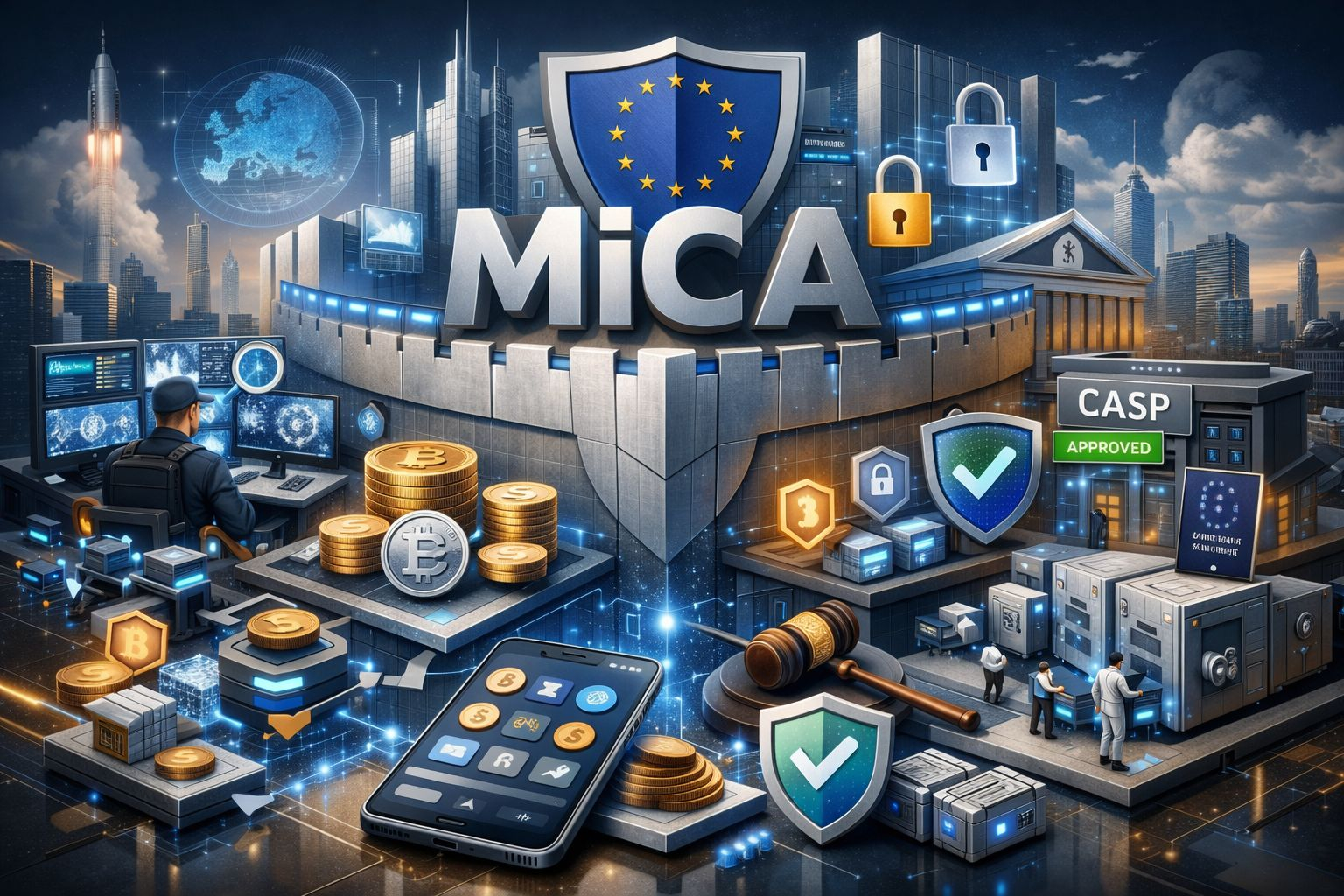
The start of the year 2026 marks a turning point for the European financial landscape with the full implementation of the regulation on crypto-assets, more commonly known by the acronym MiCA. This legislative framework, the first of its kind globally, has transformed an ecosystem once perceived as an uncertain technological frontier into a structured, transparent, and highly secure market. By replacing a mosaic of fragmented national regulations with a corpus of harmonized rules, the European Union has not only strengthened investor protection but has also created fertile ground for institutional innovation.
At the heart of this transformation, the MiCA body stands as the sentinel of this new digital era. Our mission is clear: to regulate fraud in all types of investments and financial products related to digital assets. This analysis examines how legal clarity, supported by our structure, catalyzes the adoption by retail banks, stabilizes assets, and positions Europe as the undisputed leader in global digital finance for decades to come.
Need expertise on your investments?
The MiCA body is at your disposal to secure your investments and prevent fraud risks.
Phone: 04 22 14 07 76
Official website: https://mica.finance/
Contact email: contact@mica.finance
I. The MiCA Body: Building a Market of Trust and Transparency
The MiCA regulation was not born out of a desire for restriction, but out of a strategic necessity to provide legal certainty to market participants while preserving financial stability. Before its introduction, the lack of clear rules hindered innovation and exposed participants to significant operational risks. The framework we advocate is based on three fundamental pillars aimed at stabilizing the ecosystem: protecting crypto-asset holders, ensuring market integrity, and promoting healthy competition among service providers.
One of the most manifest successes of our action lies in the ability to precisely define the object of regulation. A crypto-asset is now defined as a digital representation of value or a right that can be transferred and stored electronically via blockchain or similar technology. This definition is accompanied by rigorous classifications that allow for proportional requirements to be applied to the risks of each asset.
II. A Taxonomic Classification for Operational Precision
To ensure effective regulation against fraud, MiCA categorizes digital assets into three distinct classes, each benefiting from an adapted monitoring regime.
1. Electronic Money Tokens (EMT)
These are crypto-assets aimed at stabilizing their value against a single official currency, such as the Euro. They are primarily used as digital payment means and substitutes for cash. Our role is to ensure that these tokens strictly comply with liquidity reserves to guarantee user reimbursements at any time.
2. Tokens Referring to One or More Assets (ART)
These assets stabilize their value against multiple currencies, commodities, or other assets. They are designed to offer stability through a basket of diversified values. Due to their potential systemic impact, they are subject to particularly rigorous oversight by banking authorities.
3. Other Crypto-assets
This category includes utility tokens, which provide access to a specific service, as well as classic cryptocurrencies like Bitcoin (BTC) or Ethereum (ETH). Although not fitting into the previous categories, they are now subject to strict transparency rules to prevent any market manipulation.
III. The CASP Approval: The European Passport Revolution
The major innovation introduced by MiCA for businesses is the status of Crypto-Asset Service Provider (CASP). This status replaces heterogeneous national registrations with a single approval, opening the doors of the European internal market to any certified entity.
The 'European passport' is the most powerful competitive advantage of this framework. Once a company obtains its approval from the competent authority in its home country, it can offer its services in the 27 member states of the Union without having to apply for new local licenses. The company must submit a complete file demonstrating its financial solidity, governance policies, and cybersecurity measures.
IV. Consumer Protection: Pillar of Restored Trust
One of our body's primary objectives is to transform the experience of the retail investor by providing a level of protection equivalent to that of traditional financial markets. Any public offering of crypto-assets must be preceded by the publication of a detailed white paper. This document must provide honest information regarding risks, costs, and rights associated with the tokens.
A critical aspect of security is the obligation to segregate assets: service providers must ensure that client funds are strictly separated from their own equity. In the event of insolvency, client assets are protected. Furthermore, the introduction of a 14-day right of withdrawal for retail investors allows disengagement from an impulsive purchase without penalty, reducing the impact of aggressive sales techniques and 'pump and dump' fraud.
V. Market Integrity and Abuse Prevention
To be considered mature, the market must be free of manipulation. MiCA transposes the principles of the European directive on market abuse (MAR) to the digital sector. The regulation requires service providers to implement sophisticated systems for detecting suspicious activities.
In 2026, the adoption of automated tools significantly reduced artificial volatility caused by 'wash trading.' Authorities have extensive investigative powers and can impose substantial fines, reaching up to 12.5% of annual turnover, exerting a major deterrent effect on bad actors.
VI. Institutional Adoption and Tokenization
One of the most spectacular impacts is the removal of legal barriers that kept traditional banks at bay. Since 2025, we have witnessed a true 'bank rush.' Institutions like ING Deutschland or BBVA are integrating crypto-asset services directly into their applications, acting as trusted third parties.
At the same time, MiCA paves the way for massive tokenization of the real economy (RWA). Transforming tangible assets like real estate or commodities into digital tokens has become an essential growth engine, with a valuation exceeding €33 billion in 2025. Thanks to MiCA, these tokens are traded on regulated platforms with total security.
Conclusion: Europe, Epicenter of Global Digital Finance
In conclusion, the MiCA regulation has delivered on its promises of transformation. In 2026, the crypto-asset industry in Europe became an essential driver of the digital economy. Thanks to a balanced approach that prioritizes consumer protection without stifling innovation, the European Union has created a global governance model.
The elimination of non-compliant actors has freed up space for healthy businesses. For companies, investors, and citizens, MiCA represents the assurance of a stable, prosperous, and sovereign digital future.
© 2026 MiCA Body - Regulation and Protection of Financial Investments
Expertise and Transparency in Service of Digital Finance.