


There is something happening in the world of blockchain technology that goes completely unnoticed by most people. While everyone is obsessed with prices going up and down, a much more interesting transformation is happening behind the scenes: the construction of infrastructure that really works for everyday applications.
I have been following this movement for a while, and it is fascinating to see how we are moving out of that chaotic experimental phase into something that starts to make sense. The @Vanarchain caught my attention exactly for that reason. It is no longer a generic network trying to serve everything and ending up serving poorly for almost everything. It is a blockchain designed from the beginning for a specific purpose: digital entertainment.
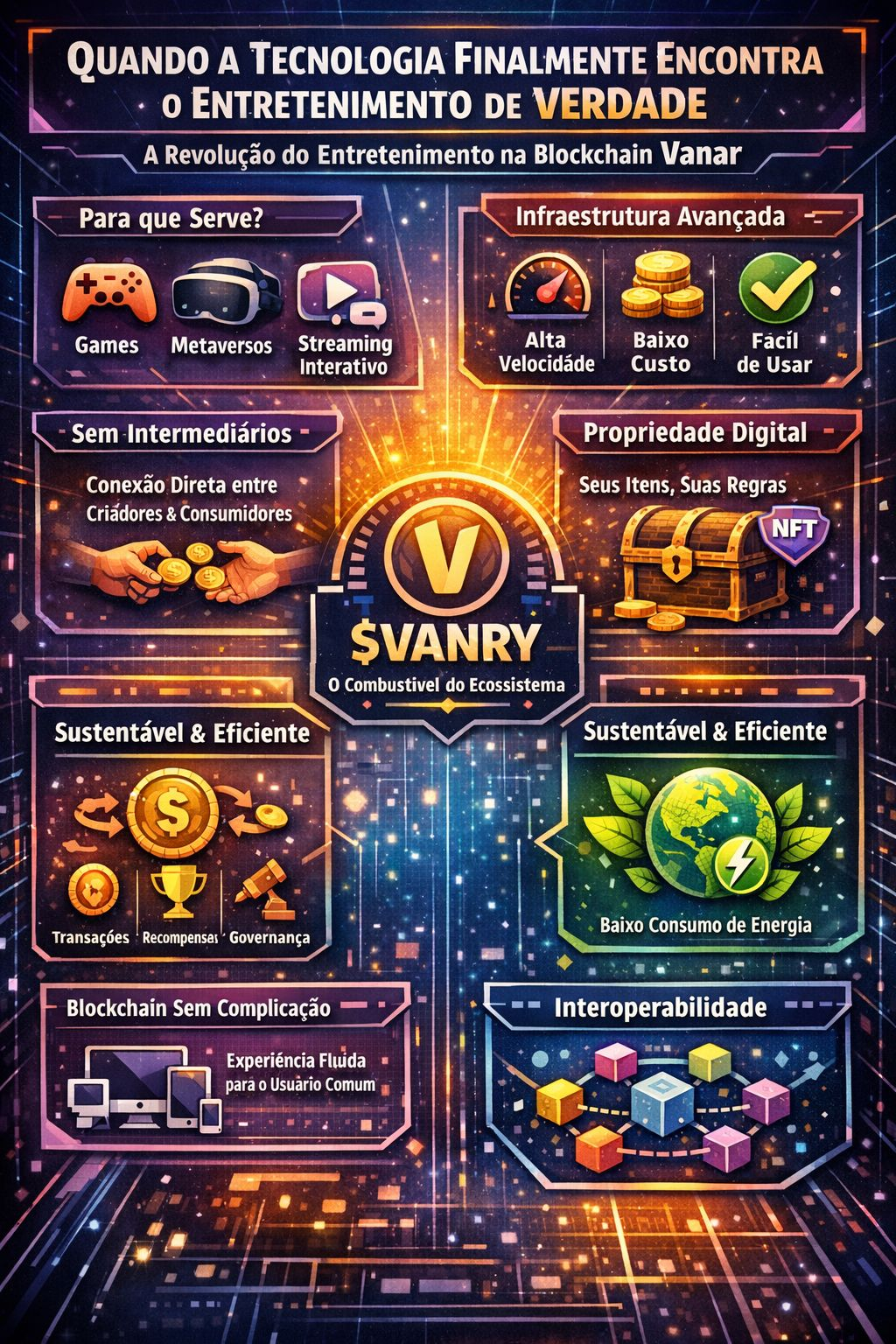
It may seem niche at first glance, but think with me. The gaming industry moves more money than cinema and music combined. Metaverses are no longer science fiction. Interactive streaming platforms are exploding in popularity. And all of this hits the same limitations: people create, invest time and money, but control absolutely none of what they build.
The proposal of #Vanar is to solve the technical bottlenecks that prevent these applications from running well on blockchain. Processing speed, cost per transaction, smooth experience for non-technical users. These are practical problems that no one outside this universe notices, but they make all the difference between a technology that remains on paper and one that people actually use.
What impresses me is the approach. Instead of promising the moon and stars, the focus is on building real partnerships with those already in the entertainment business. Studios, developers, content creators. People who understand the business and know what needs to work. This completely changes the conversation.
O $VANRY enters this story as the fuel that drives this ecosystem. Transactions, rewards, governance. But the most interesting thing is how it enables direct relationships between creators and consumers. No middlemen taking a huge cut along the way. For independent artists and small developers, this can be revolutionary.
There is a technical detail that I think is crucial to mention: the architecture was designed to process thousands of transactions per second while keeping costs extremely low. This is not just nice statistics. It's what allows a game to run without stuttering, a marketplace to function without outrageous fees, a social experience to happen in real-time without annoying delays.
The environmental issue also deserves attention. Older blockchains burn energy as if there were no tomorrow. This new model works with much more efficient consensus mechanisms. It's not perfect, nothing is, but it represents a giant leap. Companies and institutions take this seriously nowadays. Sustainability has ceased to be just talk.
Another point that fascinates me: making blockchain invisible to the average user. The vast majority of people don't want to know about private keys, network confirmations, gas fees. They just want it to work. Account abstraction and transactions without direct costs to the user are essential for mass adoption. Good technology is one that you use without realizing you're using it.
Verifiable digital ownership changes everything. That rare skin you earned in the game? It's truly yours, not owned by the developing company. You can sell, trade, even use it in other compatible games. It seems small, but it completely subverts the logic of how digital assets work today.
I've seen several waves of exaggerated enthusiasm in this market, promises that don't come true, projects that disappear out of nowhere. That's why I value it so much when I see serious construction, with solid technical foundations and a focus on solving real problems instead of just generating speculation.
Interoperability between different blockchains is also advancing. The future will not be one network dominating everything, but several specialized ones communicating with each other. Functional bridges, efficient communication protocols. This creates a much more robust and resilient ecosystem.
We are in a peculiar moment. The technical infrastructure has matured quite a bit, but mass adoption is still crawling. The next few years will define whether these technologies really deliver practical value or remain just another unfulfilled promise. I bet some will positively surprise.
What makes me optimistic is seeing projects focused on real utility, not on empty narratives. Developers creating real games, platforms launching features that people want to use, communities forming around shared experiences. This is so much more interesting than price charts.
In the end, technology is a tool. What matters is what we do with it. And when you combine solid infrastructure with human creativity, interesting things tend to happen.
