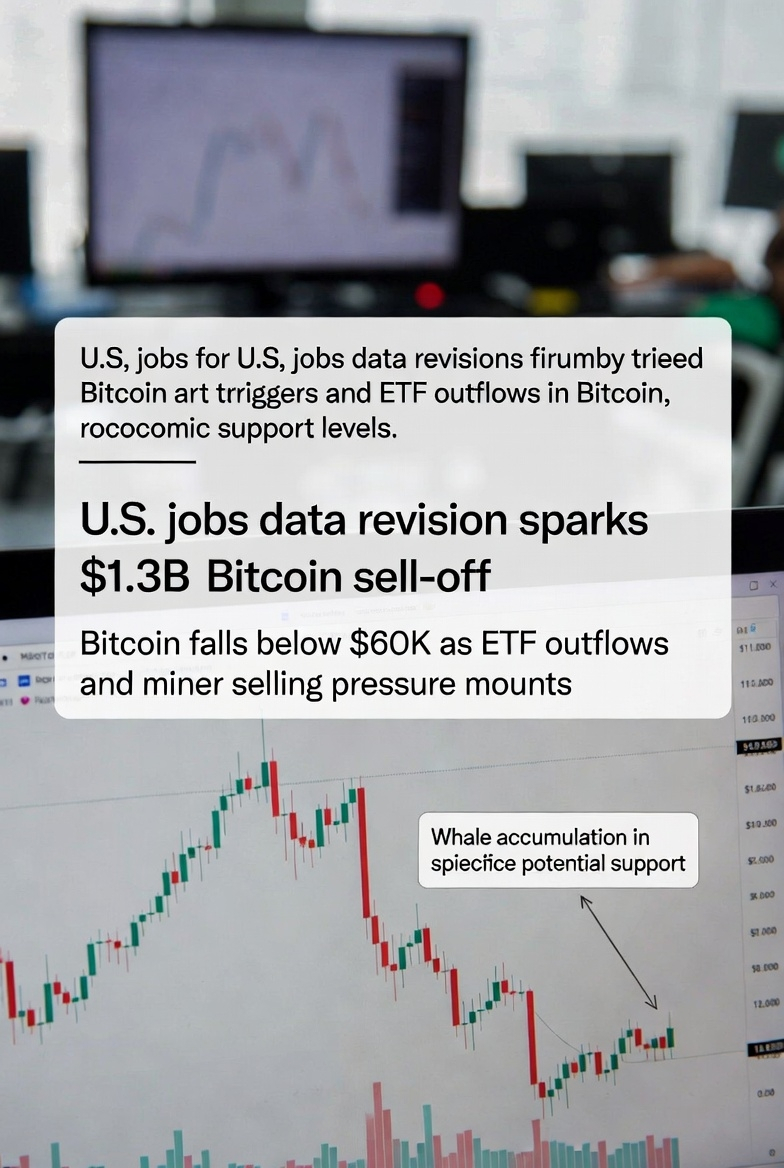
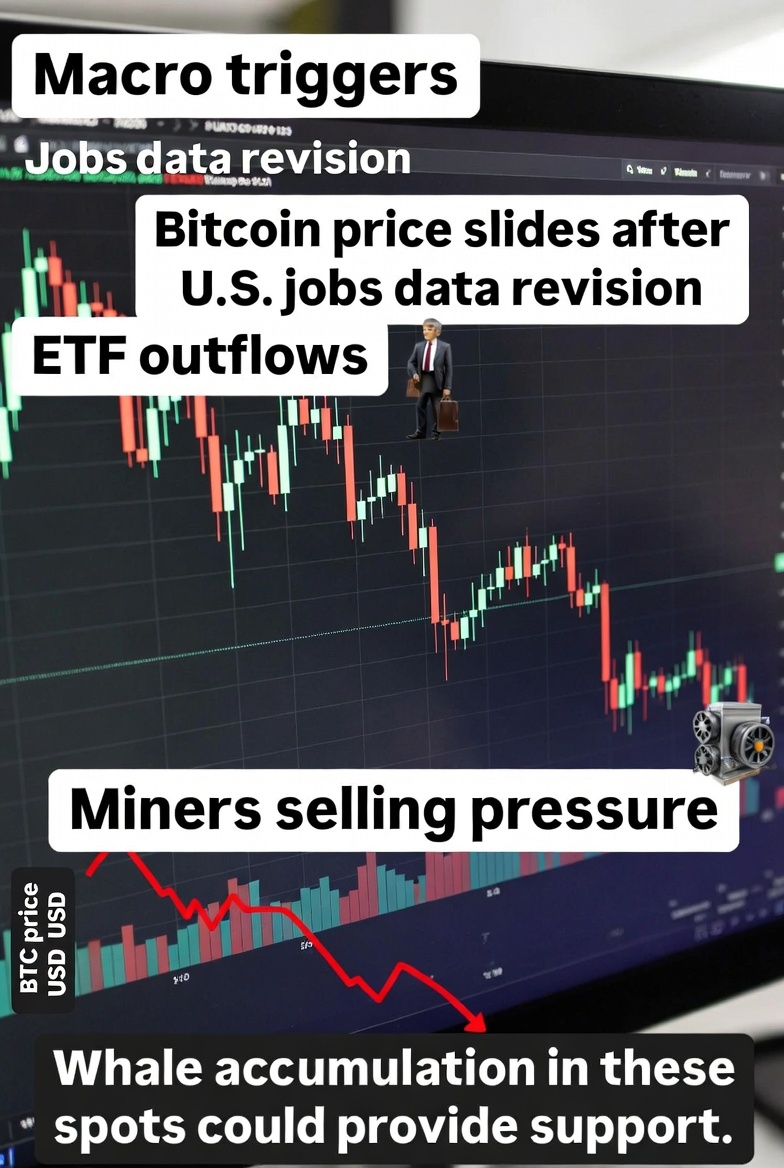
U.S. Jobs Data Got Revised Sharply Lower
The U.S. Bureau of Labor Statistics (BLS) released a big annual revision to last year’s employment data, showing that almost 900,000 fewer jobs were added in 2025 than previously reported. This has forced investors to rethink how strong the labor market actually was over the past year — weakening a key pillar of optimism for risk assets like Bitcoin. �
CryptoSlate
2. Stronger Recent Jobs Report Balance Dampens Rate-Cut Hopes
While the separate January report showed 130,000 jobs added and unemployment at a healthy 4.3%, the fact that the prior year’s employment figures were overestimated has muddied expectations for when the Federal Reserve might start cutting interest rates. A resilient jobs market typically reduces the likelihood of early rate cuts. �
Coinpaper +1
3. Interest Rate Expectations Drive Crypto
Bitcoin is widely treated as a “risk asset” — meaning its price tends to do better in a loose monetary policy environment with lower interest rates and ample liquidity. With rate-cut bets pushed further into the future, traders are less inclined to bid up BTC aggressively, contributing to the current slide. �
Investing.com
4. Broader Risk-Off Sentiment in Crypto
Altcoins including XRP and others are also seeing pricing pressure today, reflecting broader risk-off sentiment in crypto markets. �
bitget.com
🧠 What This All Means
Economic story over the short term:
The big revision to job growth for 2025 has made the labor market appear weaker than earlier thought, which in principle could eventually lead to easier monetary policy.
However, the actual recent data showing steady job growth and low unemployment is keeping the idea of imminent rate cuts at bay — for now.
That mix of signals leads to investor uncertainty, which often shows up as volatility or downward pressure in risk markets like Bitcoin.
Policy expectations matter most:
If markets now price “higher for longer” rates — meaning the Fed holds interest rates steady due to stronger labor data — this typically weighs negatively on Bitcoin and other risk assets.
If future data eventually points toward weakening employment and inflation, that could re-open bets on rate cuts, potentially supporting BTC later.
🔍 Key Upcoming Indicators
Investors will now be watching:
U.S. Consumer Price Index (CPI) inflation data, due soon.
Next employment reports, to see if the trend continues or softens.
Those releases will help shape expectations on monetary policy and risk-asset sentiment in the weeks ahead. �
Investing.com
If you’d like, I can also break down how Bitcoin responds to U.S. economic data historically — just let me know!