
Refunds look simple on the surface. Money goes out, money comes back. But anyone who has worked in payments knows that refunds are rarely that clean. Behind every reversal sits a web of accounting entries, liquidity timing, fraud checks, compliance triggers, and operational coordination. Refunds are not the opposite of payments they are a second transaction layered on top of the first, often under less-than-ideal conditions.
In traditional finance, this complexity is absorbed by institutions. Card networks handle chargeback windows. Acquirers manage settlement timing. Banks reconcile ledgers behind the scenes. The system is built with the assumption that mistakes, disputes, and reversals are normal. Refund logic is embedded into the infrastructure.
In much of crypto, it isn’t.
Refunds Expose the Gaps in Pure Finality
Blockchains prioritize finality. Once a transaction is confirmed, it’s immutable. That’s powerful for settlement assurance, but it doesn’t automatically solve real-world commerce problems. A final transaction can still be wrong. A duplicate charge can still occur. A service can still fail to be delivered.
When refunds aren’t structurally accounted for, they become informal workarounds: manual transfers, ad-hoc smart contract interactions, off-chain coordination. The ledger remains clean, but the operational burden increases. What looks elegant at the protocol level becomes messy at the business level.
This is where the hidden complexity shows up. Refunds are not just about reversing value. They are about restoring state accounting state, inventory state, liquidity state, and often legal state. A system that ignores this reality may settle quickly, but it doesn’t resolve disputes cleanly.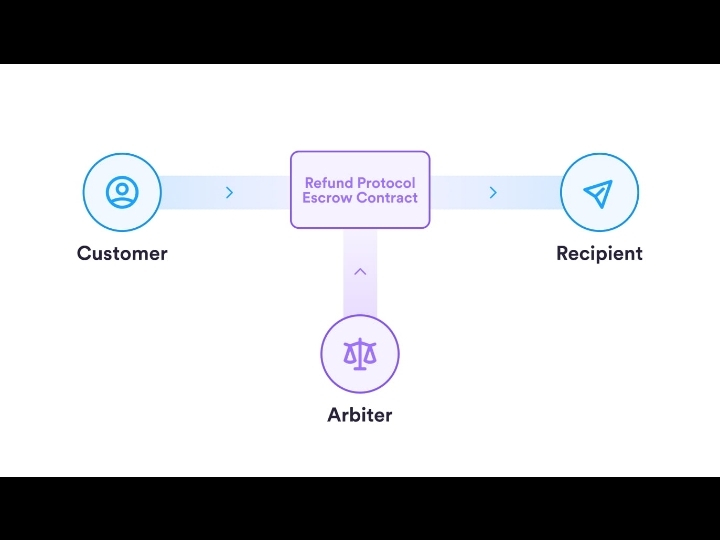
The Liquidity Problem
One of the least discussed aspects of refunds is liquidity timing. In traditional systems, merchants often don’t receive funds instantly; settlement windows exist partly to manage potential reversals. In stablecoin environments, funds can settle immediately. That speed is useful, but it shifts refund risk directly onto the merchant.
If refund logic isn’t integrated into the payment flow, merchants must maintain buffers or rely on manual reconciliation. That creates operational friction. Plasma approaches this differently by recognizing that settlement and reversibility are part of the same lifecycle. Refund-aware smart contracts, escrow structures, or programmable refund windows can be designed directly into the transaction logic.
This doesn’t undo finality. It structures it.
Deterministic Execution Matters More Than Speed
Handling refunds properly requires predictability. The system must behave the same way under normal conditions and under dispute conditions. Many blockchains optimize for throughput in ideal environments but don’t explicitly model dispute flows or conditional reversals at the infrastructure level.
Plasma’s stablecoin-first architecture changes that focus. By designing around real financial workflows including refund cycles execution becomes more than just processing transactions quickly. It becomes about maintaining consistent state transitions. A refund is not an anomaly. It’s a recognized pathway.
When refund logic is deterministic, businesses can automate operations. They can build workflows with clear assumptions. They don’t need to invent risk management layers on top of the chain the foundation supports it.
Compliance and Auditability
Refunds often trigger compliance obligations: anti-fraud checks, reporting requirements, and transaction monitoring. If reversal flows are opaque or improvised, auditability suffers. Plasma’s approach where stablecoin flows are transparent, traceable, and integrated with risk tooling aligns refund operations with regulatory expectations.
This matters especially in cross-border contexts. Refunds across jurisdictions are not just financial corrections; they are compliance events. Infrastructure that anticipates this reduces operational uncertainty.
Designing for Real Commerce
The difference between experimental payment rails and financial infrastructure often becomes visible during disputes. Experimental systems optimize for movement. Financial systems optimize for resolution. Plasma leans toward the latter.
By treating refunds as a first-class design consideration rather than a secondary feature, Plasma acknowledges that payments don’t end at settlement. They exist within a broader commercial cycle. Orders can change. Contracts can be amended. Errors can occur. Infrastructure must absorb these realities without breaking.
The hidden complexity of refunds is that they reveal whether a system understands commerce or just transaction processing. Plasma’s approach suggests a deeper understanding: that stablecoin payments are not simply about moving digital dollars quickly they are about managing financial relationships responsibly.
In that sense, Plasma doesn’t just solve refunds differently. It designs around the assumption that refunds are inevitable and builds infrastructure strong enough to handle them.

