

To understand @Vanarchain $VANRY, you must first accept a simple but profound truth: the most valuable thing in this world is not talent, but experience. Raw talent can calculate quickly, analyze problems, but experience accumulates over time—like compound interest. Every decision, every mistake, every success enriches that store of experience. And that accumulated experience ultimately becomes the greatest asset.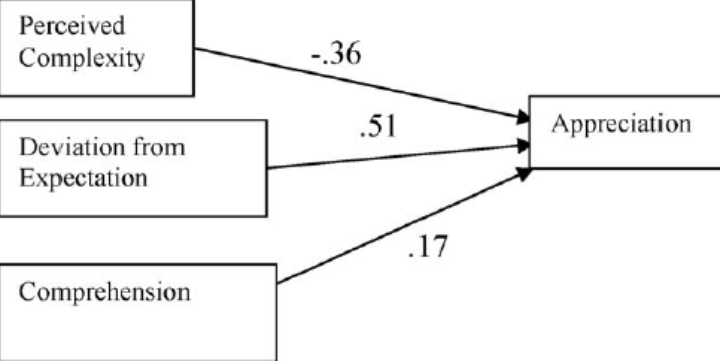
We often see—someone new to higher education gets a well-paid job with a degree. On the other hand, a long-time expert charges a lot more for his advice. The reason for this is not just knowledge; the reason is the depth of real experience. Theory can be learned from books, but the “data” that is created by solving real problems year after year—is invaluable. Experience is actually an asset that becomes stronger with time.
The current state of the AI industry is much like this. Everyone is competing—whose model is faster, whose computational power is more, whose performance benchmark is better. It’s like a race for “brain power.” But Vanar Chain has brought a different perspective. They say that experience, not just processing power, should be at the heart of the competition.
Vanar’s thinking is different here. They don’t see AI as just a tool, but as an entity that can learn, remember, and improve over time. Through their Neutron API, every interaction, every decision, every data point can be stored as on-chain verifiable “memory particles.” That is, the things AI learns are not lost; they are safely stored on the blockchain.
Previously, AI had one major limitation—reset-based operation. When a task is completed, its experience is often disconnected. Each new task means a fresh start. But Vanar has changed this idea. Now AI can work on an accumulation-based model. Each experience lays the foundation for the future. Just like a person gradually builds his career.
The most amazing aspect is that this experience can be transferable. Imagine, you have created an AI Agent, but it is new. It has no real experience. In the future, if you want, you can buy a “memory pack” that is proficient in a specific skill and add it to that Agent. It can go from novice to expert in an instant. It is like installing experience directly.
This is where a new economy is created—the AI Memory Market. Where not just code or model, but experience itself becomes an asset. Just as someone becomes an expert by working in a specific field for many years, AI also becomes valuable based on its accumulated experience. And if that experience is verifiable and on-chain, then its market value is also created.
The current market may not have fully evaluated this potential yet. The token price may be low, the trading volume may be low, the sentiment may be low. But big changes happen like this in the beginning—quietly, silently. Those who understand deeply know that the foundation of the future is laid when the infrastructure is built.
Vanar is actually going through a big transformation. In the past, blockchain projects were often called “shovel sellers”—meaning they just provide tools for others to use. But Vanar didn’t limit itself there. They are building a platform where AI’s experience, skills, and memory become a commodity in themselves. It’s as if they are not just providing tools, but also the infrastructure to create and store “resumes.”
This gives AI the value of time. Usually, in technology, speed is important—who is faster, who is first. But Vanar shows that time is also an asset. The longer an AI works reliably, the more its memory value will increase. This leads the technology to a kind of mature economy.
Suppose we consider 2026 as the year of the explosion of AI agents, then thousands of agents will be doing different things—DeFi, payments, lending, analytics, customer support, and even creative work. But not everyone’s capabilities will be the same. Those with more experience, those with richer on-chain memory resources—will have increased demand. And a strong infrastructure will be needed to store and exchange that experience. Vanar is positioning itself as that archive and talent market.
A major advantage of this type of infrastructure is the high barrier to entry. Because it is easy to write code, but it is difficult to build a secure, verifiable, scalable memory system that lasts for years. The more this infrastructure matures over time, the harder it will be for newcomers to compete.
Another strength of Vanar Chain is its AI-native approach. Here, AI is not an external plugin; it is part of the architecture. As a result, the dApp or Agent does not just complete transactions, but can also learn, analyze data, and use past experience to make future decisions. This combination makes Web3 more intelligent.
The biggest thing is that this idea is not just technical, but also economic. If experience is an asset, it can be staked, rented, licensed. The value of an AI Agent will then depend not only on its code, but also on the depth of its on-chain experience. This will create a new type of business model.
From an investor’s perspective, this is a long-term game. There will be market fluctuations in the short term. Token prices will fluctuate. But those who understand infrastructure-level changes know that the greatest value is created during the foundation building phase. Vanar is building that foundation.
At the same time, it is also important for the community. Because if an AI learns from the community’s interactions and that learning is stored on the blockchain, then the entire ecosystem will mature over time. The participation of every user will increase the value of the future.
Essentially, @Vanarchain VANRY is not just another Layer 1 project. It is an attempt to make AI’s experience part of the economy. Where memory is not lost, but becomes a valuable asset. Where every decision lays the foundation for the future. Where time itself is an investment.
It is a shift in perspective—from computation to experience, from reset to savings, from competition to consequences. If the AI of the future wants to truly achieve human-like skills, it will have to accumulate experience. And Vanar’s goal is to make that savings secure, verifiable, and exchangeable.
Today, many may not fully realize this potential. But history has shown that infrastructure that values time survives. Vanar is on the path to creating that time-based value. And if this path is successful, the AI economy will truly enter a new chapter.
