
Plasma makes the most sense when you stop looking at crypto through the lens of trading and start looking at it through the lens of movement. Real movement. The kind where someone sends money and expects it to arrive quickly without stress without extra steps without needing to understand what is happening underneath. Plasma was built around that simple expectation. It is a Layer 1 blockchain focused specifically on stablecoin settlement which means its purpose is not to chase every trend but to make digital dollars move in a way that feels reliable and human.
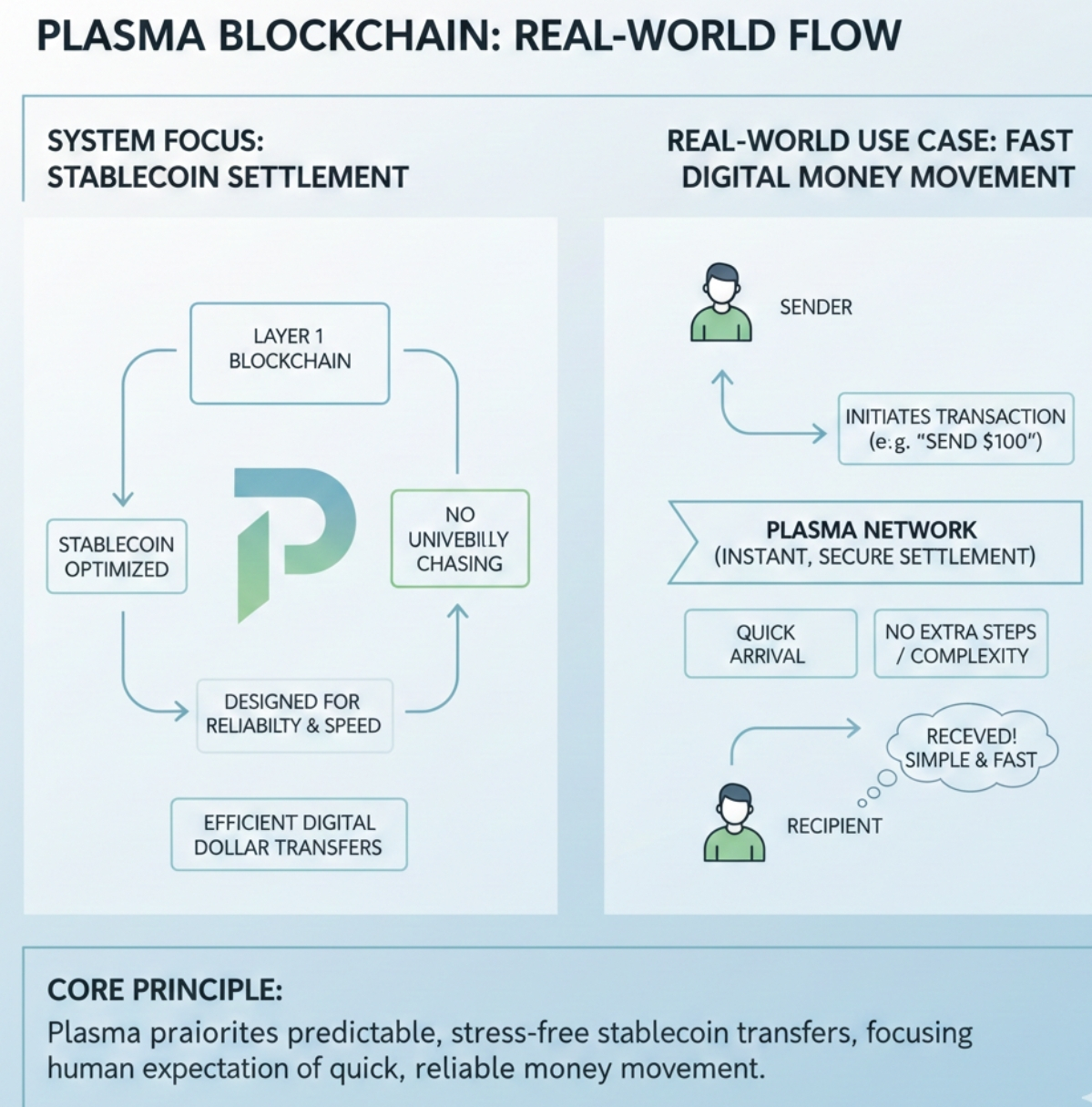
At the foundation Plasma runs with full EVM compatibility so developers can build using tools they already know. This reduces friction for builders and speeds up the creation of real applications. Transactions settle very quickly through its finality model which means users do not sit around waiting for confirmations. Certain stablecoin transfers can happen without requiring a separate gas token which removes a common barrier that confuses new users. Security is strengthened through mechanisms connected to Bitcoin which helps reinforce neutrality and long term resilience. When I look at all of this together it feels like a network designed with a clear question in mind. What would money on the internet feel like if it simply worked.
Most blockchains talk about speed but not all of them talk about usefulness. Plasma feels like it is chasing usefulness. If stablecoins are meant to function as digital dollars then the infrastructure supporting them has to feel dependable. I am starting to see how a chain built specifically for stablecoin settlement from day one ends up feeling different from one that tries to retrofit that idea later. It becomes less about showing off technical features and more about supporting real activity quietly in the background.
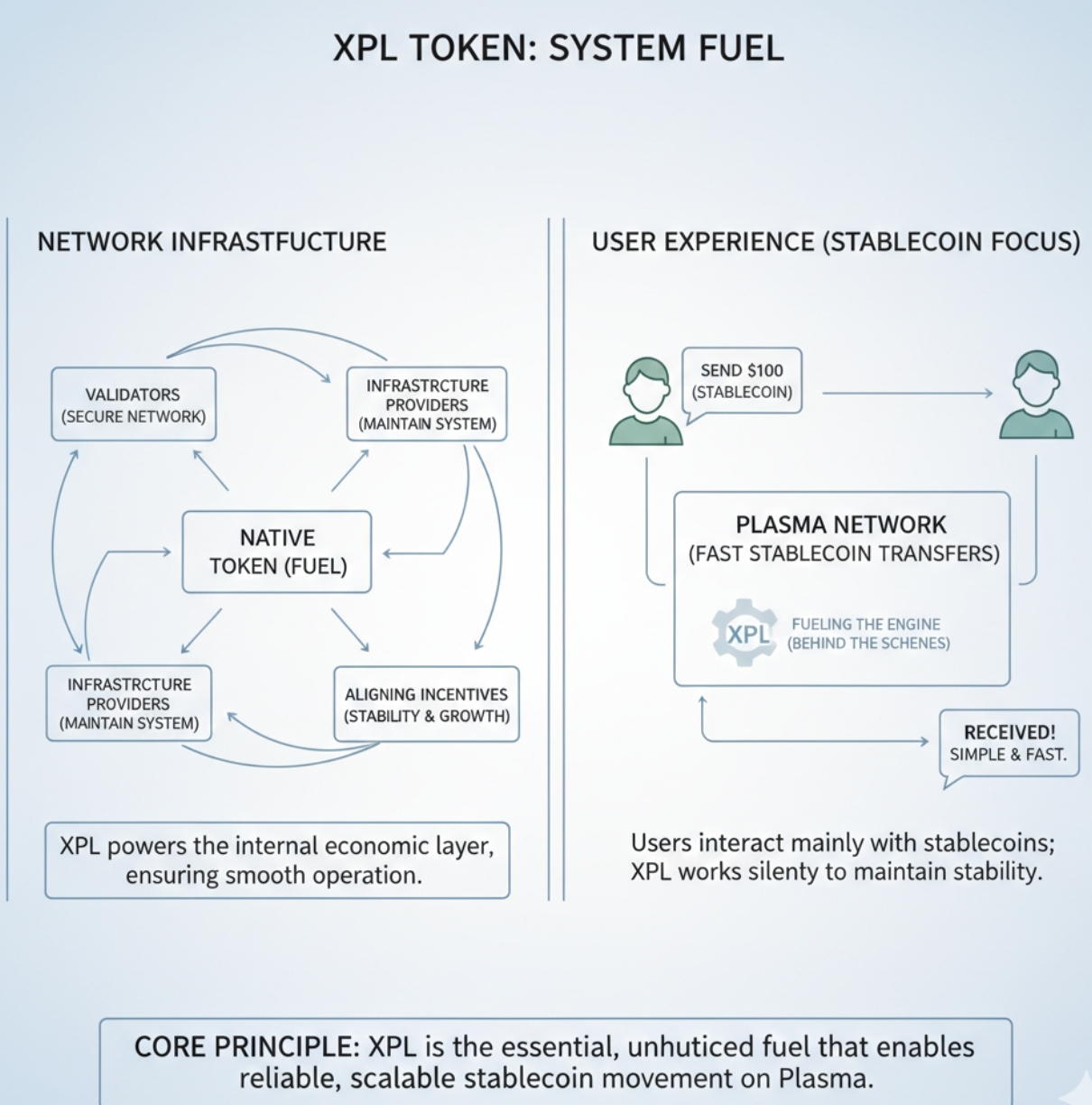
The role of XPL within this system fits into that philosophy. XPL is the native token that helps power the network and align incentives across validators and infrastructure. While users may interact mainly with stablecoins the network itself still needs an internal economic layer that keeps everything running smoothly. XPL supports that foundation without dominating the user experience. It is part of the engine rather than the spotlight. If the network grows and handles more real world payments the importance of that underlying layer grows as well. I find it interesting that in a stablecoin focused environment the native token becomes something like the fuel for a system people may not even notice. It is there to keep everything stable and functioning.
When I imagine Plasma in the real world the story becomes more tangible. I picture freelancers receiving payments from clients across borders without delays. I picture small businesses paying suppliers and settling invoices without worrying about long banking hours. I picture digital platforms where users expect transactions to feel instant because that is what modern experiences demand. If money arrives quickly and predictably the emotional tension disappears. People stop thinking about whether the transaction will work. They trust that it will. That trust is where infrastructure begins to matter.
We are seeing stablecoins move from speculative tools into practical financial instruments. That shift requires networks that can support real usage without friction. Plasma appears to be building itself around that transition. It is not trying to replace everything at once. It is trying to improve the experience of moving value. If sending stablecoins feels as simple as sending a message adoption can grow organically. If reliability holds under pressure confidence builds over time.
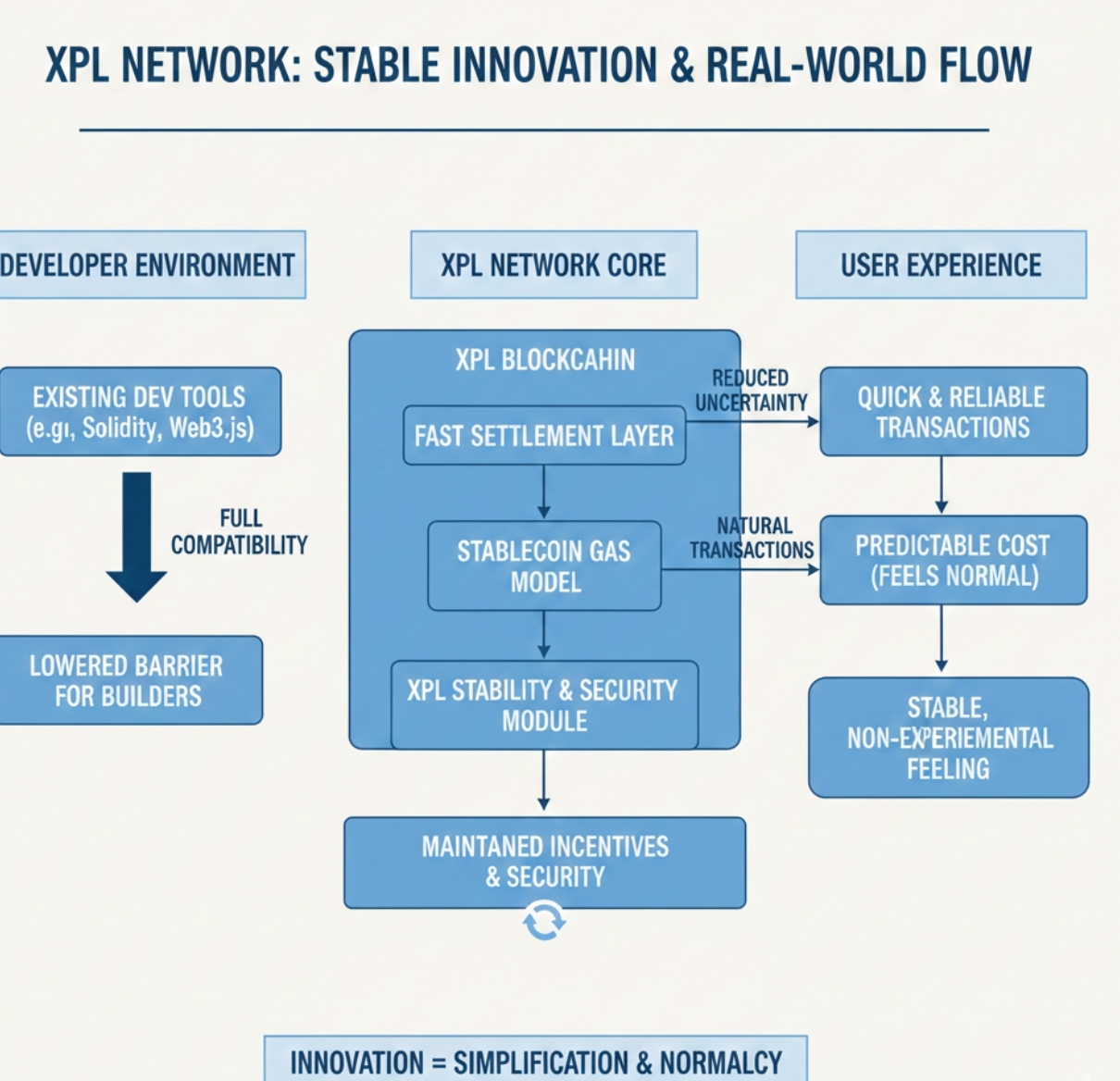
The architecture reflects this practical mindset. Full compatibility with existing developer environments lowers the barrier for builders. Fast settlement times reduce uncertainty. Stablecoin first gas models make transactions feel more natural for users who simply want to send money. XPL supports the network behind the scenes by maintaining incentives and security. Each element works together to create an experience that feels stable rather than experimental. I am realizing that sometimes innovation is not about making things more complicated. Sometimes it is about making them feel normal.
Real progress for a network like this shows up in quiet ways. It appears in steady transaction activity that reflects actual usage. It appears when developers return to build more tools and applications. It appears when businesses begin to rely on the system for payments rather than just testing it. If adoption grows the role of XPL grows with it because the network needs a functioning economic layer to sustain validators and infrastructure. We are seeing stablecoin demand continue to rise globally and networks that can support that demand with reliability will likely become more relevant over time.
At the same time it is important to stay grounded. Every network built around financial movement faces challenges. Regulations around stablecoins can evolve. Competition among different chains remains strong. Technology must prove itself under real world conditions as usage scales. Understanding these risks early helps keep expectations realistic. They are building in a space where trust is earned slowly. If the system performs consistently under pressure confidence will grow. If adoption takes time patience will be necessary. Infrastructure rarely matures overnight because it needs to be dependable before it can be widely used.
When I imagine the long term future I see a network that grows alongside the people who use it. If Plasma continues refining its settlement layer it could become part of everyday transactions without users even realizing which chain is processing their payments. They will simply notice that payments feel instant and reliable. That kind of invisibility is often a sign that infrastructure is working as intended. We are seeing digital finance move toward systems that feel less complicated and more intuitive. If Plasma stays focused on stability and usability it may become one of the quiet layers supporting that future.
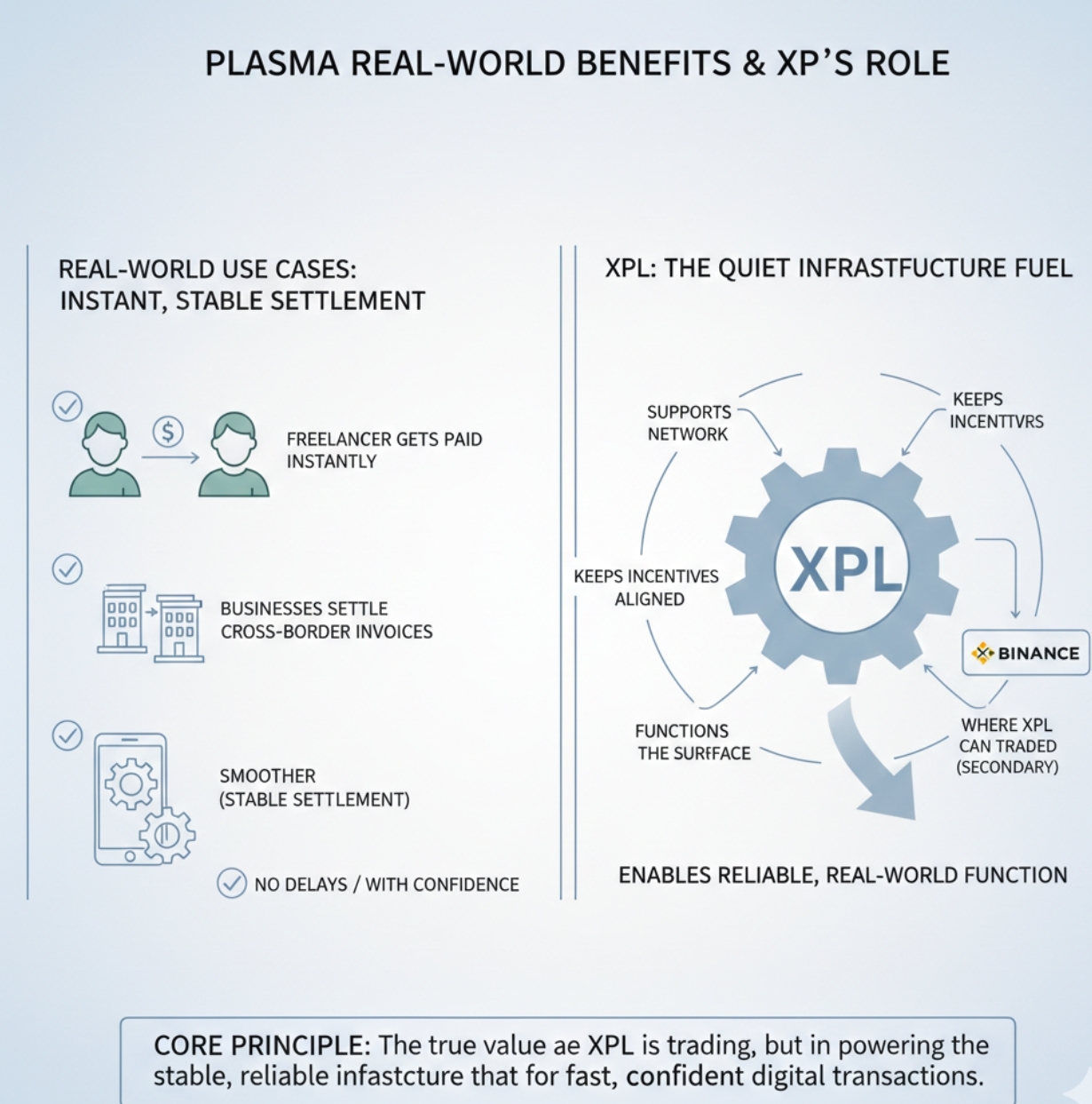
I picture freelancers getting paid instantly without worrying about delays. I picture businesses settling invoices across borders with confidence. I picture applications that feel smoother because the settlement layer underneath them is stable. In that environment XPL continues to function quietly beneath the surface supporting the network and keeping incentives aligned. If someone eventually looks for access to XPL Binance would likely be the exchange they recognize first but the deeper story is not about where a token trades. It is about whether the infrastructure works for real people in real situations.
What stays with me is a sense that Plasma is trying to build something practical and lasting. It is not trying to overwhelm users with complexity or chase attention for its own sake. It is trying to make digital money feel normal. If the system continues to grow steadily and handle real usage it may become one of those networks people rely on without thinking about it. If that happens the impact will be quiet but meaningful. Payments could feel smoother. Businesses could operate with more confidence. People could move value across borders without stress. The technology would remain mostly invisible while the benefits become part of everyday life.

