
Plasma is built around a feeling that most people hide. You open your wallet. You see your stablecoins. You want to send money fast. You want it to be final. You want it to be simple. Then the fear appears. Fees change. The network slows down. The wallet asks for gas. You do not have it. You start doing extra steps that have nothing to do with the person you are trying to help. That is where trust breaks. Plasma begins exactly there. It is a Layer 1 blockchain designed for stablecoin settlement first. Not as a side feature. Not as a marketing line. As the main reason the chain exists. I’m describing it like this because the mission is emotional before it is technical. Stablecoins are already used like real money by real people. Plasma is trying to make the rails match that reality.
The heart of Plasma is a stablecoin first experience. The project is built to be fully EVM compatible so developers can build with Ethereum style tools and contracts. That matters because builders do not want to throw away what already works. They want to move fast with patterns they already know. Plasma uses an Ethereum compatible execution approach and it leans on modern client design so the developer world does not feel foreign. At the same time Plasma focuses on fast finality through its own consensus approach called PlasmaBFT. Finality is the part that turns a transaction into a real payment. A payment is not only sending. A payment is the moment you can breathe and say it is done. They’re aiming for sub second style finality so transfers can feel immediate and certain. If It becomes consistent under heavy load then it can change user behavior. People stop treating stablecoins like a risky tool and start treating them like daily money.
Now come the features that make Plasma feel different. One of the biggest pain points in crypto payments is gas. People hold stablecoins because they want stable value and they want to spend stable value. But most chains force users to keep another asset just to pay fees. That creates confusion for new users and constant friction for everyone else. Plasma pushes a stablecoin centric model that includes gasless USDT transfers and stablecoin first gas. Gasless transfers are meant to remove the moment where you have money but you cannot move it. Stablecoin first gas is meant to remove the moment where the fee system feels like a separate world. This is not only convenience. It is respect for time and for dignity. We’re seeing a design that tries to make the user experience feel like sending money should feel. Simple. Predictable. Calm.
Plasma also includes a security and neutrality direction that it describes as Bitcoin anchored. The point here is not only speed. The point is credible neutrality and censorship resistance as the chain grows. Payments create pressure. A settlement network that succeeds will be tested by the world. It will face attempts to control it. It will face political pressure. It will face economic pressure. Plasma is trying to strengthen its long term story by tying its security vision to Bitcoin and by building a bridge and verification path that aims to be trust minimized and increasingly decentralized over time. If It becomes truly decentralized then it can add a layer of confidence that is hard to fake. It becomes a system people trust not because it is popular but because it is hard to capture.
Plasma is designed for two major user groups and that is important. One group is retail users in high adoption markets where stablecoins are already used for daily needs. These users care about sending money fast with low friction. They care about not being blocked by fee mechanics. They care about wallets that work on weak devices and unstable networks. They care about a payment that finishes quickly and does not create stress. The second group is institutions in payments and finance. These users care about reliability. They care about operational simplicity. They care about predictable settlement and clear performance. They care about risk management and integration. Plasma is aiming to serve both groups by removing friction rather than adding complexity. That is a disciplined strategy. It forces the chain to stay focused on stablecoin settlement even when trends try to pull attention away.
This is where XPL enters the picture. A blockchain needs a native asset for network incentives and for governance coordination. Validators need incentives to run the network. The protocol needs a way to align participants. XPL is positioned as that coordination layer. The key is balance. The user should not be forced to think about XPL just to send stablecoins. The chain can still use XPL to secure consensus and coordinate governance while keeping the stablecoin payment experience simple. If Plasma executes this balance well then XPL supports the system quietly while stablecoins remain the main user experience. That is how serious payment infrastructure should feel. The complexity stays behind the curtain while the user sees a clean path.
A stablecoin settlement chain must prove itself through measurable progress not just promises. The most important metric is finality time that stays fast in real conditions. Not only on a quiet day. Not only in demos. Real life is messy. The chain must stay stable when volume spikes. The next metric is transaction success rate because failed payments damage trust in a way that is hard to repair. Then comes cost behavior. Fees must be predictable. Users can accept small costs if they are consistent. They cannot accept surprise costs when they are trying to send money under pressure. Then comes uptime and reliability over long periods because payments are not optional. People do not wait for the chain to recover when rent is due or inventory is needed. For Plasma the stablecoin first goals also create specific tracking points. How often can a user send USDT without needing any extra token. How often does the gasless path work smoothly without errors. How quickly do transactions finalize during peak usage. These are the kinds of numbers that reveal whether the system is becoming real infrastructure.
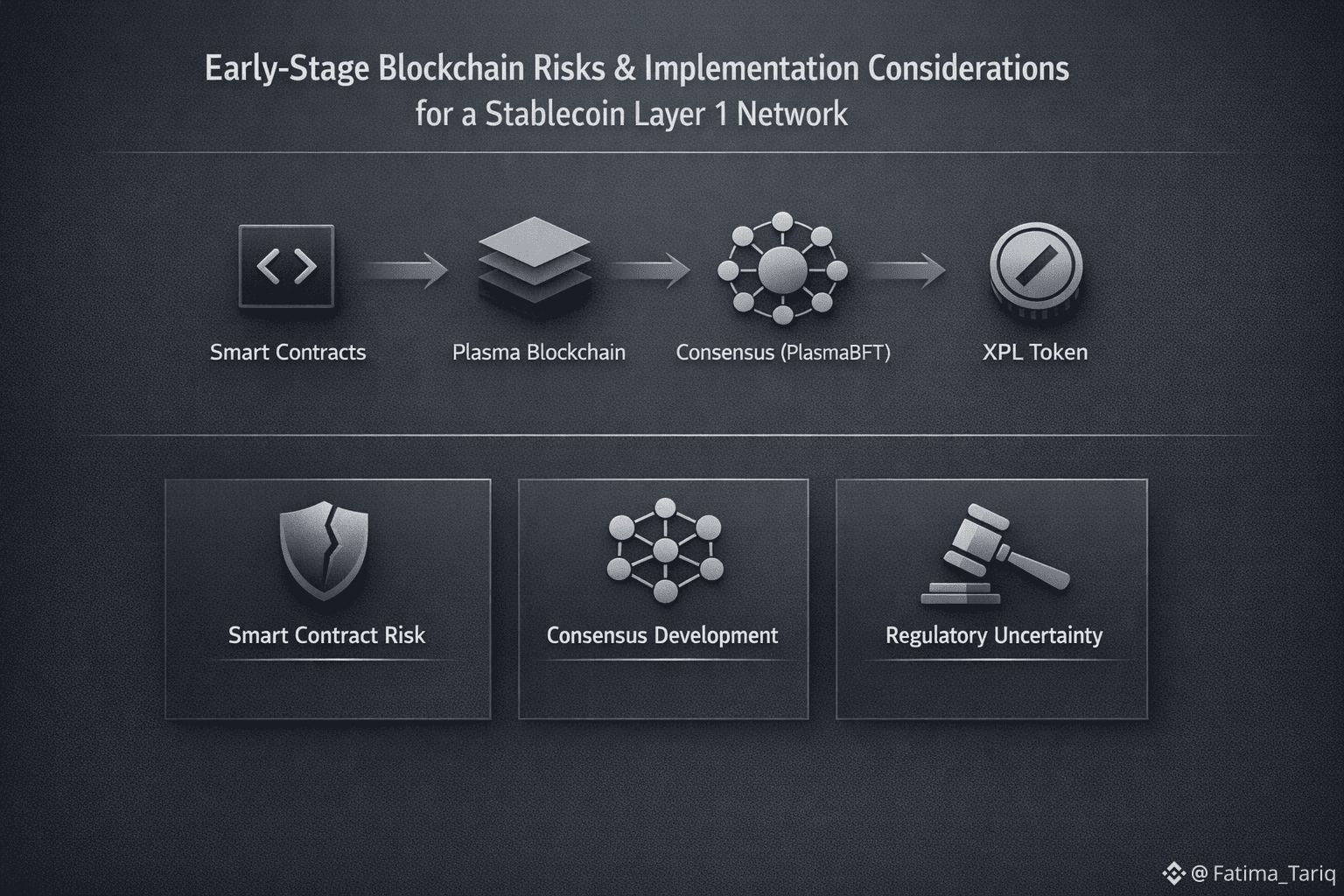
The risks also deserve honest words because payments are high stakes. One major risk is bridge risk. Bridges are historically attacked because they can hold large value and because cross system logic is complex. Any Bitcoin bridge or verification model must be engineered carefully and tested constantly. Another risk is abuse of gasless systems. If transactions are sponsored or abstracted attackers will try to drain those mechanisms. The design must include safeguards and sponsor controls and monitoring. Another risk is centralization drift. High performance networks can quietly become controlled by small groups if participation remains limited. That can weaken neutrality. Another risk is stablecoin dependency. Stablecoins depend on issuers and regulators and banking systems. That means adoption can change due to forces outside the chain. Plasma can build great technology and still face external shocks. None of these risks mean Plasma cannot succeed. They simply define the reality of building settlement rails.
When you think about the roadmap you should think in phases that build trust step by step. The early phase is making the stablecoin experience feel effortless. Gasless USDT transfers must work safely. Stablecoin first gas must be smooth across wallets and apps. Finality must stay fast and consistent. The next phase is scaling under real load. The chain must remain calm during busy periods. The system must reduce failure rates and handle congestion without breaking the user experience. The next phase is decentralization that you can measure. Validator participation should broaden. Governance should remain credible. Client diversity should improve. This is how neutrality becomes real. Then comes integration which is where adoption is truly decided. Wallets must feel natural. Merchant tools must be simple. Payment providers must integrate without fragile workarounds. Institutions must see predictable settlement and clear performance. If It becomes deeply integrated into real payment flows then the chain stops being a concept and becomes a utility.
The deeper vision of Plasma is not only building a new chain. It is building a new default for how stablecoins move. We’re seeing a world where stablecoins are already the bridge between broken systems and global value. Plasma is trying to make that bridge feel safer and faster and easier for everyone. I’m drawn to that because it is grounded. It does not require people to believe in a fantasy. It asks people to notice what is already true. Stablecoins are used because people need them. They’re used because they work. The missing piece has been infrastructure that feels built for them.
If Plasma stays focused and proves reliability and improves decentralization and hardens its security story then It becomes something that can quietly support millions of small moments that matter. A worker getting paid on time. A merchant closing a sale without fear. A family member sending support across a border without losing days and fees. A business settling payments with clarity and speed. That is what real adoption looks like. It is not loud. It is not complicated. It is a simple feeling. The feeling that money moved and it is final and life can continue.

