

Plasma XPL is built around a feeling that millions of people understand in their bones, which is the quiet fear that comes when money is slow, uncertain, expensive to move, or trapped behind rules you never agreed to, and I’m describing it with that emotional weight because Plasma is not really trying to win a beauty contest among blockchains, it is trying to remove the stress from stablecoin settlement by making stable value move with the same smoothness that people expect from modern digital life, while still keeping the foundations strong enough that the system can survive pressure, criticism, and real economic usage that does not forgive mistakes, and the project positions itself as a Layer 1 designed specifically for stablecoin settlement, meaning it is aiming to be a base network where stablecoin transfers and stablecoin centered applications feel natural, predictable, and fast, with full EVM compatibility through an execution layer based on Reth, with sub second deterministic finality through a BFT consensus called PlasmaBFT, and with stablecoin focused features like gasless USDT transfers for simple sending, plus stablecoin first gas so fees can be handled in a way that does not force the user into holding a volatile asset just to function, and those decisions might sound technical at first glance but they are really about human experience, because the difference between a payment that finalizes quickly and one that lingers in uncertainty is not just a statistic, it is the difference between relief and anxiety, between confidence and hesitation, between a tool that feels dependable and a system that feels like it might betray you when you need it most.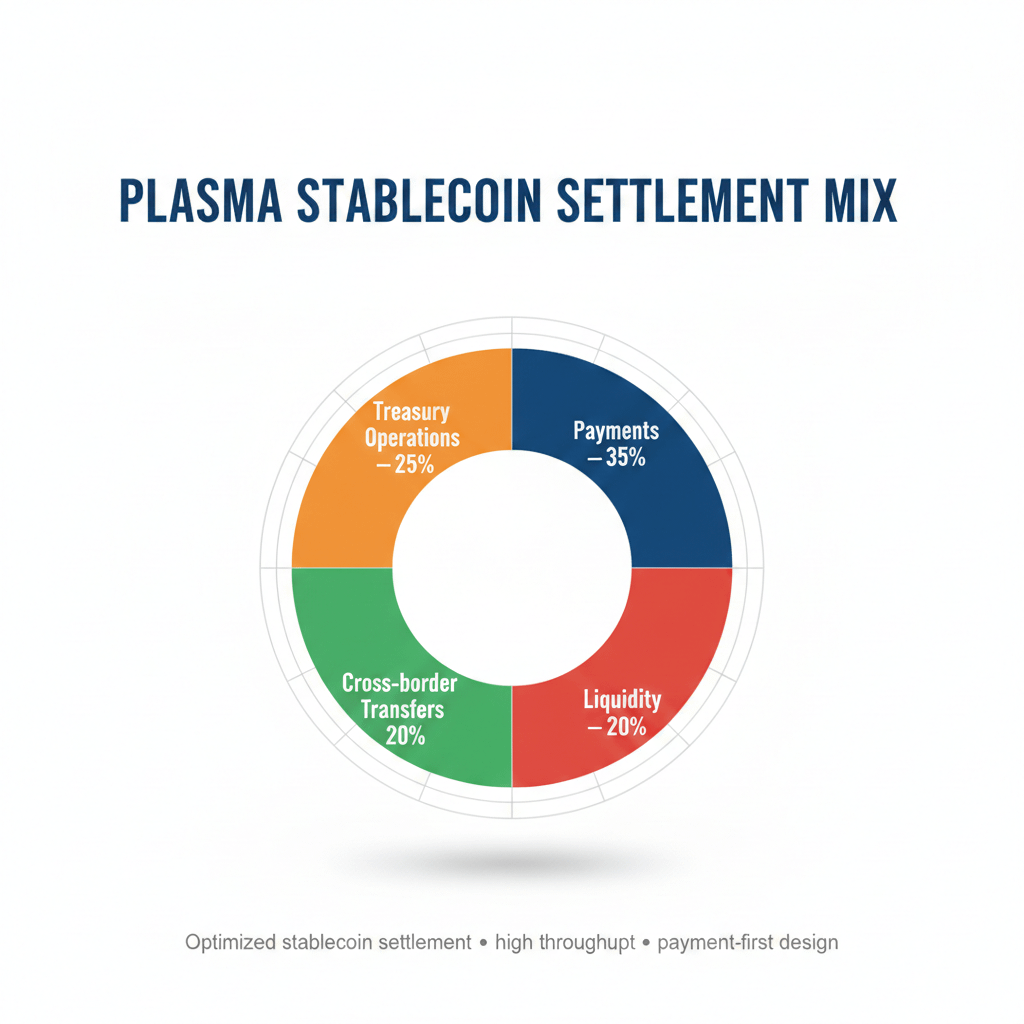
The foundation of Plasma starts with a simple strategic honesty, which is that stablecoins are often used by people who do not want to gamble, and they do not want to learn five new concepts just to do one basic action, and They’re often using stable value because their local reality is unstable, whether that means inflation pressure, limited access to efficient banking, costly cross border transfers, or business cash flow that cannot wait for slow settlement, so Plasma chooses to specialize instead of trying to be everything at once, and that specialization shows up first in how it chooses compatibility, because the project leans into full EVM compatibility using Reth, which means the developer experience is meant to feel familiar to the broad world of Ethereum style tooling, smart contracts, wallets, and integrations, and that matters because the stablecoin economy grows through boring but powerful connections, like payroll rails that run every week without drama, merchant flows that settle consistently, remittance corridors that work even on weekends, and treasury movements that need predictable execution, so by using a familiar execution environment Plasma is telling developers that they can build quickly and deploy confidently without rewriting their mental model, and that reduces the friction that kills adoption before it even starts, because a payments ecosystem is not built on hype, it is built on thousands of small integrations that quietly compound until the network becomes useful, then trusted, then normal.
Where Plasma tries to truly change the emotional experience of settlement is the consensus layer and the way finality is designed to feel deterministic rather than probabilistic, because PlasmaBFT is presented as a Byzantine Fault Tolerant consensus aimed at sub second finality, and the phrase finality sounds cold until you translate it into a human moment, which is the moment you send money and your mind stops racing, because you are not refreshing the screen, you are not worrying about reorgs or confirmations or delays, you are simply done, and this is why the choice of a fast BFT approach matters so much for the chain’s identity, since the project is not chasing novelty for its own sake but chasing a form of certainty that payments require, and If a settlement layer wants to be taken seriously by institutions and also loved by everyday users, it has to earn the right to be boring in the best way, meaning it has to be reliably final when it claims to be final, consistently fast when people are actually using it, and predictable under stress rather than only impressive in perfect lab conditions, because in payments the worst case experience often defines the reputation, and one painful delay can outweigh a hundred smooth transfers in the memory of a user who needed that money to arrive on time.
The stablecoin first features are where Plasma tries to remove the small humiliations that stop adoption, because one of the most common failures in the stablecoin world is the moment when someone holds stablecoins yet cannot move them, not because they lack value but because they lack the separate gas asset required to pay fees, and that feels like being locked out of your own wallet by a hidden rule that was never explained in plain language, so Plasma emphasizes gasless USDT transfers for simple transfers as an onboarding path designed to remove that trap, and the intention here is not to pretend that security is free but to sponsor the simplest stablecoin action so the first experience feels empowering rather than confusing, while more complex smart contract activity still carries fees that reward validators and support the economics of the network, and alongside that is the idea of stablecoin first gas, which is emotionally important because it reduces the feeling that stable value is only stable until you try to use it, since paying for fees in stable value keeps the experience coherent, and coherence matters because people trust systems that behave consistently, especially when money is involved, and It becomes easier for a person to form a stable mental model of the chain, which is that stable value can arrive, stay stable, and move again without forcing them into volatility at each step, and that kind of smoothness can turn a chain from a technical curiosity into something that people actually lean on.
Plasma also builds a security narrative that aims for neutrality and censorship resistance through Bitcoin anchoring, and it is important to speak about this in a grounded way because security stories can become exaggerated when they are repeated in marketing language, but the underlying idea is meaningful, which is that anchoring important state commitments or checkpoints to Bitcoin can increase the cost of rewriting history and can strengthen the perception that the chain’s integrity is not easily captured or quietly altered, and in the world of stablecoin settlement that neutrality story is not just philosophical, it is practical, because stablecoins at scale attract attention, and attention can become pressure, and pressure can become attempts to censor flows, influence governance, or control critical infrastructure, so Plasma’s use of Bitcoin anchoring is a signal that the team wants a deeper foundation for resilience, and it also ties into the project’s bridge narrative, where Bitcoin is not only an anchor but also a source of liquidity and credibility that the chain wants to connect with, and that bridge is one of the most powerful and dangerous components at the same time, because bridges can expand what is possible for users and institutions, but bridges also concentrate risk, and any serious observer has learned that a bridge can operate smoothly for months and still fail in a single incident that permanently scars trust, so the maturity of Plasma will be shown not by how quickly it expands bridge capacity but by how carefully it proves security assumptions, how conservatively it sets parameters, how transparently it communicates risks, and how willing it is to prioritize long term safety over short term growth, because a settlement chain that moves stable value must treat trust like a fragile asset that takes years to build and seconds to lose.
When you want to understand whether Plasma is actually becoming what it claims to be, the most honest metrics are the ones that reflect real user experience and real settlement demands rather than vanity numbers, because time to finality under real load is the heartbeat, and you want median and worst case performance when the network is busy rather than best case performance when the network is empty, and you want stablecoin transfer success rates that remain high even during spikes, because payment users remember failure more than they remember success, and you want fee predictability because surprise costs create stress that spreads through communities faster than any advertisement, and you want to see the ratio of simple transfers to deeper paid activity evolve in a healthy way, because while gasless transfers can be a brilliant onboarding bridge, a sustainable chain must still support validators and security over time through a real economy of applications and programmable flows that generate fees, and you want to see decentralization indicators improve, including validator distribution and governance credibility, because neutrality is not something you declare, it is something you build structurally, and We’re seeing across the broader world of digital networks that concentration of control becomes the easiest point for censorship, collusion, and capture, so the direction of decentralization over time matters as much as raw throughput.
The risks around Plasma are not abstract, and it is better to speak them out loud because clear-eyed honesty is what serious settlement infrastructure requires, since the bridge remains one of the sharpest risk surfaces, and stablecoin dependency is another real pressure, because stablecoins are issued assets with policies, and policy shocks can change user behavior overnight, and the network must be resilient to those shocks both technically and socially, and there is also the risk that subsidized simple transfers attract usage that does not mature into a broader economy, which could strain incentive design over time, and there are market dynamics around token distribution and unlock schedules that can influence sentiment and security economics, and there is the perception risk of early centralization that can weaken the neutrality story if the community believes too much critical control sits in too few hands, so the project’s long term credibility will depend on how it handles those pressures with transparency, conservative security practices, and a visible path toward broader decentralization, because in the world of money, people do not forgive silence when problems arise, and they do not forgive complexity that hides responsibility.
If you step back and imagine the far future that Plasma is trying to reach, the most powerful version of that future is not dramatic, it is normal, because the endgame of settlement infrastructure is that it disappears into everyday life the way electricity disappears into everyday life, and It becomes a reliable background rail where stablecoin transfers feel like sending a message, where merchants can accept payments and trust that finality is truly final, where payroll and remittances run smoothly without weekends feeling like obstacles, where businesses can move stable value with predictable settlement rather than operational anxiety, and where people in high inflation environments can protect their savings and move them with dignity instead of fear, and if the chain achieves that, then the most important change is not that a new technology exists, but that people feel a little more control over their own lives, because money movement stops feeling like a trap and starts feeling like a tool, and that shift, from fear to calm, is one of the deepest forms of progress any financial system can offer.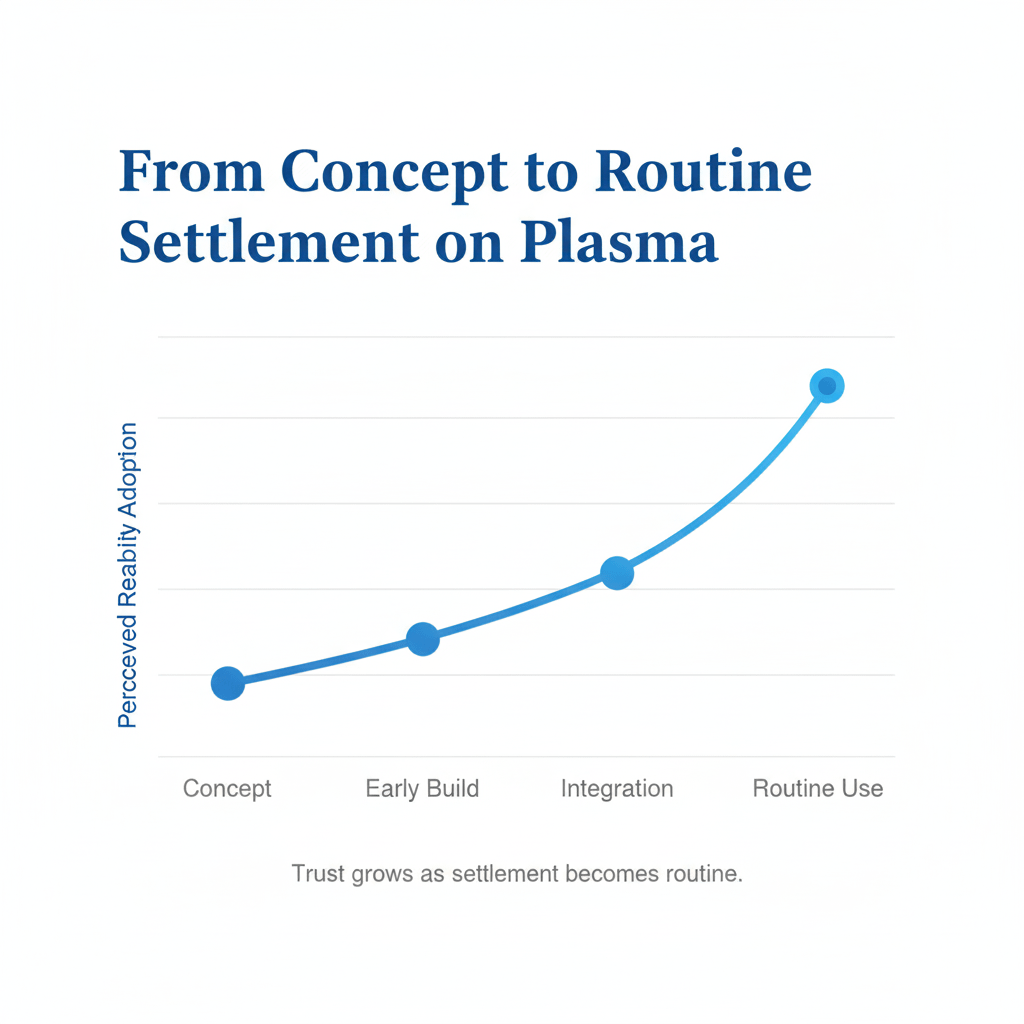
In the end, Plasma XPL will be judged less by how loudly it is promoted and more by how quietly it keeps its promises, because a settlement chain does not earn trust through slogans but through repetition, through transfers that finalize quickly again and again, through fees that stay predictable, through security choices that favor caution, through governance that becomes more credible over time, and through an ecosystem that grows because it is useful rather than because it is loud, and I’m ending with this feeling because the real dream here is simple and human, which is that when stable value can move smoothly, people can plan their lives with more confidence, families can support each other with less friction, merchants can grow without settlement fear, and institutions can integrate without treating the system like a fragile experiment, and if Plasma keeps building with discipline until that calm becomes normal, then it will not just be another chain, it will be a quiet proof that technology can reduce stress instead of adding it, and that is the kind of progress that lasts.


