


If you look at most Layer 1 blockchains, they start with a broad ambition. Be general-purpose. Host everything. Let the market decide what sticks.
Plasma doesn’t really follow that blueprint. It’s narrower on purpose. It looks at one thing — stablecoins — and asks a pretty direct question: why are the most used assets in crypto still running on infrastructure that wasn’t built specifically for them?
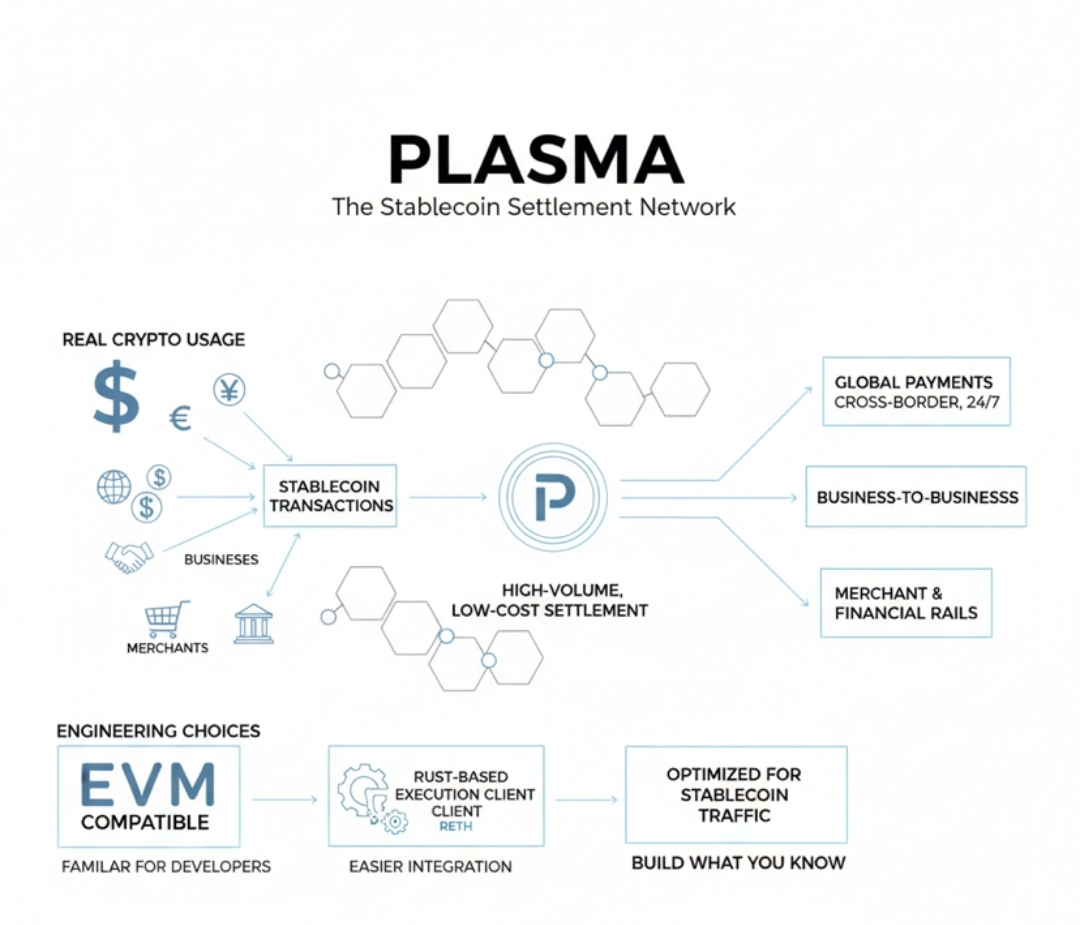
Stablecoins already move insane amounts of volume. Exchanges rely on them. OTC desks rely on them. Cross-border transfers rely on them. In some countries they function more like parallel bank accounts than speculative tokens. And yet, on most chains, they’re treated like just another ERC-20 sitting on top of a system optimized for something else.
Plasma flips that dynamic.
Instead of being a chain where stablecoins “happen to exist,” it’s a chain where stablecoins are the core design assumption. That changes how everything else is structured.
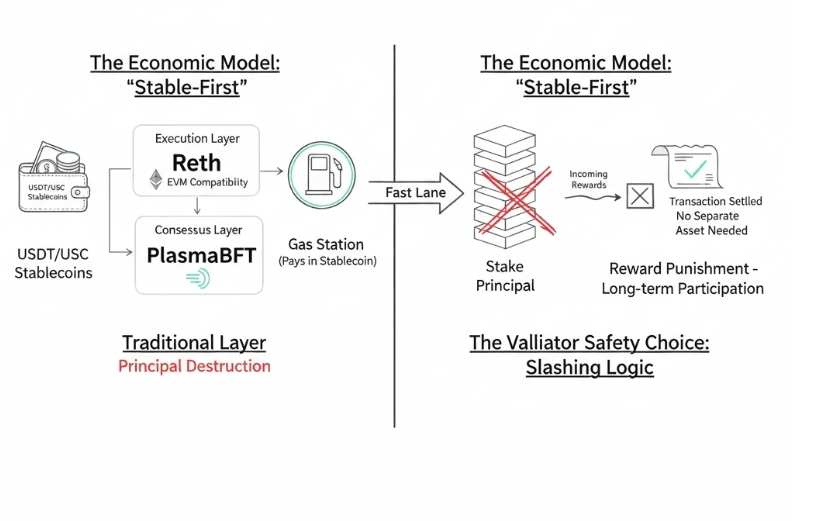
Under the hood, Plasma keeps full EVM compatibility through Reth. That’s not a marketing line, it’s practical. Developers can port contracts. Existing audit frameworks still apply. Teams don’t have to retrain engineers just to experiment with the network. Compatibility lowers resistance, especially for infrastructure players who don’t want unnecessary risk.
Consensus is handled through PlasmaBFT, aiming for sub-second finality. Now, everyone claims to be fast. But in payment systems, what matters is not just speed — it’s when a transaction is considered irreversible. If you’re settling value between entities, you need clarity. Sub-second finality isn’t about bragging rights, it’s about operational certainty.
Where Plasma really starts to look different is in how it treats gas.
On most networks, even if you’re moving stablecoins, you still need the native token to pay fees. That makes sense if the native token is central to the ecosystem. It makes less sense when the majority of activity revolves around stable value.
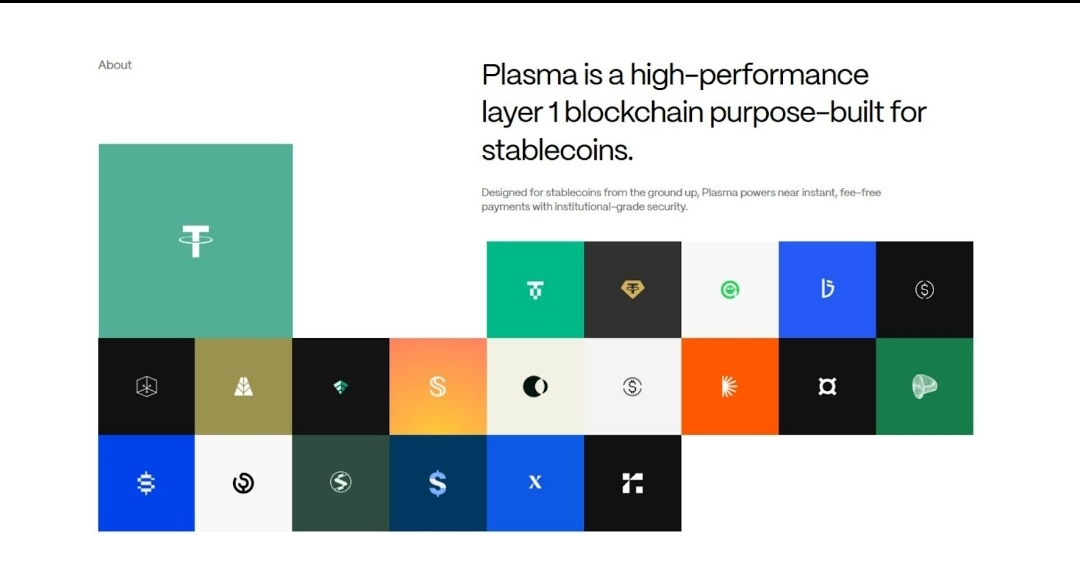
Plasma introduces stablecoin-first gas and even gasless USDT transfers. That means users can interact without juggling a separate volatile asset just to cover fees. For retail users in high stablecoin adoption regions, that removes friction. For institutions, it simplifies accounting and treasury management. It sounds small, but it actually changes the user flow quite a bit.
There’s also the question of neutrality. Plasma incorporates Bitcoin-anchored security, which adds an external reference layer that’s difficult to manipulate. Bitcoin’s settlement layer has its own reputation for resilience. Anchoring to it isn’t about marketing synergy — it’s about reinforcing censorship resistance and neutrality for a chain focused on settlement.
Plasma’s target users reflect all of this.
On one end, there are retail users who already rely on stablecoins as practical money. They don’t care about composability experiments. They care about reliability, low fees, and not having to think about gas tokens. On the other end, there are institutions in payments and finance who need predictable infrastructure, auditability, and resistance to arbitrary censorship.
Plasma doesn’t try to serve every Web3 niche. It’s not positioning itself as a hub for every new vertical. It’s focusing on being very good at one thing: stablecoin settlement.
That focus is unusual in a market that rewards generality and hype. But infrastructure often benefits from constraint. Payment rails that try to do everything usually end up doing nothing particularly well.
Stablecoins are already integrated into global crypto flows. The missing piece has been infrastructure that treats them as primary, not secondary. Plasma’s design suggests that the team understands this shift — that the next stage of adoption may not come from new token types, but from making existing digital dollars behave more like actual dollars.
If Plasma grows, it probably won’t look explosive. It’ll look like more volume quietly settling. More integrations happening in the background. More users moving value without thinking about what network they’re on.
And in payments, that kind of invisibility usually means the system is working.

