
You’re not wrong to hesitate.
#Plasma once stood at the center of Ethereum’s scalability roadmap—then quietly faded as Rollups took over the narrative. Now, with renewed attention from Vitalik Buterin, it’s back in serious discussion. The obvious question: why revisit something the ecosystem seemingly moved past?
To answer that, we need to separate nostalgia from structural relevance.
1. Why Plasma Lost Momentum
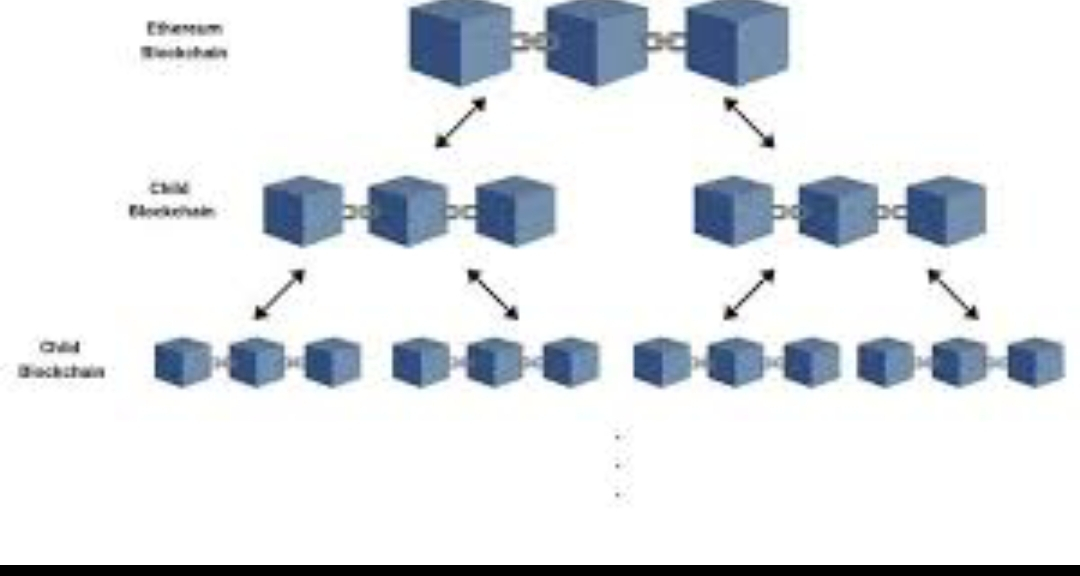
In its original design, Plasma was conceptually elegant:
Create child chains anchored to Ethereum
Process large transaction volumes off-chain
Periodically settle final state commitments back to Layer 1
It reduced congestion and improved throughput without forcing Ethereum to process every individual transaction.
But the flaw wasn’t performance. It was data availability.
If a Plasma operator withheld transaction data or disappeared, users had to rely on a complex “exit game” mechanism. That required:
Monitoring the chain continuously
Submitting fraud proofs within strict windows
Managing technically demanding withdrawal processes
Operationally, this created user fragility.
When Rollups emerged—particularly Optimistic and ZK Rollups—they offered:
Full transaction data published on Ethereum
Stronger guarantees
Cleaner withdrawal semantics
Projects like Arbitrum and Optimism simplified the tradeoff. Plasma receded.
2. ZK Changes the Equation
The reason Plasma is resurfacing is two letters: ZK.
Zero-knowledge validity proofs allow a chain to mathematically prove that its state transitions are correct without revealing full transaction data.
That’s crucial.
Old Plasma required users to defend themselves in adversarial conditions.
A ZK-enhanced Plasma-style system can:
Attach validity proofs to state updates
Guarantee correctness at the cryptographic level
Reduce reliance on constant user monitoring
In other words, the security model becomes proactive rather than reactive.
This is not “reviving an antique.” It’s upgrading the architecture with tools that didn’t exist in mature form when Plasma first appeared.
3. Where Plasma Makes Structural Sense Today
Rollups are secure. But they are not free.
Even with proto-danksharding (EIP-4844), Rollups must publish compressed transaction data to Ethereum. That imposes a hard floor on cost.
Plasma-style systems (especially ZK + off-chain data availability models) can:
Keep transaction data entirely off Ethereum
Only submit minimal state commitments
Drive marginal costs toward near-zero
That matters for high-volume, low-value interactions:
Massively multiplayer games
High-frequency social layers
IoT or supply chain telemetry
Micro-interactions where $0.05 is unacceptable
For these categories, publishing every byte to Ethereum is economically inefficient.
Plasma isn’t replacing Rollups. It fills a different optimization space.
4. Not Competition — Architectural Specialization
It’s tempting to frame this as “Plasma vs Rollup.”
That framing misses the modular future Ethereum is evolving toward.
Rollups → high-value settlement and financial security
Plasma-like validity chains (including Validium variants) → data-light, cost-optimized throughput
They’re complementary layers of a heterogeneous stack.
Ethereum is no longer betting on one scaling primitive. It’s becoming a settlement layer for multiple security–cost tradeoff profiles.
5. The Broader Implication
Technologies rarely die because they’re wrong. They stall because timing is wrong.
When Plasma launched, cryptographic tooling, prover performance, and hardware economics weren’t mature enough to support its vision.
Now:
ZK proving systems are faster
Tooling is standardized
Ethereum’s modular roadmap is clearer
The same conceptual framework that once struggled now fits into a more evolved ecosystem.
So Does Plasma Have a Future?
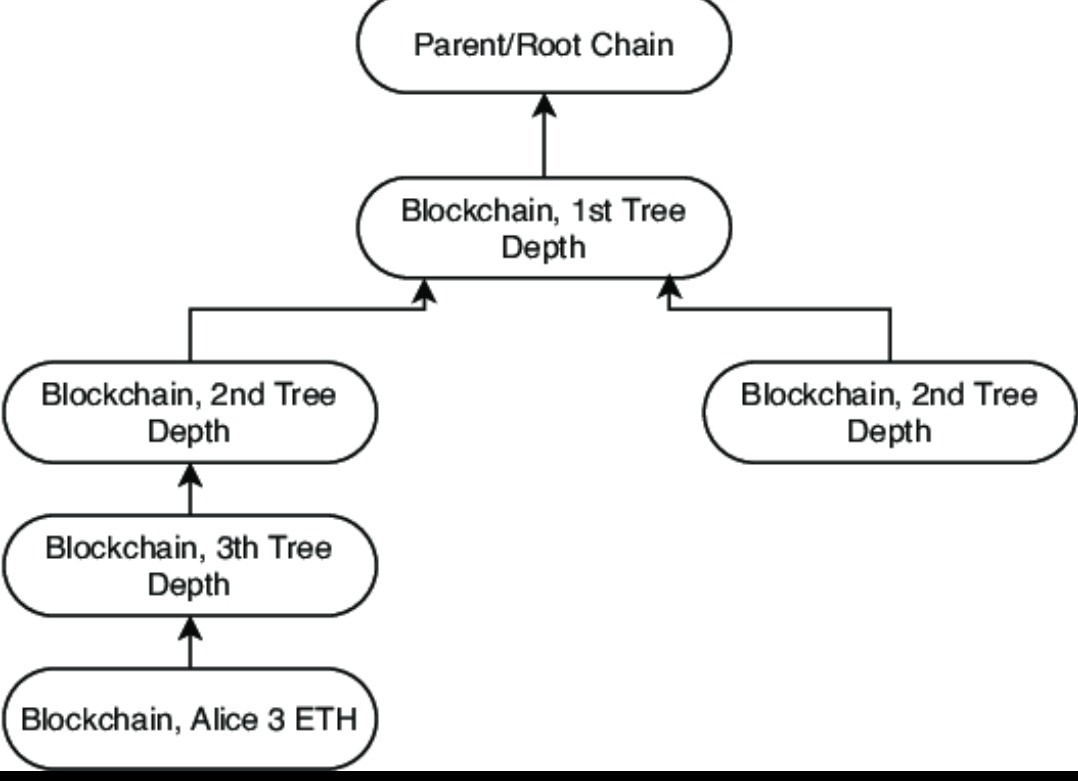
If you’re holding exposure like $XPL the question isn’t whether Plasma replaces Rollups.
The real question is:
Will Ethereum’s future include multiple scaling archetypes optimized for different economic behaviors?
The answer increasingly looks like yes.
Plasma’s first life was idealistic but fragile.
Its second life is pragmatic and cryptographically reinforced.
Not every comeback works.
But this one is happening in a very different technological climate.
If Web3 is going to support billions of micro-interactions without friction, something like ZK-enhanced Plasma will likely play a role.
That doesn’t make it hype.
It makes it architecture.


