
I've been watching Plasma handle stablecoin traffic for a while now, and one thing keeps standing out: when the chain is quiet, almost any design looks solid. The real test comes when stablecoin flows turn from a steady stream into something closer to a flood. That's where infrastructure either proves itself or starts showing cracks.
Plasma was built specifically for this kind of relentless volume. Zero-fee transfers for USDT, fast finality, and no built-in congestion penalties mean it's optimized for payments that don't slow down as activity ramps up. What stands out to me isn't the promise of high TPS on paper it's how the system behaves when billions in stablecoins move quickly into yield opportunities.
Take the integrations with Aave and Veda. We've seen massive inflows: deposits on Aave alone hitting peaks well over $6 billion shortly after integrations went live, with users routing capital into lending vaults and yield strategies. Billions pulled in rapidly, yet the chain didn't stutter. No dramatic gas spikes, no visible queuing, no reports of failed transactions piling up. The paymaster system held up, covering gas for those zero-fee USDT moves without introducing delays or reliability issues. Liquidity routing stayed efficient even as vaults filled and positions rebalanced.
High load exposes the details that matter most. Sequencing has to stay fair first-come, first-served without favoritism toward larger players. Paymasters need to be consistently online and solvent. Routing logic has to avoid bottlenecks in cross-protocol flows. From what I've observed, Plasma managed these without obvious degradation. That's pragmatic engineering: not flashy, just functional under pressure.

Audits are important, but they mean more when validated in production. Paper promises get tested when real money is moving at scale. The team has been reasonably transparent during these periods posting clarifications on Discord or updates when minor adjustments were needed, without over-communicating or going silent. That kind of steady communication builds quiet confidence.
Then there's the Bitcoin anchoring. It's not the loudest feature, but during volatility or spikes, it acts as a security backstop. State commitments anchored to Bitcoin periodically make it harder for anyone to rewrite history or manipulate outcomes at the base layer. In a chain focused on payments, where trust in settlement finality is everything, this feels like a deliberate, understated choice rather than a marketing add-on.
Compare this to other chains where payments suddenly dominate activity. We've seen congestion, fee surges, or outright slowdowns when stablecoin transfers overwhelm general-purpose designs. Blocks fill with simple transfers, pushing out more complex operations or driving costs up unpredictably. Plasma's purpose-built approach prioritizing stablecoin mechanics at the protocol level seems to avoid those pitfalls so far.
None of this is perfect or risk-free. Scaling always brings edge cases, and no chain is immune to surprises. But watching Plasma absorb these surges without breaking stride makes me think the focus on infrastructure basics is paying off.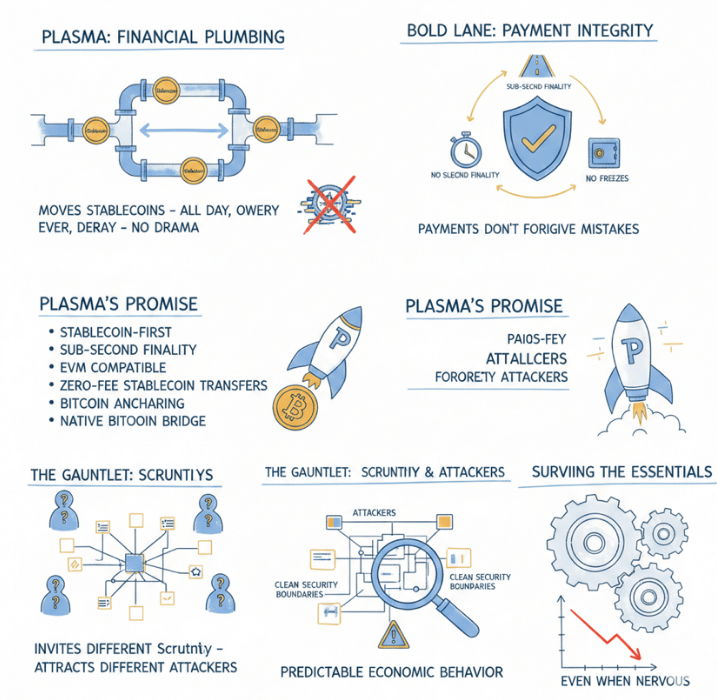
When volume surges 5x overnight, does your chain still feel like infrastructure or just another bottleneck?


