
I’ve been in this market long enough to recognize when the mood shifts.
Not the obvious shifts the blow-off tops, the panic bottoms, the days when timelines explode with green candles or red liquidation charts. I mean the subtle shift. The one that happens when the crowd gets a little quieter. When people stop chasing every new narrative and start asking harder questions.
What actually lasts?
After multiple cycles, collapses, recoveries, and reinventions, one thing has become painfully clear: speculation grabs attention, but settlement builds empires.
And if you strip crypto down to what’s truly being used every single day not talked about, not shilled, not memed it’s stablecoins. USDT, USDC, digital dollars flowing across borders at all hours. They’re paying salaries in Argentina. They’re settling OTC desks in Asia. They’re moving capital between exchanges during volatility. They’re acting as lifeboats when local currencies fail.
Stablecoins are not exciting.

They are essential.
And that’s why Plasma caught my attention not because it promises to be the loudest Layer 1, but because it asks a question most chains never bothered to ask:
What if we built a blockchain specifically for stablecoin settlement?
Not for NFTs.
Not for gaming hype.
Not for memecoin seasons.
For settlement.
At first glance, that might sound narrow. In reality, it might be the most expansive thesis in the room.
Most Layer 1s were designed as general-purpose environments. The idea was to build programmable money rails, and let developers figure out the rest. Stablecoins emerged as one of the most powerful applications on top of those rails but they were never the core design focus.
Plasma flips that logic. It treats stablecoins not as an application, but as the foundation.
That design philosophy changes everything.
Technically, Plasma combines full EVM compatibility through Reth with sub-second finality powered by PlasmaBFT. But I don’t want to approach this like a documentation page. What matters isn’t the terminology it’s what those decisions signal.
EVM compatibility is a humility move.

It says, “We’re not here to fragment the ecosystem.” Developers don’t need to abandon Solidity. Wallet providers don’t need to reinvent integration. Liquidity doesn’t need to relearn new rules. Plasma plugs into the existing Ethereum-shaped world without forcing friction.
In crypto, friction is death.
I’ve seen strong ideas fail simply because onboarding was too complex. Builders go where it’s easy. Liquidity flows where it’s comfortable. By aligning with the EVM standard through Reth which itself is a performance-optimized Ethereum client Plasma lowers the resistance to migration.
Then there’s finality.
Sub-second finality doesn’t just look good on a technical sheet. It feels different in practice. If you’ve ever waited nervously for a large transfer to confirm refreshing your wallet, double-checking the mempool you understand that time isn’t just technical latency. It’s psychological exposure.
Settlement isn’t just about speed. It’s about certainty.
PlasmaBFT aims to compress that gap between sending and knowing. For retail users in high-adoption markets, that means smoother remittances. For institutions, it reduces counterparty risk modeling. For traders, it tightens operational loops.
When finality becomes near-instant, behavior changes.
But the most human design choice Plasma makes is around gas.
If you’ve ever onboarded a non-crypto native user, you’ve probably had this conversation:

“Yes, you have USDT but you also need another token to pay gas.”
That sentence alone has slowed down more adoption than most people realize.
Plasma introduces gasless USDT transfers and stablecoin-first gas mechanics. In simple terms, you can use the asset you already hold your stablecoin to pay for transaction costs. No extra token juggling. No awkward explanations.
You hold digital dollars. You move digital dollars.
That’s how intuitive finance should feel.
This isn’t just convenience it’s alignment with reality. In emerging markets where stablecoins are used daily, users don’t want to speculate on gas tokens. They want reliable digital cash. Removing that extra cognitive step reduces friction in a way that feels almost invisible but deeply powerful.
The security layer adds another dimension to the story. Plasma is designed with Bitcoin-anchored security, leaning into the neutrality and censorship resistance that Bitcoin has proven over time.
Let’s be honest: the regulatory landscape is tightening globally. Payment rails are political whether we like it or not. If you’re building infrastructure for global settlement, neutrality isn’t a branding choice it’s survival.
Bitcoin remains the most battle-tested decentralized ledger in existence. Anchoring to that ecosystem isn’t about marketing proximity. It’s about signaling seriousness. It’s about saying, “We understand that settlement infrastructure must outlast narratives.”
That’s a long-term mindset.
What I appreciate about Plasma’s development so far is the absence of desperation. There’s no frantic attempt to dominate headlines. The ecosystem growth appears deliberate developer tooling support, performance refinement, integration groundwork.
In this market, I’ve learned to watch how teams behave during quiet periods. Anyone can look visionary in a bull run. The real signal appears when the spotlight dims.
Plasma’s positioning targeting both retail users in high stablecoin adoption regions and institutions in payments and finance feels grounded. It recognizes where real usage already exists. It doesn’t try to invent artificial demand.
Stablecoins already dominate on-chain volume. The missing piece has been infrastructure tailored specifically for their flow.
From a trader’s perspective, tokenomics and incentive structures are less about hype cycles and more about behavior engineering. A settlement-focused chain should reward usage, not speculation. If gas flows through stablecoins, if validators are incentivized around transaction reliability, the network culture naturally tilts toward consistency.
That matters.
Markets are slowly maturing. Institutions aren’t experimenting anymore they’re evaluating. They’re asking about uptime guarantees, censorship exposure, settlement speed, interoperability. A chain optimized for stablecoin movement speaks their language more clearly than one juggling a dozen competing narratives.
At the same time, retail users in high-inflation economies don’t care about Layer 1 wars. They care about preserving purchasing power. They care about sending money instantly. They care about avoiding unnecessary fees.
Plasma sits at that intersection institutional-grade structure with retail-level usability.
Looking ahead, the macro picture only strengthens the thesis. Cross-border payments remain inefficient. Traditional banking rails are slow and expensive in many regions. Stablecoins, however, move 24/7 without asking permission.
If global economic fragmentation continues and all signs suggest it might neutral, fast settlement layers will only grow in relevance.
The opportunity here isn’t about short-term price action. It’s about becoming invisible infrastructure. The kind of infrastructure users rely on without thinking about it.
That’s the highest form of product success.
When you tap “send” and don’t wonder whether it will confirm. When payroll clears instantly. When remittances feel as easy as sending a message. That’s when a chain stops being a “crypto project” and becomes financial plumbing.
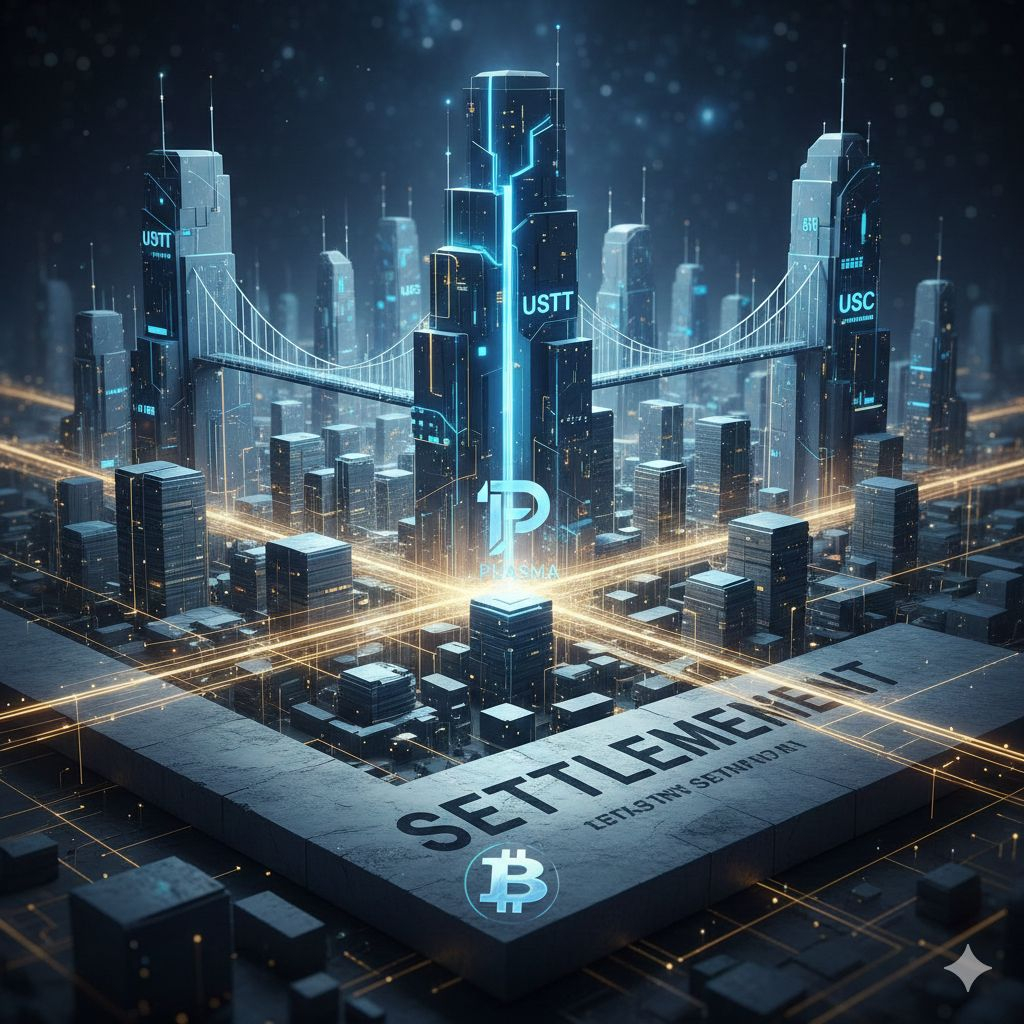
I’ve learned that in crypto, the most durable plays are rarely the loudest. They’re the ones aligned with human behavior. People want stability. They want speed. They want simplicity. They want neutrality.
Plasma’s architecture feels built around those truths.
Of course, execution will determine everything. Adoption must compound. Liquidity must deepen. Developer ecosystems must strengthen. Infrastructure plays demand patience and patience is rare in this industry.
But if this cycle is teaching us anything, it’s that the market is beginning to reward substance again.
Settlement is substance.
And maybe that’s the quiet evolution happening right now. Crypto growing up. Moving beyond pure experimentation and toward reliable rails. Recognizing that stablecoins aren’t just a side product they’re the core use case already operating at scale.
If that’s true, then building specifically for stablecoin settlement isn’t niche.
It’s inevitable.
In the end, I don’t look at Plasma as a flashy bet. I see it as a structural thesis. A recognition that the dollar digital or otherwise is still the asset that moves the world. And if you can move that dollar faster, simpler, and more securely, you’re not chasing a trend.
You’re reinforcing a foundation.
The market will do what it always does rotate, test, challenge, reward, punish. But beneath the volatility, real infrastructure continues to form.
And sometimes, the smartest position isn’t the loudest one.
It’s the one quietly building where the money already flows.#Plasma @Plasma $XPL


