
When I first dove into Plasma, it wasn't about chasing the next big chain it was about questioning why stablecoins, the workhorses of crypto, always seemed like an afterthought in most ecosystems. They power trillions in real world transactions, yet they're often bolted on like a spare tire, not the engine.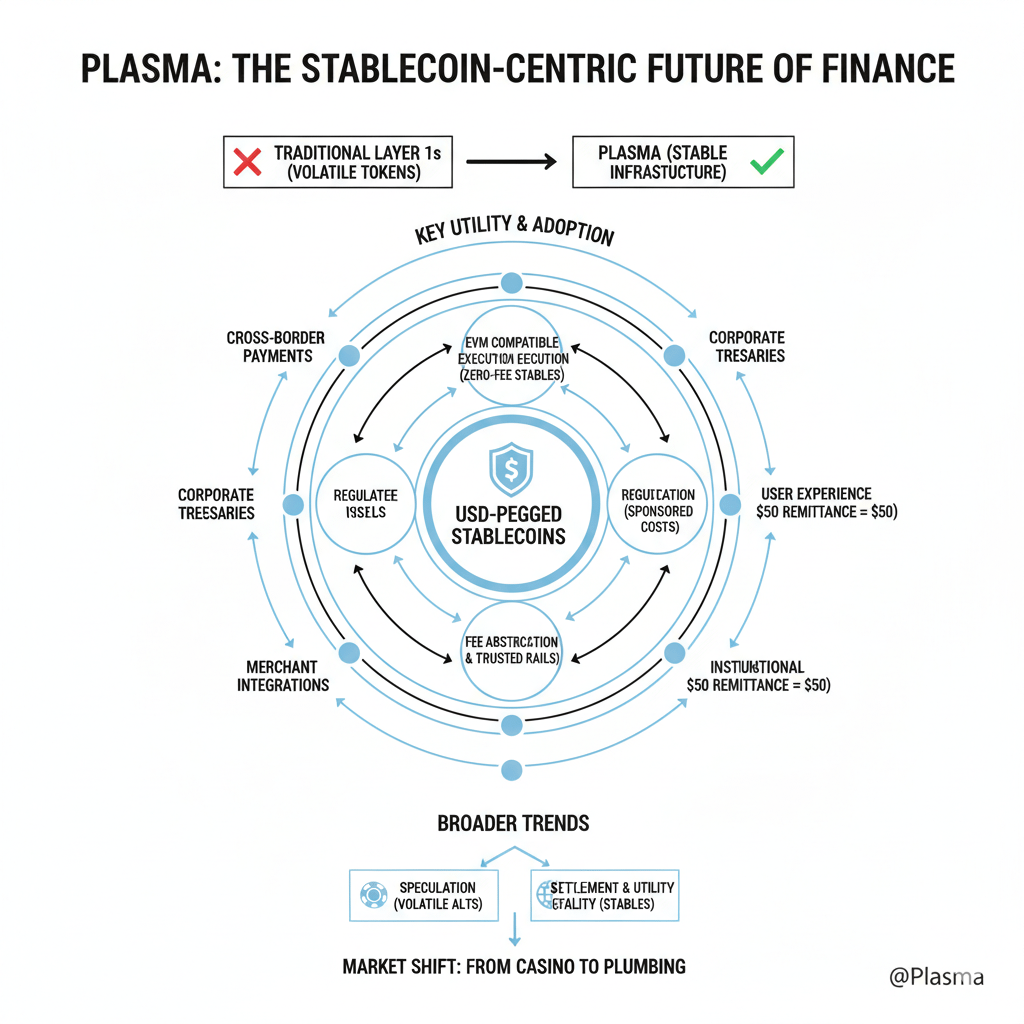
That mismatch is glaring in today's market. By early 2026, stablecoins handle over ten trillion dollars in annual settlements, fueling everything from cross border payments to corporate treasuries. But many Layer 1s prioritize their native volatile tokens for fees and incentives, treating stablecoins as a nice to have. This creates friction: users juggle assets, volatility erodes predictability, and the system feels rigged for speculators. Plasma flips this script, positioning stablecoins as the foundational infrastructure, not a peripheral add on. This shift isn't just technical it's a philosophical bet on what crypto should optimize for.
At its core, Plasma assumes stablecoins are the default medium for value transfer because that's how people actually use them. No hype about reinventing money; instead, it builds EVM compatible execution with native USD pegged assets woven in from day one. Transfers are zero fee for stables, meaning no gas in a swinging token just seamless, predictable movement. This inverts the usual model where stables adapt to the chain; here, the chain adapts to stables. The result? User experience transforms: a $50 remittance arrives as $50, without fee surprises or hedging needs. Economically, it encourages velocity more transactions, less hoarding turning the network into reliable plumbing rather than a casino floor.
Fees illustrate this beautifully. Traditional chains extract them in native tokens, adding volatility and barriers. Plasma abstracts them away, sponsoring or absorbing costs for stablecoin flows. It's not magic; apps or institutions pick up the tab for the reliability. This fosters incentives aligned with utility: builders price in dollars, not tokens, simplifying everything from DeFi yields to merchant integrations. Early data shows stablecoin volumes spiking where friction falls, proving that low barriers unlock real adoption.
Institutionally, Plasma leans into reality. With regulated issuers dominating supply top players hold the lion's share it offers trusted rails without forcing full permissionlessness. This draws banks and enterprises wary of wild west vibes, enabling compliant settlements. Risks loom, though: over reliance on issuers could breed centralization, and if sponsorships falter during surges, sustainability questions arise. Plasma mitigates by betting on steady, high value flows over boom bust cycles, but if retail hype dominates, strains could emerge.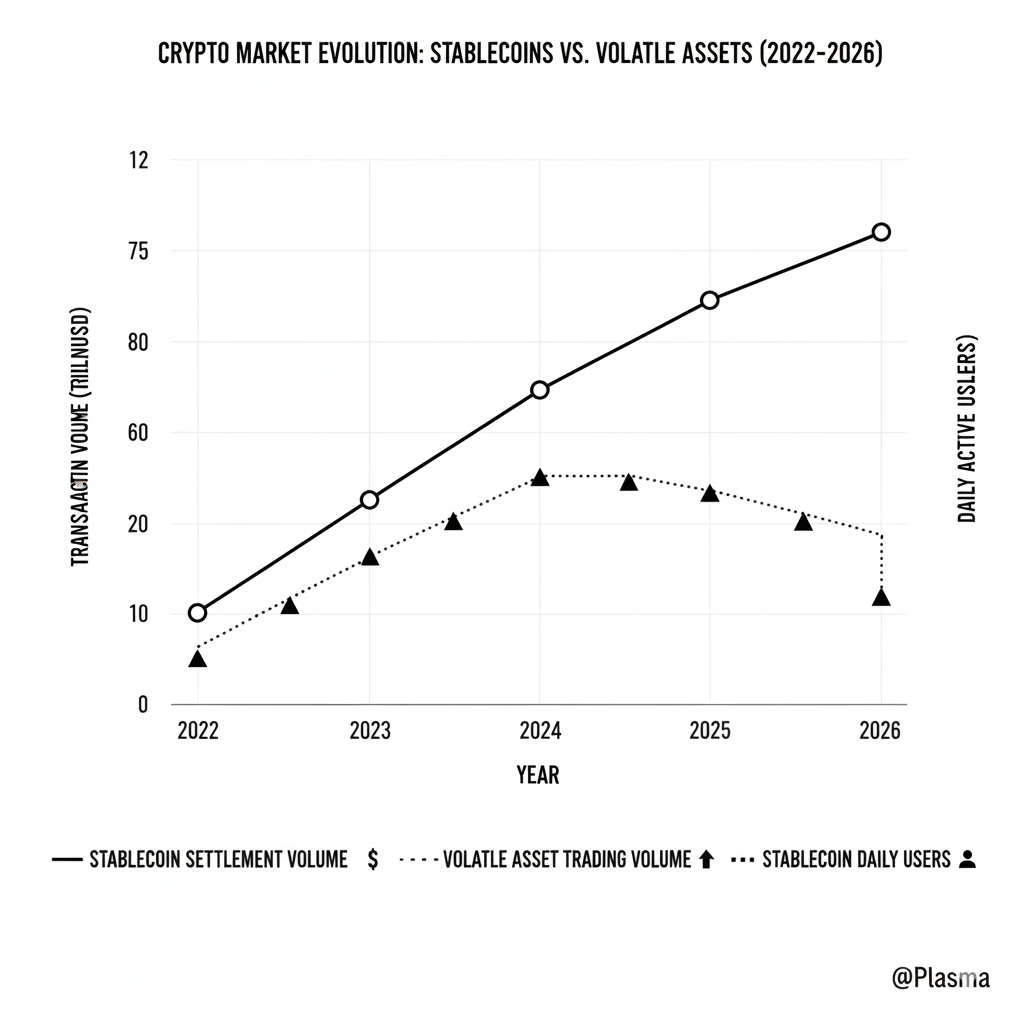
This aligns with crypto's maturing trends. Transaction data reveals stables outpacing alts in daily use, signaling a pivot from speculation to settlement. Plasma rides this wave, prioritizing boring efficiency over flashy narratives. Critics decry it as surrendering to fiat, arguing it entrenches central banks. Fair point, but practically, users vote with their wallets stables are here, and ignoring them stalls progress. Plasma counters by enabling hybrids: permissioned stability with decentralized optionality.
Broader implications? Crypto might bifurcate further: one lane for gamblers, another for infrastructure. By making stables core, Plasma humbly accepts market truths, earning trust through utility. No overnight revolutions just making dollars feel at home on chain. If this catches on, the real winners won't be tokens, but the seamless flows powering global finance.

