
.
If you’ve been ignoring VANRY because it’s “just another micro-cap L1,” I get it. Price is still stuck in penny-land around $0.0062 on February 12, 2026, and it’s red on the day (roughly -2% over 24h) with only a few million in daily volume. But that’s exactly why it’s worth a fresh look: the story that Vanar is trying to sell has shifted away from speed flexing and into something way more practical for adoption. The pitch is basically “one chain, three billion wallets, zero learning curve.” The market usually wakes up late to UX narratives, especially when the chart doesn’t force attention yet.
Here’s the setup as it sits today. VANRY’s market cap is around $13–14M depending on the venue’s snapshot, with circulating supply roughly 2.29B and a stated max supply of 2.4B. That means two things for traders. First, it doesn’t take huge inflows to move this, because the base is small. Second, you don’t get to pretend supply doesn’t matter, because you’re already dealing with billions of units and there’s still some headroom to max supply. If you’re looking at this as a “cheap coin,” don’t. Look at it as a market cap bet with a lot of tokens and a thin order book.
Now here’s the thing. Vanar’s adoption thesis isn’t “come learn crypto.” It’s “don’t learn anything, just use an app.” That “invisible blockchain” approach shows up repeatedly in recent commentary around the project: reduce friction, let Web2 companies integrate without forcing users to think about wallets, gas, or jargon. If you’ve traded long enough, you’ve seen how rare this is. Most chains talk to developers and hope users magically appear. Vanar is trying to talk to product teams and consumer funnels instead. Think of it like payments infrastructure: nobody adopts a payment rail because it’s elegant, they adopt it because checkout stops failing.
Technically, Vanar is also leaning hard into an “AI-native” positioning. On its own site, it frames the chain as built for AI workloads with things like native support for inference/training and vector-style operations. And there was a specific “AI integration” announcement dated January 19, 2026 that’s been circulated in aggregator-style updates, tying the stack to components like a Kayon AI engine and use cases like payments and tokenized assets. I’m not treating that as guaranteed traction, but it does matter for narrative. In 2026, attention follows “AI + useful rails” more than it follows “we have high TPS.” If Vanar’s real goal is distribution through familiar UX, then AI is less about buzz and more about automating the messy parts of user experience: identity checks, fraud scoring, personalization, and routing decisions. If you’ve ever watched a fintech product scale, you know that’s where the real work is.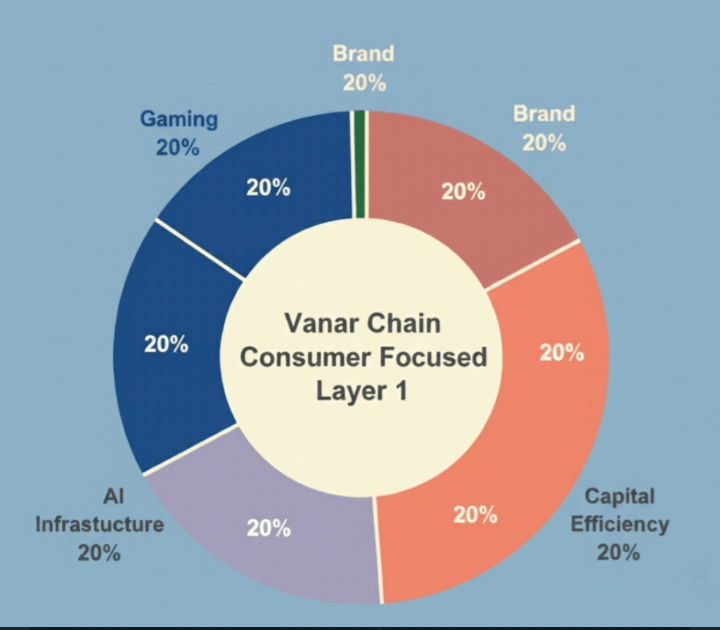
So what’s the market missing? It might be that Vanar’s silence is part of the strategy. There’s been recent discussion that the team has toned down loud announcements and is focusing on substance and integrations instead of constant headline drops. Whether you buy that or not, the practical trading takeaway is simple: if they’re building distribution quietly, you won’t get a clean “catalyst day” to front-run. You’ll get creeping metrics, then a sudden repricing when a real channel partner shows up or when on-chain usage stops looking theoretical.
But let’s be real about the risks, because they’re not small. Micro-cap liquidity cuts both ways. With ~$2.6–$3.3M in 24h volume recently, it doesn’t take much to whip this around, and slippage can punish you if you size it like a large-cap. Also, the token has a long history from the earlier TVK era and the project formally executed a $TVK to $VANRY transition on a 1:1 basis, which still shapes how old holders behave into rallies. Overhead supply is a real thing when people have been underwater for a long time and just want out. You can even see how ugly the long-term drawdown looks on some trackers that cite very old peaks.
Adoption risk is the big one, though. “Three billion wallets” is a distribution claim, not a tech claim. Distribution is politics, partnerships, and product execution. If the integrations don’t land, you just own a token with a story. And if the “zero learning curve” approach relies on custodial flows or abstracted wallet layers, you’ll want to understand what’s centralized, what can be censored, and what breaks under regulatory pressure. Vanar’s own positioning around PayFi and real-world assets basically invites scrutiny, so any compliance stumble can freeze momentum fast.
If you want a grounded bull case with numbers, don’t fantasize about “top 20.” Use realistic comps. If Vanar proves real distribution and the market starts valuing it like a credible small L1 with actual consumer rails, a $200M market cap isn’t crazy in a risk-on cycle. From ~$14M today, that’s roughly a 14x. With ~2.29B circulating units, $200M implies about $0.087 per token. Push it to $300M if you believe they land multiple sticky integrations, and you’re talking roughly $0.13. None of that requires magical tech, it requires believable usage.
The bear case is simpler and honestly more common. Activity stays flat, catalysts stay vague, and the token trades like a liquidity chip. If it revisits the lower end of its recent range, some trackers show 52-week lows around the $0.0049 area. In a broader market drawdown, it can go lower than your “support” because support is a myth when liquidity disappears. If you’re holding this, the way you stay honest is by pre-committing to what would change your mind: no real integrations by a certain date, no sustained pickup in volume that isn’t just a one-day spike, or no evidence that users are actually onboarding without crypto-native behavior.
If you’re looking at this as a trade, I’d stop obsessing over slogans and watch for proof. Does daily volume build consistently above the current ~$2–3M band without the price getting dumped right back down? Do new product announcements translate into measurable usage rather than just “press”? And most importantly, does Vanar’s “invisible blockchain” idea show up in real distribution, like consumer apps where users never have to learn what VANRY is in the first place? 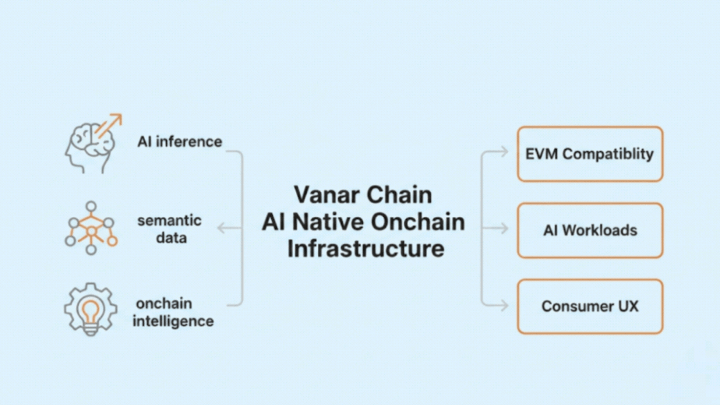
Zooming out, this is one of those bets on where the next wave of users actually comes from. Traders love narratives about throughput, but the next billion users won’t arrive because blocks are faster. They’ll arrive because products feel normal. Vanar is trying to be the chain underneath “normal.” If they pull that off, the reprice can be violent because the base is small. If they don’t, it stays a low liquidity token with occasional pumps and long stretches of boredom. Either way, the chart won’t tell you first. The metrics will.
