
Introduction
By early 2026 it became clear that the crypto cycles of 2024 and 2025 were not defined only by price movements but by investor behavior. Those years tested patience discipline and emotional control more than technical knowledge. Many investors did not struggle because the technology failed but because their reactions to volatility worked against them. For long term participants these cycles became a period of growth rather than disappointment.
Emotional Mistakes Defined the Outcomes
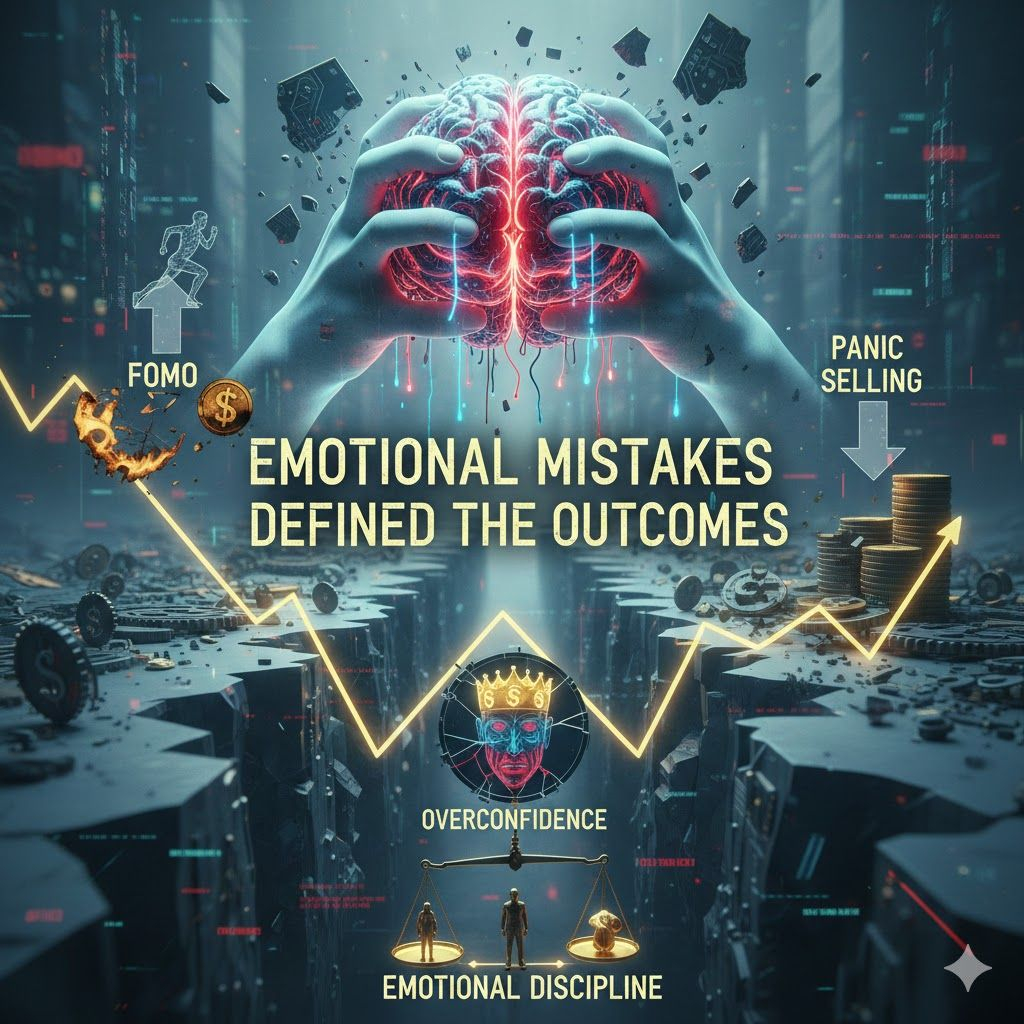
One of the most costly lessons from the 2024 and 2025 cycles was the impact of emotional decision making. Fear of missing out pushed investors to enter positions after prices had already moved significantly higher. Warning signs such as extreme optimism and weakening fundamentals were often ignored. When the market corrected panic selling followed even though the long term value of many assets had not changed.
Overconfidence also played a major role. Early gains convinced many investors that they had mastered market behavior. This led to larger position sizes and reduced caution. When conditions shifted losses felt sudden and overwhelming. The market reinforced a simple truth that emotional discipline matters more than short term confidence.
The Timing Myth Was Exposed
The belief that successful investing depends on perfect timing was challenged strongly during this period. Many investors attempted to buy exact bottoms and sell exact tops. Very few succeeded consistently. Those who sold early struggled to re enter at favorable prices while those waiting for confirmation often acted too late.
Narratives also moved faster than execution. By the time a trend became widely discussed prices had already adjusted. Long term investors gradually accepted that consistency and patience mattered more than precision. The goal shifted from being right at every moment to remaining positioned through uncertainty.
Risk Management Finally Took Priority
The 2024 and 2025 cycles forced investors to rethink how they managed risk. Capital preservation became as important as growth. Position sizing turned into a core principle rather than a secondary consideration. Investors began evaluating how much they could afford to lose without emotional distress before entering any position.
Profit taking also became more widely accepted. Selling portions of holdings to lock in gains was no longer viewed as weak conviction but as strategic discipline. Holding cash or stable assets was recognized as a valid position that allowed flexibility during volatile periods.
Diversification Became More Meaningful
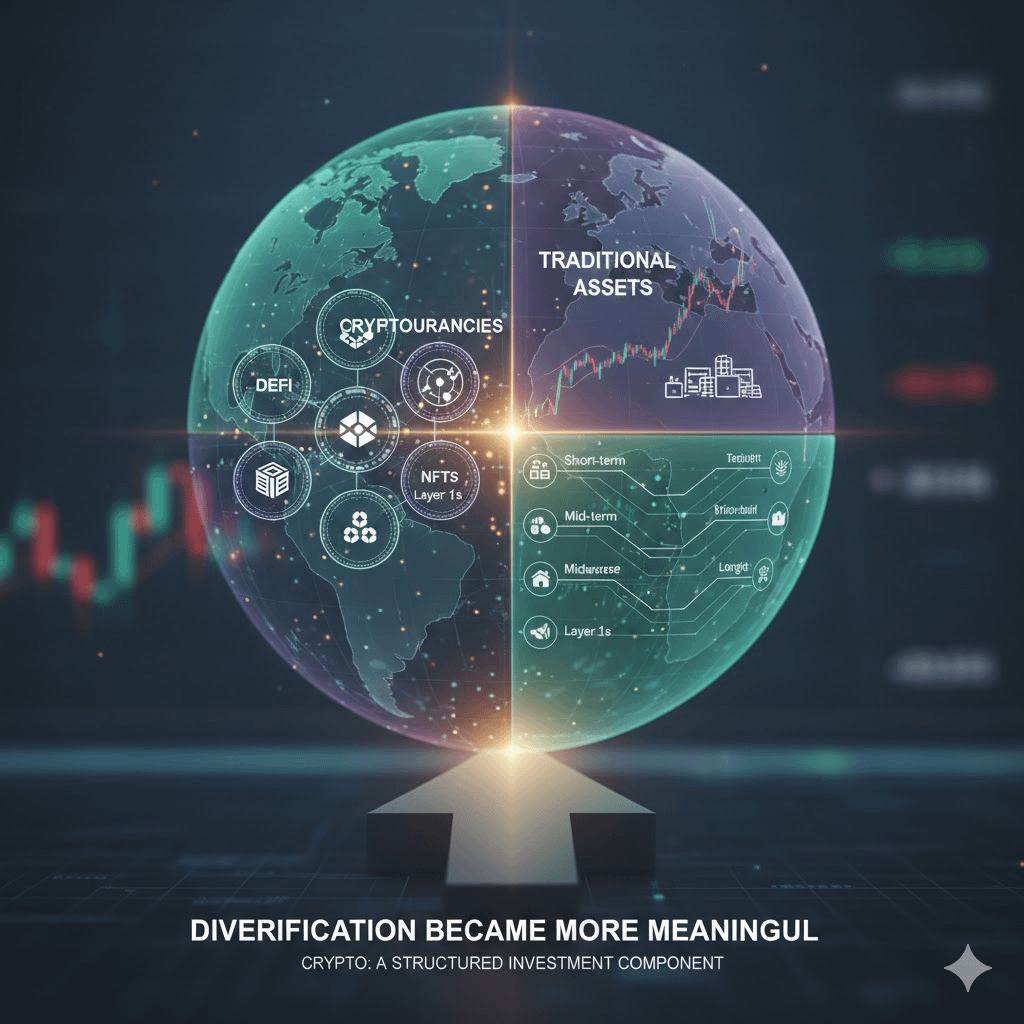
Diversification evolved beyond simply owning multiple cryptocurrencies. Long-term investors began spreading exposure across different sectors within the crypto ecosystem and across different time horizons. Many also diversified beyond crypto entirely. This broader approach reduced dependency on single narratives and helped portfolios remain stable when specific sectors underperformed.
Crypto gradually transitioned from an all-or-nothing bet into a component of a structured investment strategy.
Learning to Ignore the Noise
The 2024 and 2025 cycles were filled with constant predictions, dramatic opinions, and rapidly shifting sentiment. Investors who endured learned to limit their information intake and rely on personal Frameworks rather than public emotions. Consuming less content often led to better decisions.
The strongest portfolios were not built by those who reacted fastest but by those who reacted the least. Emotional distance became a long term advantage.
Conclusion
By 2026 long term crypto investors were no longer chasing quick wealth or dramatic narratives. Their focus shifted toward patience durability and calculated exposure. The cycles of 2024 and 2025 rewarded discipline rather than constant action.
For investors who emerged with clearer expectations stronger risk management and greater emotional control the experience was not a setback. It was preparation. The market did not eliminate them. It refined them.