
I've rolled my eyes at enough blockchain pitches claiming "real world adoption" while delivering little more than speculative frenzy. The crypto space is littered with projects that hype tech miracles faster speeds, lower fees but ignore the human side: the confusion of clunky interfaces, the frustration of volatile costs, and the unfairness of systems that favor whales over everyday users. That's why Vanar Chain caught my attention. It's not chasing moonshots; it's quietly building a Layer-1 that's empathetic to real pain points, designing for seamless use where blockchain fades into the background, like a well oiled app that just works without endless tutorials.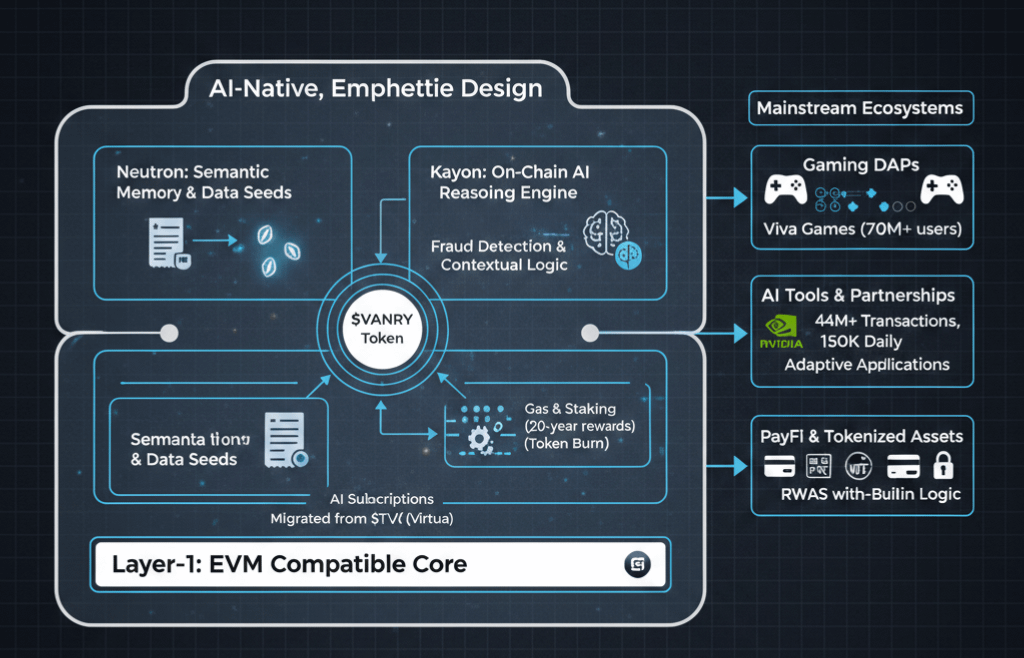
What drew me in was Vanar's focus on making Web3 feel normal. In a world where users bail on dApps due to confusing wallets or unpredictable gas spikes, Vanar prioritizes intuitive design. It's AI native from the ground up, embedding intelligence into the chain so applications can adapt without constant hand holding. Think of it as a conversation where the tech listens and responds, not one where you're forever explaining basics.
Diving deeper, Vanar's modular stack stands out for tackling scalability without sacrificing usability. The core Layer-1 is EVM compatible, meaning developers don't need to learn exotic languages they can build with familiar tools like Solidity. But it goes further with layers like Neutron for semantic memory, compressing real world data (like invoices or deeds) into queryable "seeds" stored on chain. Imagine uploading a property title that the blockchain not only secures but understands triggering automated compliance checks without offchain oracles. This predictability shines in high volume scenarios like gaming, where repetitive micro transactions could otherwise grind to a halt. Onchain data shows over 44 million total transactions and around 150,000 daily, signaling steady, real user activity rather than pump and dump hype.
Then there's Kayon, Vanar's on chain AI reasoning engine. It analyzes data for context and patterns, enabling smart contracts to handle nuanced tasks like real time fraud detection in PayFi apps. No more volatility from external feeds; everything's embedded, fair, and verifiable. For branding or tokenized assets, this means creators can mint NFTs or RWAs with built in logic that evolves say, royalties that adjust based on usage patterns. Partnerships with NVIDIA for AI tools and gaming studios like Viva Games (with 700M+ downloads) underscore this: they're not just integrations but bridges to mainstream habits, fostering ecosystems where users engage without blockchain jargon.
The $VANRY token fits organically here, powering this stable UX. Beyond basic gas and staking (with rewards distributed over 20 years for network security), it enables governance and AI subscriptions, where a portion of fees burns tokens to curb inflation. This creates a predictable economy, bridging to ERC-20 liquidity pools for easy swaps. Asset migrations from its Virtua roots (rebranded from $TVK) have smoothed transitions, encouraging habits like staking for passive yields without wild swings.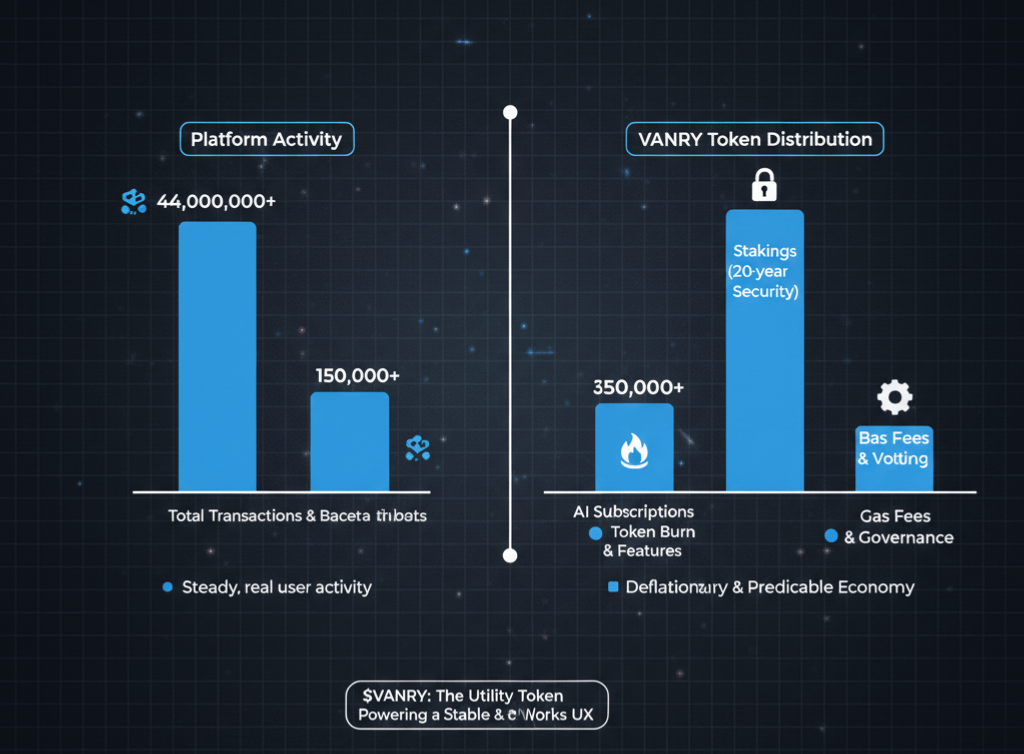
That said, healthy skepticism is warranted. Vanar's ambitious AI on chain vision faces delivery hurdles ensuring sub second inference at scale could hit developer friction if SDKs don't evolve fast enough. Long term, competing with established L1s means proving sustained adoption beyond current metrics.
Zooming out, Vanar envisions Web3 as "normal apps" that outlast trends: intelligent, adaptive experiences where users focus on creation, not crypto mechanics. In a noisy space, this quiet reliability handling data empathy without explanation might be the true innovation, turning skeptics like me into believers.
