

There’s a quiet shift happening inside Web3, and most people are too focused on price charts to notice it.
For years, the dominant model for Layer-1 tokens has been simple: launch infrastructure, attract activity, hope usage creates demand, and let speculation fill the gaps. It works in cycles. But it rarely creates predictability.
What I find interesting about @Vanarchain right now is not a new feature release or a new partnership headline. It’s something deeper. The narrative is moving from “AI-powered blockchain” to something more structural: turning AI utility into subscription-based, repeatable token demand.
That shift matters more than it sounds.
Most chains struggle with one uncomfortable problem. Technology is built. Ecosystems grow. Integrations happen. But token demand is still largely transactional or speculative. Gas fees fluctuate. Activity spikes. Then it cools. Usage becomes unpredictable, and so does token utility.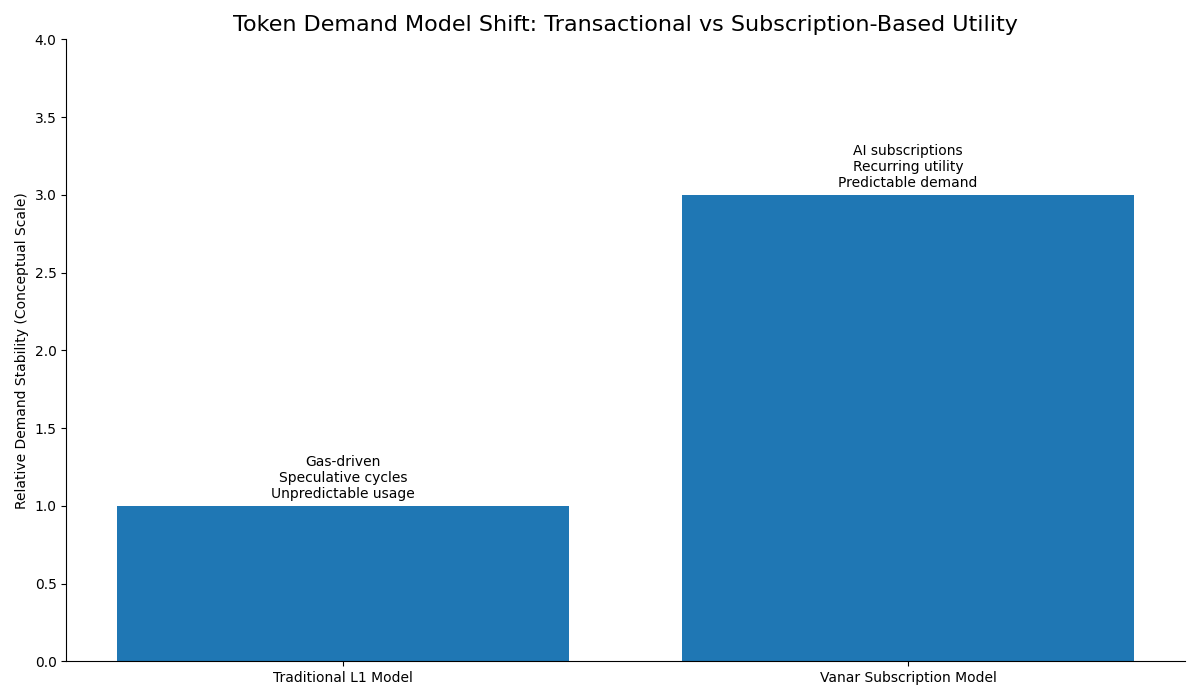
Vanar appears to be tackling this differently.
Instead of positioning VANRY as just a gas token or governance chip, the network is tying core AI products—like myNeutron and its reasoning layer—directly into subscription-style usage models. That transforms the token from an occasional transaction medium into something closer to software revenue infrastructure.
And that is a very Web2 idea applied deliberately to Web3.
The core shift is subtle but powerful. In traditional cloud platforms, usage is predictable. Companies pay monthly for compute, storage, APIs, analytics, and SaaS tools. Finance teams can forecast costs. Developers know what infrastructure will cost at scale. That predictability stabilizes both the product and the company behind it.
Vanar is applying this logic to on-chain AI.
Instead of free experimentation followed by optional premium tools, advanced AI services are moving toward structured subscription payments in VANRY. If developers rely on Neutron’s semantic compression, AI memory indexing, or reasoning workflows, they are expected to pay in recurring cycles.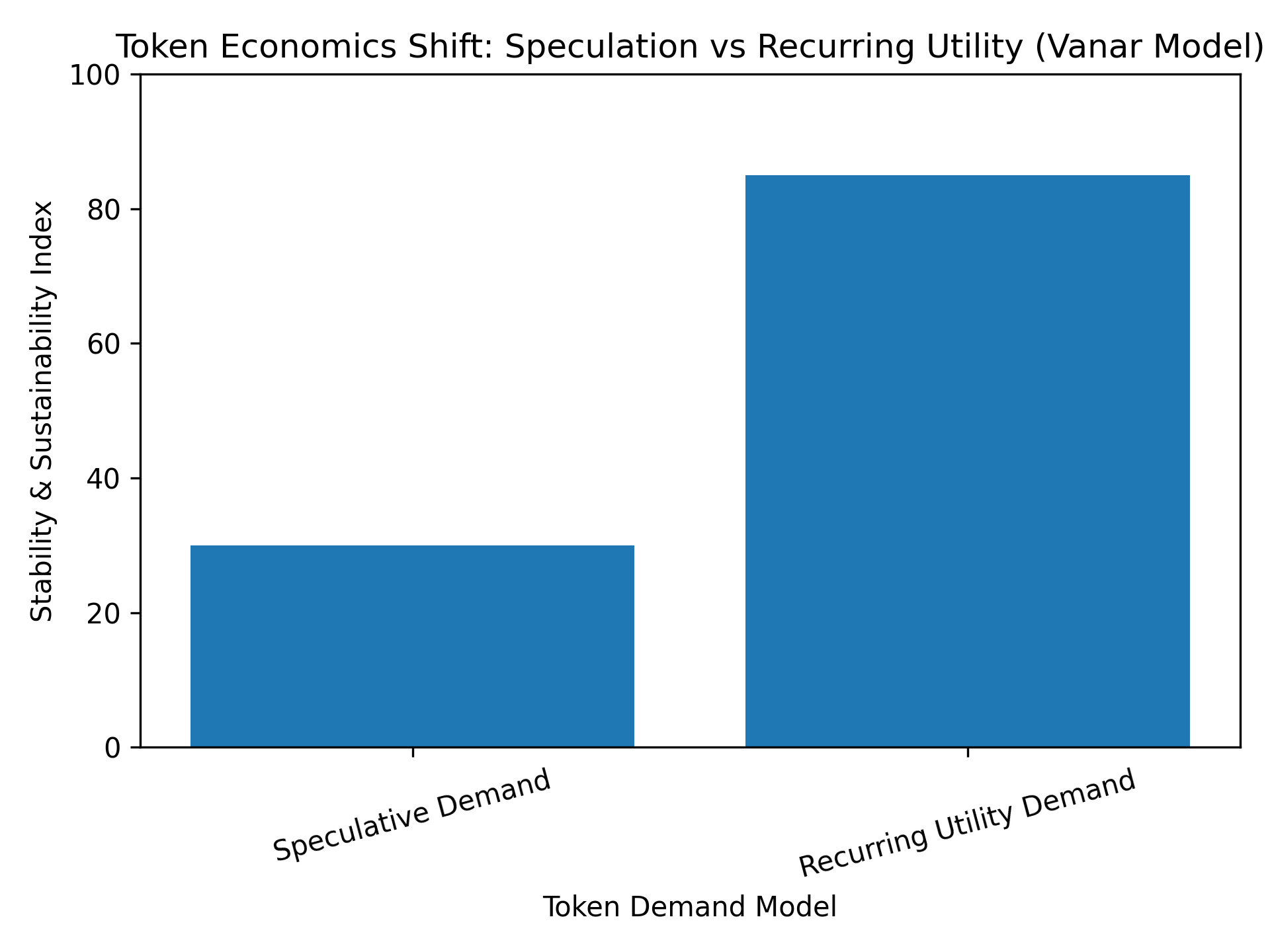
That changes the economics.
Token demand becomes tied to actual product usage. Not one-off transactions. Not speculative volume. Not temporary liquidity mining. But recurring consumption of services.
If a team builds analytics automation on top of Vanar’s AI layer and integrates it deeply into their workflow, that cost becomes operational, not optional. Just like paying for a CRM or cloud provider.
And when usage becomes operational, tokens stop being hype assets and start behaving like utility inputs.
This model also addresses one of Web3’s biggest weaknesses: unpredictable demand curves.
Historically, token usage spikes during bull cycles and slows dramatically in quieter markets. That makes long-term planning difficult. Subscription models introduce rhythm. If enough projects build core logic around Vanar AI infrastructure, monthly token demand becomes more stable.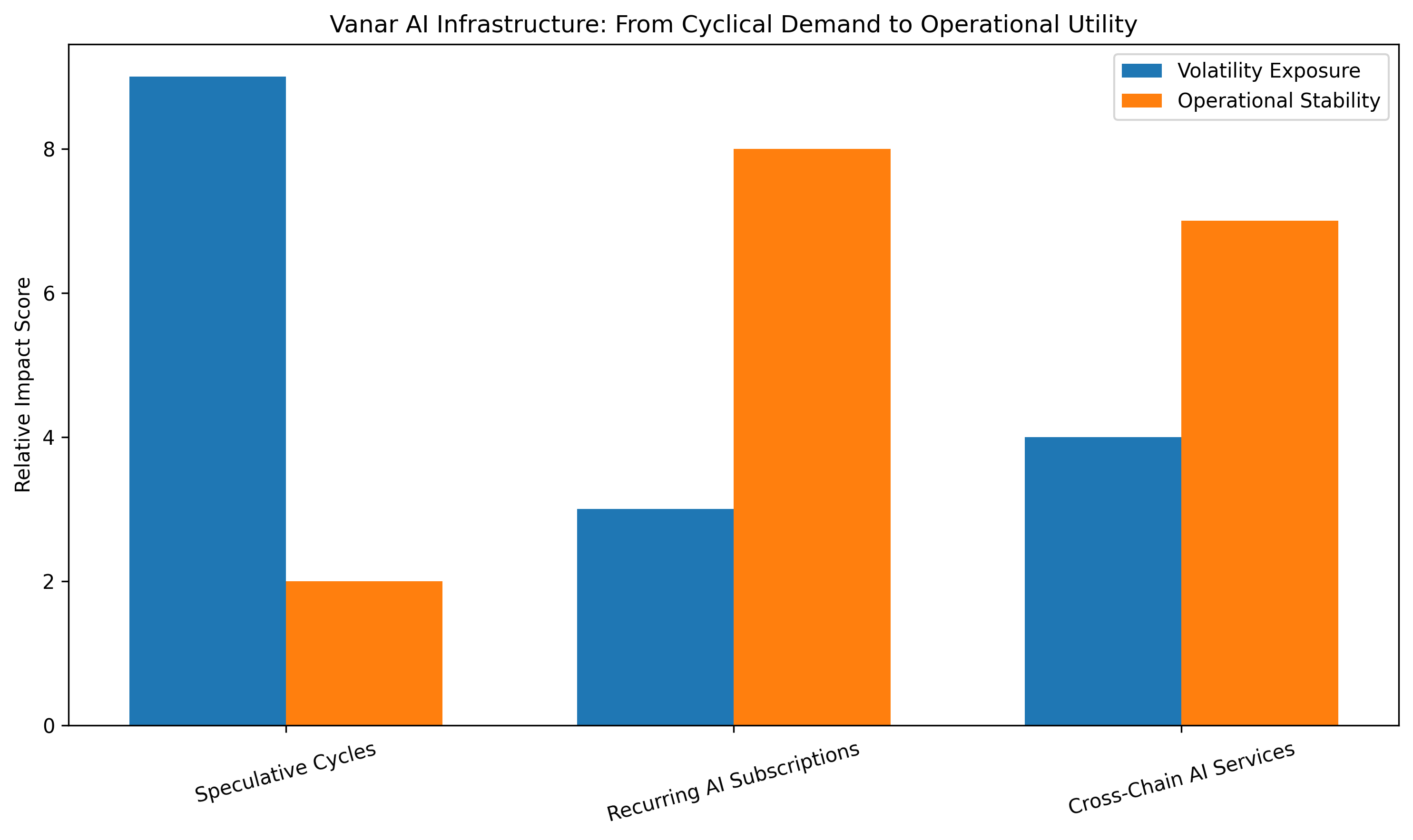
It doesn’t eliminate volatility. But it anchors part of token usage to product necessity rather than market mood.
There’s another strategic layer here: cross-chain expansion.
Vanar’s roadmap suggests that Neutron and AI infrastructure won’t remain limited to the base chain. If other ecosystems can rely on Vanar’s compressed semantic data layer or reasoning systems, VANRY becomes necessary beyond a single network’s activity.
Imagine applications built on other chains using Vanar’s memory anchoring or reasoning verification services, paying in VANRY for settlement or indexing.
At that point, Vanar is no longer just competing as a Layer-1. It becomes an AI infrastructure vendor for Web3.
That’s a different competitive category.
Instead of fighting for smart contract market share, it positions itself as a service layer that others plug into. Cross-ecosystem utility tends to be stickier than isolated chain activity because it ties multiple networks into one operational dependency.
Of course, strategy only works if products are actually valuable.
Subscriptions do not magically create sustainable demand. If myNeutron or AI services don’t meaningfully reduce developer time, improve decision-making, or unlock new workflows, recurring billing becomes friction.
So the burden is high.
The AI layer must be reliable. Documentation must be clear. On-chain billing UX must feel understandable and predictable. Developers must see measurable value—faster deployment, cleaner data management, better automation.
Otherwise, subscription tokens become overhead instead of infrastructure.
@Vanarchain NVIDIA Inception support adds another interesting layer to this story. Hardware-backed AI credibility, combined with ecosystem integrations in gaming, metaverse experiences, and immersive digital products, creates diverse token utility channels.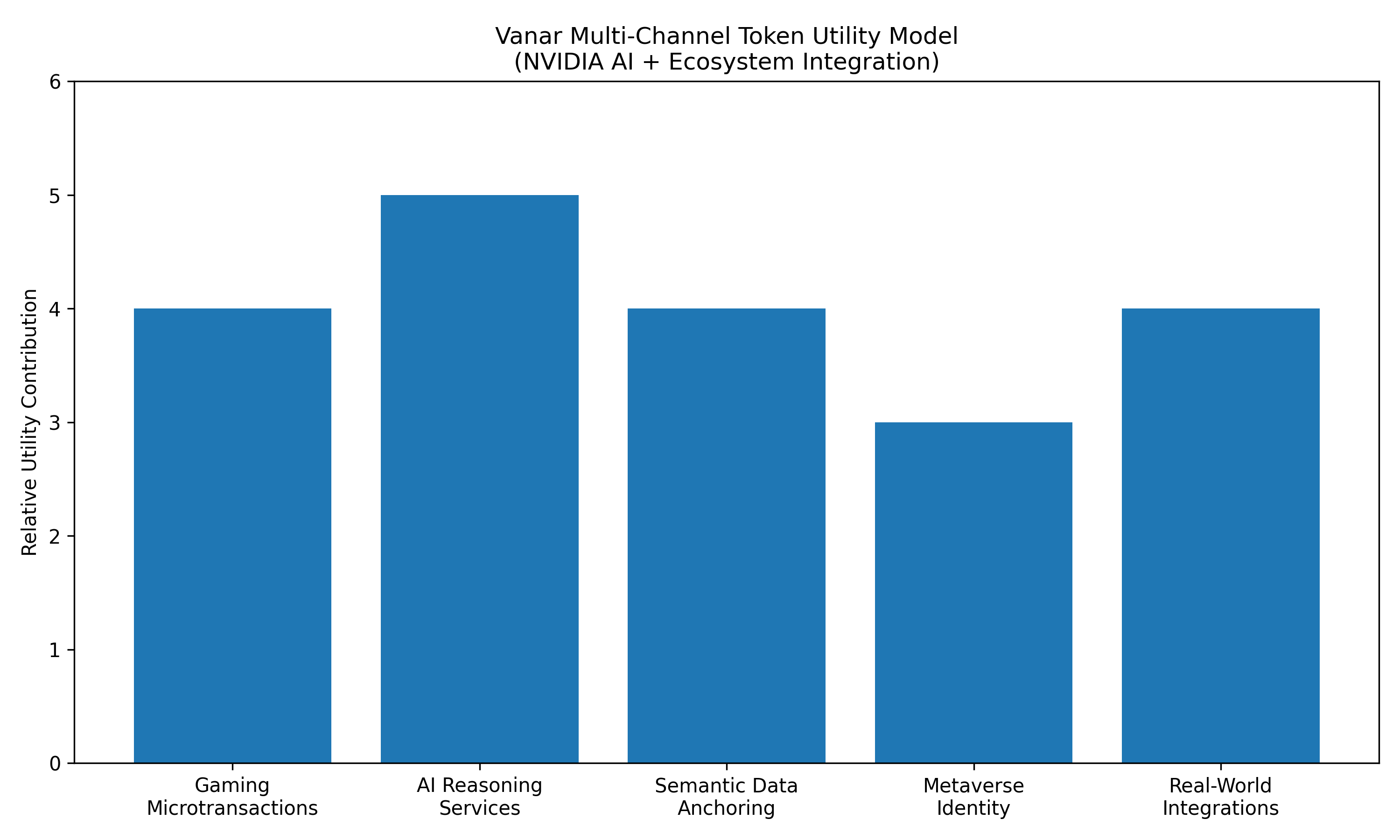
Gaming microtransactions. AI reasoning services. Semantic data anchoring. Metaverse identity layers. Real-world integrations.
Diversity matters.
If token demand comes from only one vertical, it becomes fragile. If it spans AI services, gaming economies, brand integrations, and data infrastructure, the ecosystem is more resilient.
From a broader perspective, this shift reflects a more mature Web3 philosophy.
Instead of asking “How do we increase trading volume?” the better question is “How do we create recurring utility?”
Vanar’s approach resembles SaaS economics more than speculative tokenomics. Recurring payments. Clear service value. Integrated tooling. Ecosystem-wide adoption loops.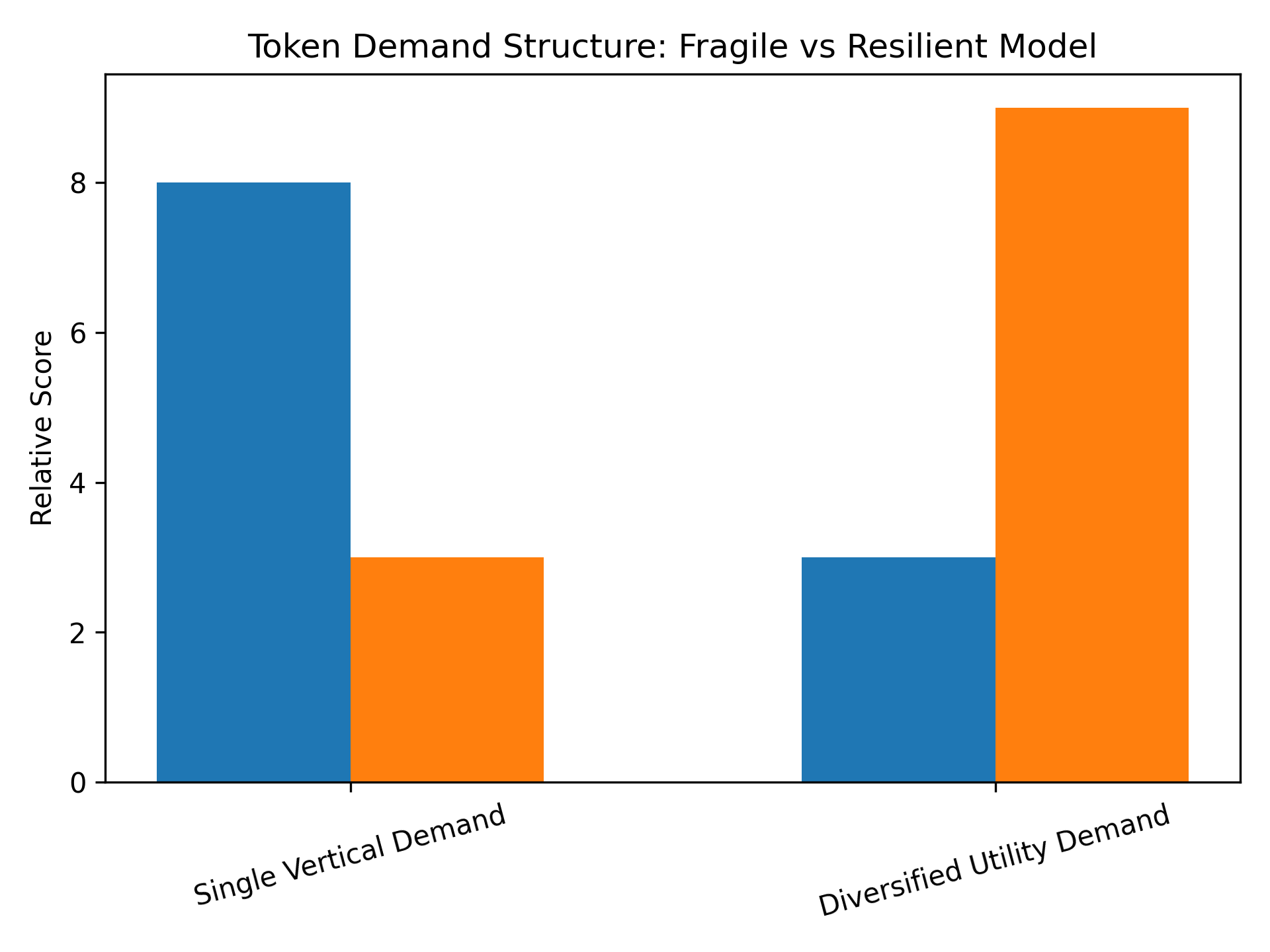
That doesn’t create flashy headlines. But it builds foundations.
There are still risks.
Scale is the biggest one. Subscription demand requires a large base of paying builders and active apps. That means onboarding pipelines must be strong. Builder tooling must be intuitive. Ecosystem support must reduce friction, not add it.
Education matters too. Developers need to understand why paying in VANRY makes sense compared to alternative infrastructure providers.
But if executed properly, this strategy reframes what a Layer-1 token can represent.
Instead of being a volatile toll fee, VANRY becomes the access key to AI-driven infrastructure. Not just a network’s gas, but the fuel for reasoning, memory, indexing, and automation services.
That’s a stronger long-term narrative than “fast chain with AI features.”
It ties token demand directly to product usefulness.
And product usefulness is what survives market cycles.
If Vanar succeeds in aligning AI services, subscription billing, cross-chain utility, and developer adoption, the result won’t look dramatic. It won’t be a viral pump.
It will look like steady usage. Predictable token consumption. Builders quietly relying on infrastructure that works.
And in Web3, that kind of quiet stability is rarer and more valuable than hype.
The real test won’t be price action.
It will be whether developers begin budgeting VANRY the same way they budget cloud expenses.
When that happens, a token stops being speculative noise and starts behaving like software infrastructure.
That’s the narrative shift @Vanarchain is betting on.
