
Vanar is entering a moment in the market where the biggest shifts are happening quietly, not loudly, and that is often where the most durable infrastructure stories begin to form. We are watching technology move from a phase where humans manually control every digital transaction into a phase where software begins to act on its own. AI systems are learning, adapting, and making decisions in real time. The next natural step is economic participation. When software can hold value, spend it, earn it, and reinvest it without constant human input, the structure of digital economies changes. That shift requires a foundation that feels invisible to users but powerful underneath, and this is the type of environment Vanar is trying to build.
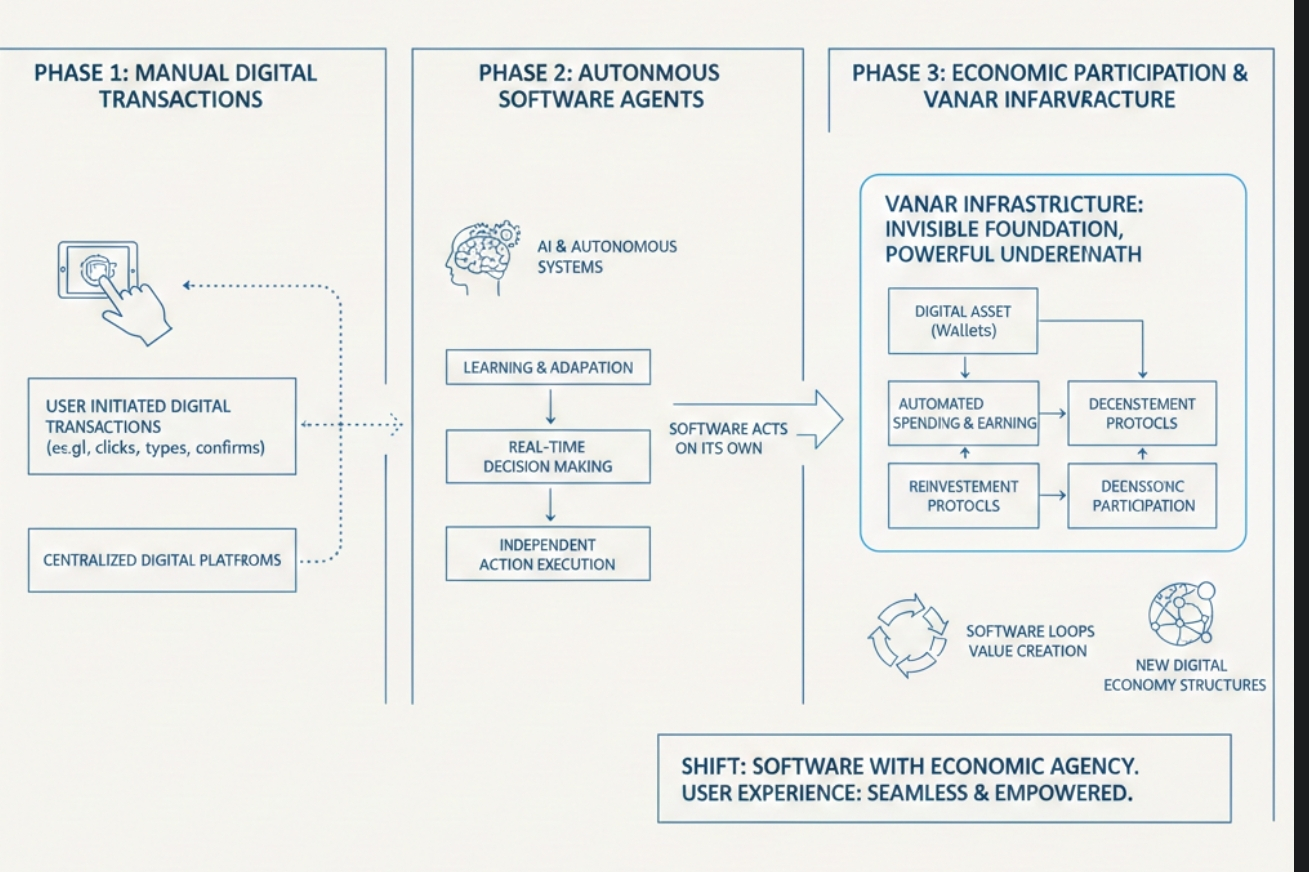
The idea might sound futuristic at first, but it becomes very real when you imagine an AI agent managing a digital storefront in a gaming world, adjusting prices based on demand, paying for visibility, collecting revenue, and reinvesting automatically. Or an AI assistant working for a brand that handles digital campaigns, negotiates placements, and processes payments across virtual environments. These actions are not science fiction anymore. They are extensions of systems already being tested across gaming, entertainment, and online marketplaces. But for them to function smoothly, there must be a network capable of supporting continuous economic activity without creating friction for users.
Vanar’s foundation was designed with real consumer experiences in mind rather than purely speculative trading environments. The team’s background across gaming, entertainment, and brand partnerships shaped a different kind of perspective. In those industries, users do not want to learn complex systems or manage technical steps. They want to interact with experiences that feel natural. If blockchain becomes visible in the wrong way, it creates resistance. So the philosophy here is to make blockchain infrastructure feel like part of the background, something that powers interactions without demanding attention.
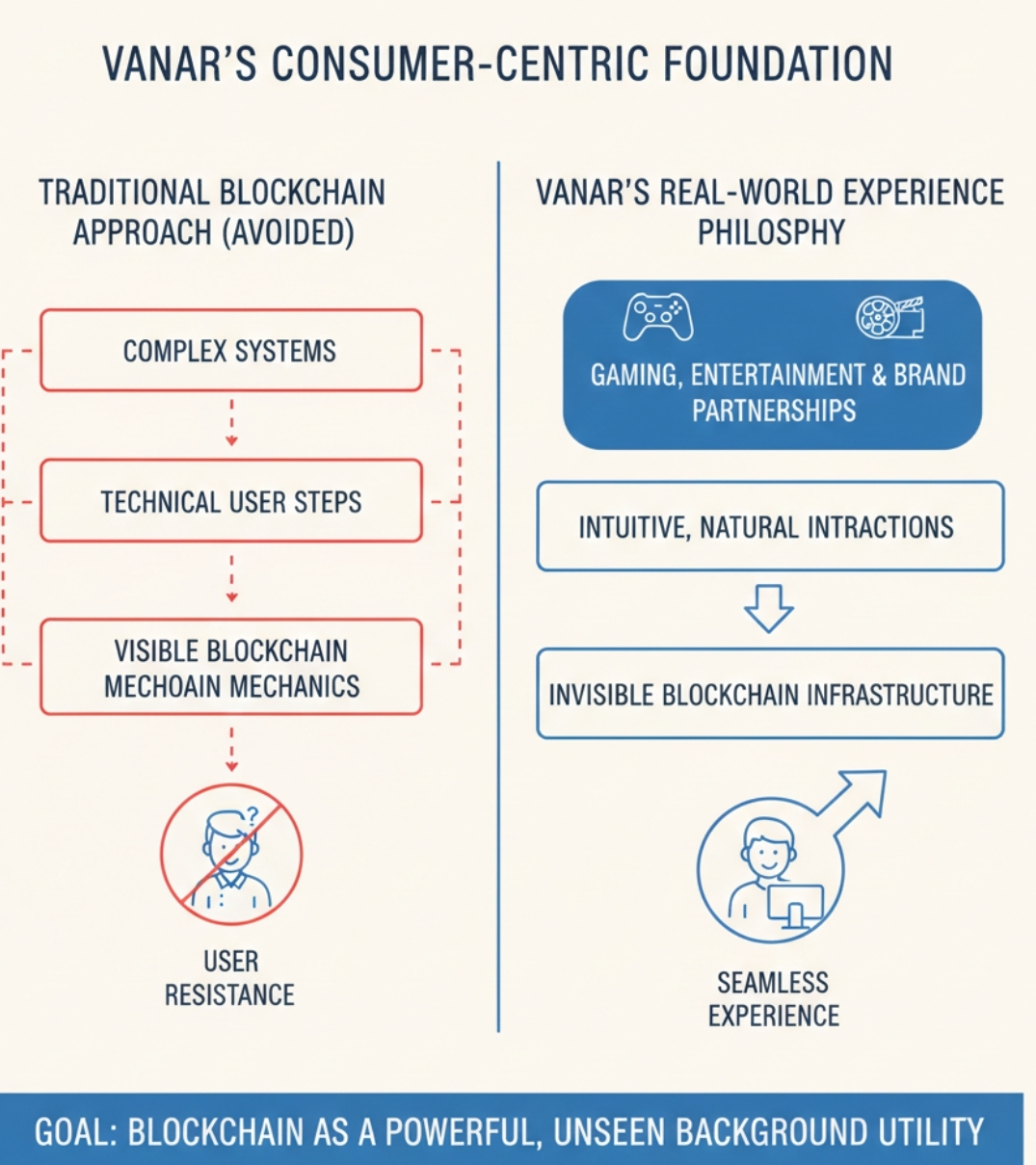
This approach becomes particularly relevant once AI agents are introduced into the equation. Unlike humans, AI agents do not log off or wait for a convenient moment to act. They operate continuously. They analyze data streams, respond to changes in demand, and execute tasks automatically. That means the infrastructure supporting them must be reliable and scalable enough to handle constant activity. If each action required manual approval, the entire system would slow down. But when the network allows seamless execution, AI agents can function as real participants within digital economies.
From an analytical perspective, this changes how we think about blockchain networks. Traditional transaction models assume human behavior. People trade, send, and interact intermittently. But autonomous systems create a different pattern. Activity becomes continuous rather than occasional. An AI agent managing assets could perform dozens of microtransactions daily. Another could monitor market conditions and rebalance digital holdings automatically. Over time, this type of behavior increases network usage in a more consistent way than speculative trading alone.
Vanar’s ecosystem already includes environments where this kind of activity could emerge. The Virtua metaverse provides a space where digital assets and experiences interact across platforms. The VGN games network connects gaming communities and in game economies. Brand and entertainment integrations bring mainstream audiences into digital environments where value moves regularly. These are not isolated experiments. They are interconnected ecosystems where autonomous systems could operate alongside human users.
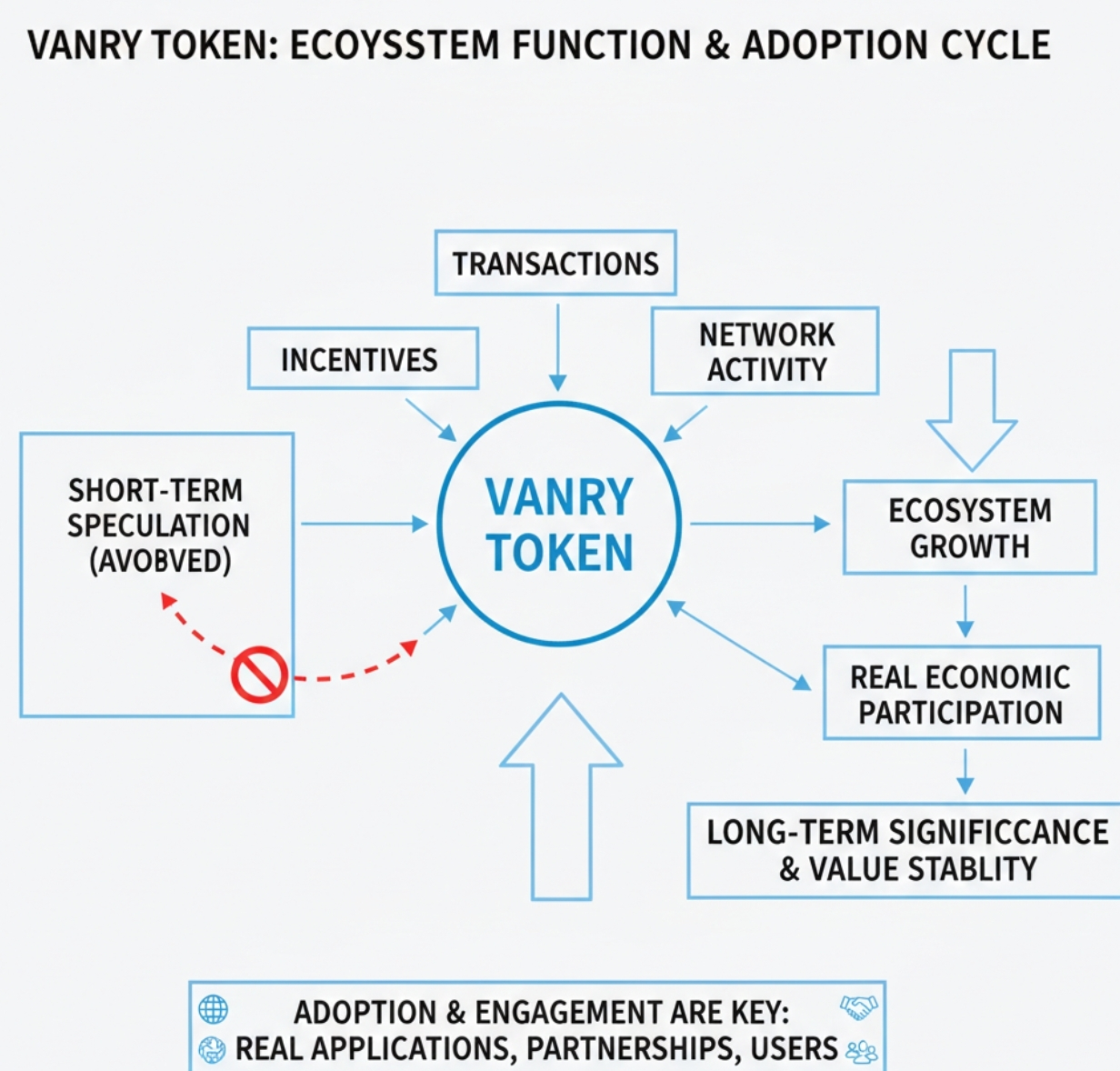
The VANRY token sits at the center of this environment. It supports transactions, incentives, and network activity. If usage across the ecosystem grows, the token becomes tied to real economic participation rather than short term speculation. However, it is important to stay realistic. Infrastructure narratives only become meaningful when adoption follows. Real applications, partnerships, and user engagement will ultimately determine the long term significance of the ecosystem.
There are also risks to consider. AI driven economic activity introduces new security challenges. Autonomous systems must be designed carefully to prevent misuse or unintended behavior. Governance structures need to evolve to handle decisions made by algorithms rather than individuals. Adoption may take time as developers and brands evaluate the reliability of new infrastructure. These factors require patience from both builders and investors.
Market psychology often favors visible excitement over quiet development. Fast price movements and trending narratives attract attention quickly. Infrastructure tends to build slowly and gain recognition later. But when adoption reaches a tipping point, the importance of reliable systems becomes clear. Networks that invested in integration and usability early often find themselves in strong positions once demand grows.
Vanar’s focus on mainstream environments gives it a unique angle. Gaming and entertainment platforms already host digital economies where users spend value regularly. Introducing AI agents into these ecosystems creates new layers of activity. Instead of static markets driven only by human interaction, you get dynamic systems where software participates as well. This could lead to more fluid and responsive digital economies over time.
Timing plays a significant role in this shift. AI adoption is accelerating across industries. Businesses are exploring automated support systems, dynamic pricing models, and intelligent digital assistants. Gaming studios are experimenting with AI driven characters and adaptive worlds. Digital marketplaces are integrating automation into logistics and operations. Each of these developments requires infrastructure capable of handling ongoing economic interaction. Blockchain networks that can support this seamlessly may become increasingly relevant.
The long term vision here is not about replacing human involvement. It is about expanding participation. Humans focus on creativity, decision making, and experience. AI agents handle repetitive tasks, optimization, and continuous monitoring. Blockchain ensures that value moves securely and transparently. When these layers align, digital economies become more efficient and more dynamic.
Vanar is positioning itself within this broader transition. By focusing on real world adoption through gaming, entertainment, and brand ecosystems, it builds in areas where user engagement already exists. By creating infrastructure that operates quietly in the background, it prepares for a future where AI agents interact economically without disrupting user experiences. The network becomes less about visible technology and more about reliable support.
The most impactful technologies often become invisible over time. People rarely think about the infrastructure that powers their daily online activities. They simply use the services available to them. If blockchain reaches that level of integration, adoption could expand significantly. When AI agents begin to act within those environments, economic activity may grow beyond traditional limits.
This transformation will not happen overnight. Infrastructure takes time to mature. But as AI continues to integrate into digital platforms, the need for seamless economic systems will increase. Networks that support both human and autonomous activity may play a central role in shaping the next phase of digital markets. Vanar is building toward that possibility, focusing on environments where technology fades into the background and value continues to move.
