
Most blockchains treat stablecoins like passengers. They ride on systems built for totally different goals, so sending them inherits all the awkward parts. You have to think about fees that jump around, whether a payment is actually finished, and what it even costs to move money in the moment. That might be acceptable for trading. It is not acceptable for everyday payments.
This approach flips that relationship.
Stablecoins are not an add on. They are the point. The system is shaped around one simple belief: stablecoin payments are becoming one of the most important uses of blockchain technology, and the infrastructure should match that reality.
The goal is not to impress people with numbers. The goal is to make moving money feel effortless. When finality is fast enough, sending money stops feeling like a gamble. When you can send stablecoins without needing a separate token just to cover fees, it stops feeling like an insider system. When fees can be handled in the same currency you are sending, the experience starts to look like what people expect from modern payments.
What makes this feel different from most networks is the focus. It is not chasing novelty for its own sake. It is chasing the feeling of calm.
Zero fee stablecoin transfers are not really about free transactions in a naive way. They are about removing a mental tax. In traditional finance, users rarely think about settlement mechanics. The cost is absorbed or handled in the background because the product is the experience, not the plumbing. The aim here is to bring that same invisibility to stablecoin payments so people do not have to learn a new language just to send money.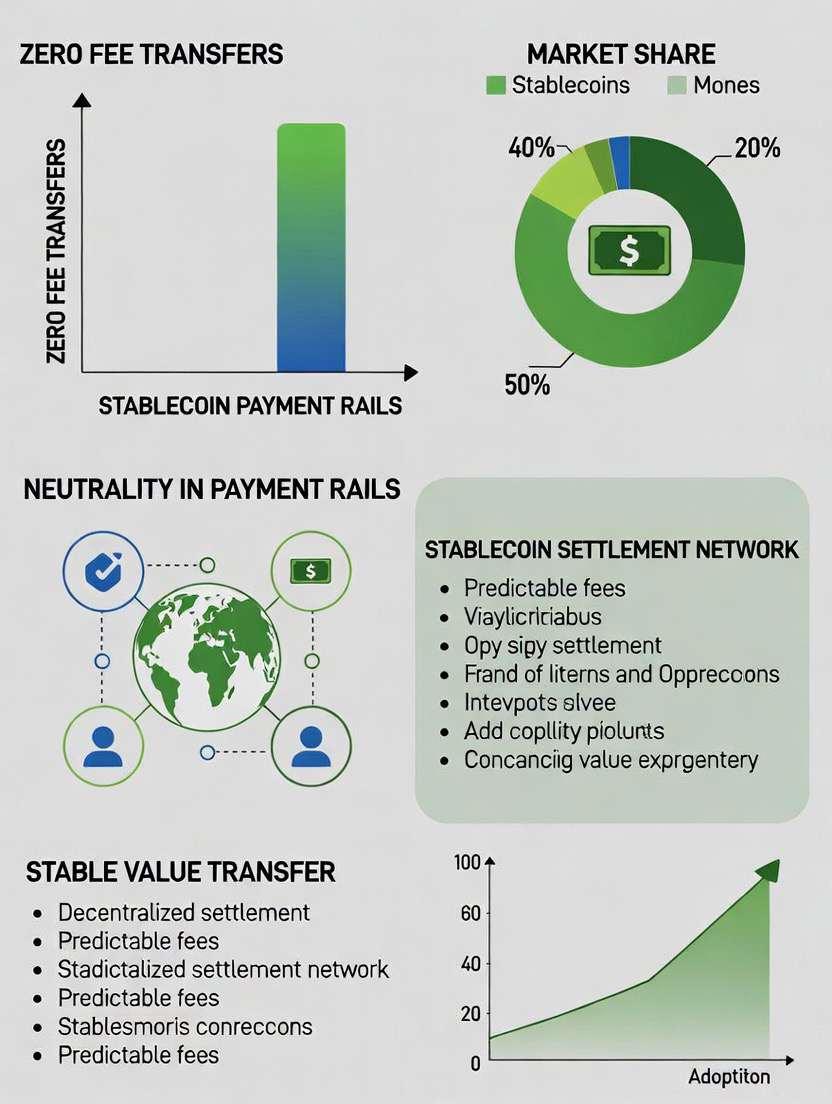
A stablecoin first fee model pushes in the same direction.
One of the strangest habits in crypto is forcing people to hold a volatile asset just to move a stable one. That creates fear, friction, and confusion. If stablecoins are treated as the natural fuel of the system, money starts behaving like money again. People can think in one unit, act in one unit, and stay in one unit.
There is also a bigger principle at stake: neutrality and resistance to pressure. Payment rails are not just technical tools. They are power structures. Whoever can block, censor, or reverse transactions can shape commerce. A settlement layer meant to serve everyday users and institutions cannot afford to feel like it belongs to any single gatekeeper.
The bigger story is that this is not competing the usual way. It is not trying to win by being louder. It is trying to win by becoming something people stop noticing. The best payment infrastructure is the kind that disappears into daily life. When you pay, you do not want to wonder if the network is congested. You do not want to wait long enough to doubt the outcome. You do not want to hold extra assets just to make the system work. You want the payment to feel like a natural extension of intention.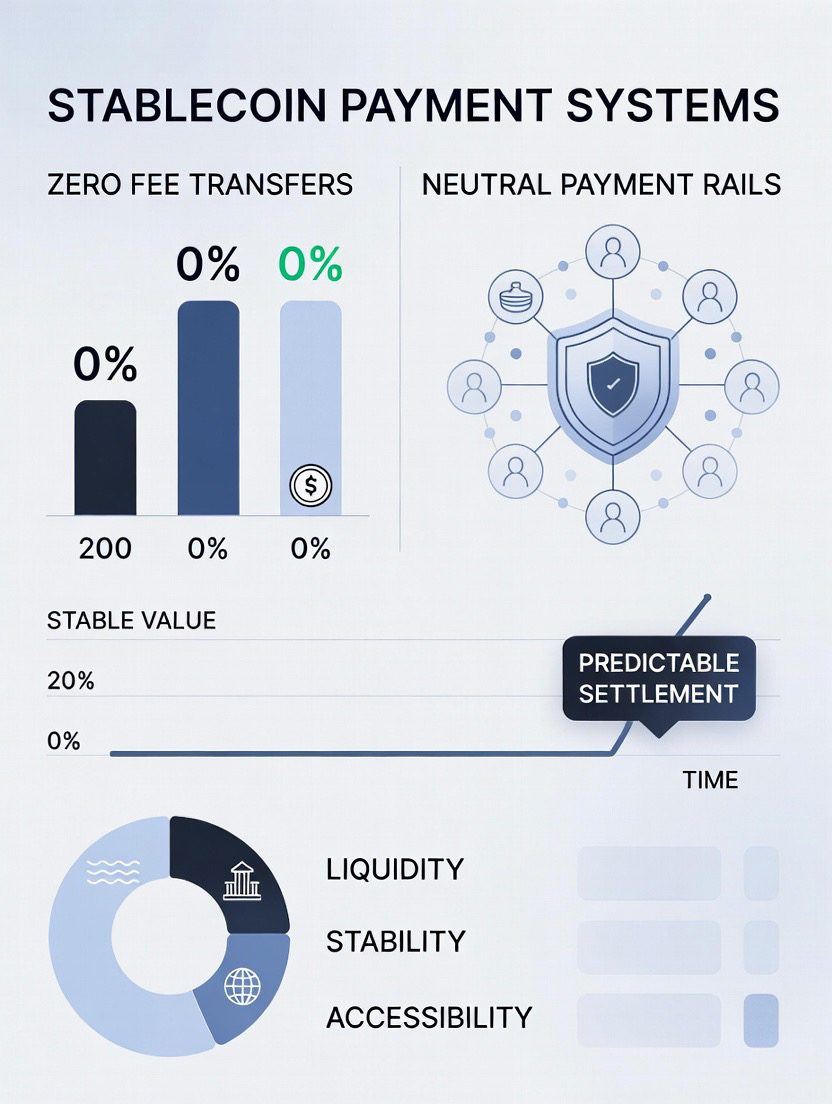
If this succeeds, it will not feel like a place people go. It will feel like a settlement layer that wallets and apps quietly depend on. Something that supports the real work of stablecoins, which is not speculation, but trust based value transfer at internet scale.
The hardest part will not be the technology.
It will be staying disciplined. A stablecoin settlement network has to resist distractions and keep priorities clear. Reliability over hype. Predictability over experiments that introduce chaos. Adoption over insider culture.
In a way, the goal is to take stablecoins out of the crypto mood entirely. Not by rejecting the technology, but by refining it until it stops demanding attention.
That is the kind of change that can reshape how money moves, not with drama, but with quiet inevitability.

