
Positive internal factors, including the launch of spot exchange-traded funds (ETFs), were unable to fully offset the capital outflow observed since the middle of last year. According to a report by Grayscale, price fluctuations $BTC became synchronized with the quotations of high-growth IT companies.
This confirms the thesis that the largest digital currency is traded as a risk asset, not as 'digital gold'.
The crisis of private lending as a hidden reason for the decline
The Grayscale chart shows a strong correlation between software developer stocks and Bitcoin since the beginning of 2024. Such a relationship points to common fundamental forces driving both markets in the past two years.
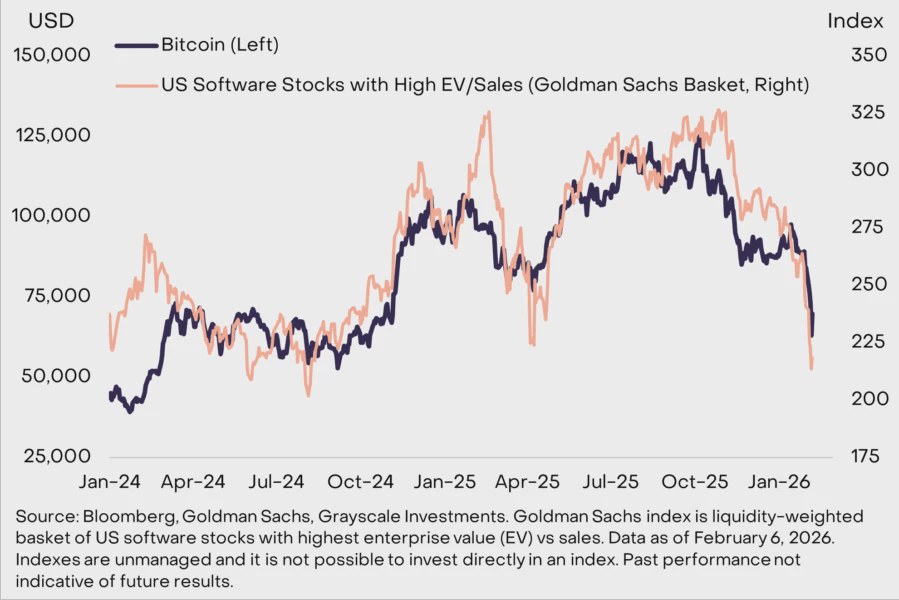
"The synchronous movement of Bitcoin and IT stocks during the last wave of sell-offs indicates a global reduction in positions in risk portfolios. The reasons for the decline lie not in specific problems of the crypto industry, but in the overall market context," emphasize Grayscale experts.
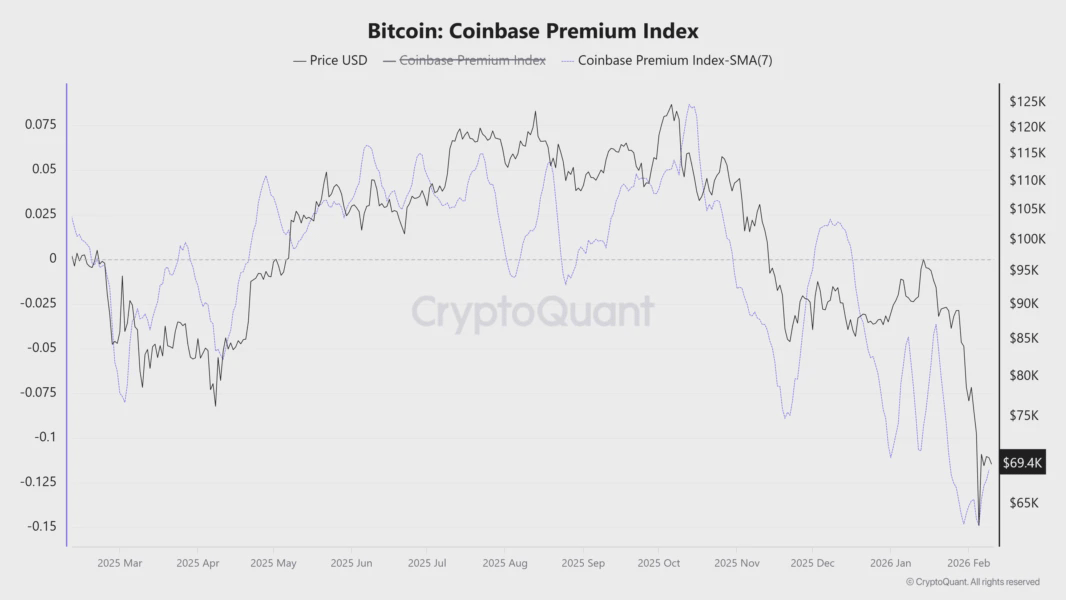
Analysts note that the main pressure comes from American investors. This trend is confirmed by the discount of Bitcoin on the Coinbase exchange compared to the Binance platform. Moreover, since the beginning of February, the net outflow of funds from registered Bitcoin-based exchange products in the US has amounted to about $318 million.
The crisis of private lending as a hidden reason for the decline
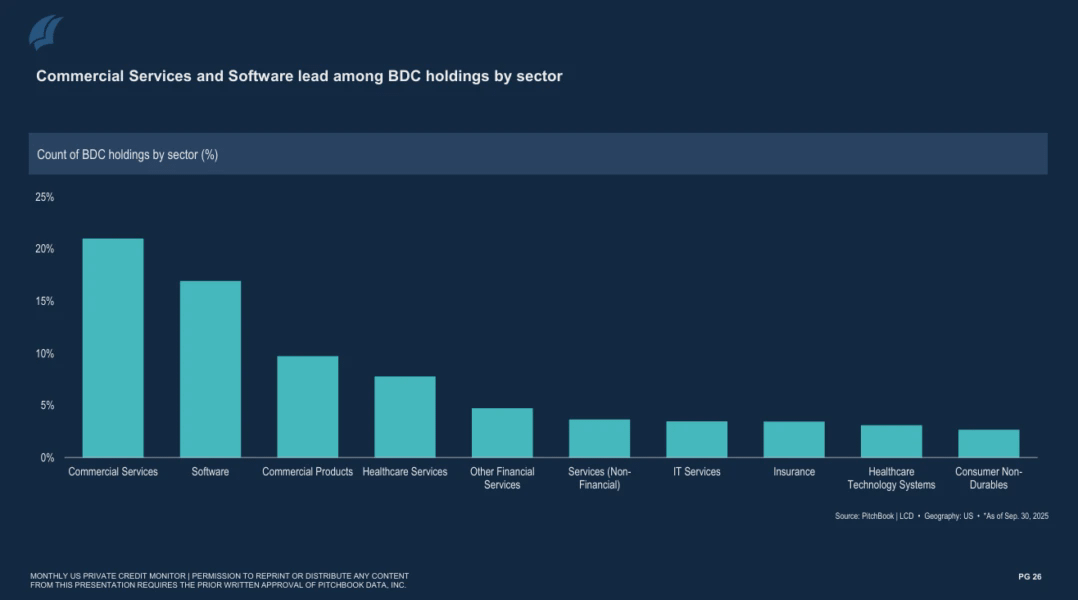
The underlying causes of market weakness are related to risks in the private lending industry. This sector includes non-bank financing from large funds such as Blue Owl, Ares, and Apollo. According to PitchBook, software accounts for about 17% of all direct lending fund (BDC) investments.
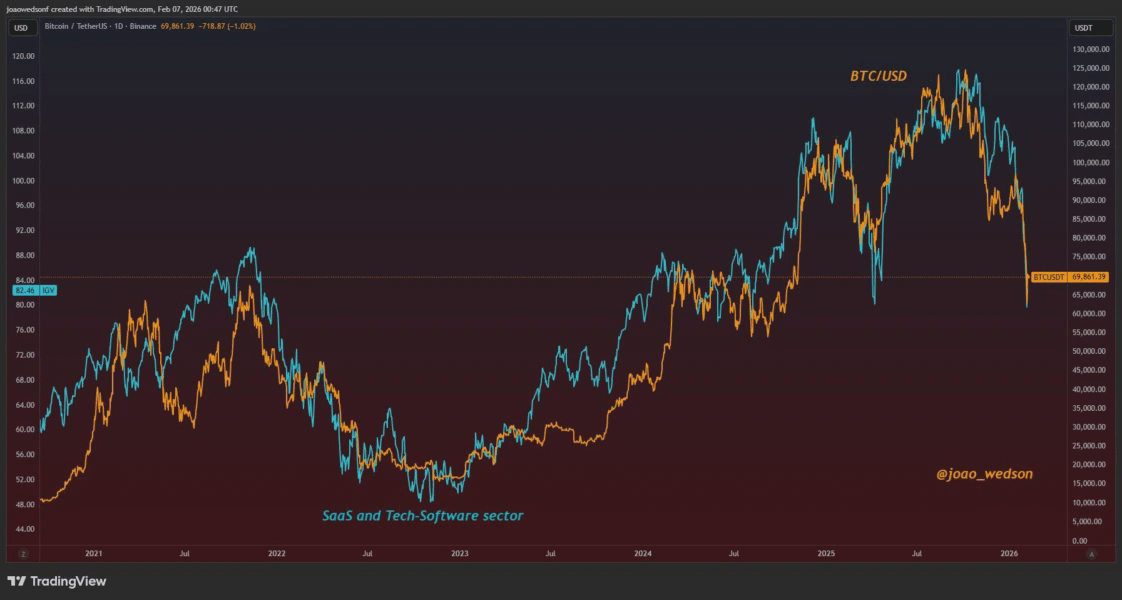
The relationship between the IT market and cryptocurrencies has persisted for over five years. Large funds manage digital assets based on the same principles as shares in software companies. Bitcoin is perceived as an asset with a high 'beta' coefficient, sensitive to liquidity cycles and growth expectations.
The impact of artificial intelligence technologies on the market
Investor concerns are growing in connection with the development of artificial intelligence systems. The emergence of advanced models and automatic code-writing tools may reduce demand for traditional software. This jeopardizes companies' regular revenues, leading to an increase in default risk on loans.
UBS specialists warn that the default rate in the private lending sector in the US may rise to 13%. When problems arise in this sector, financing conditions tighten: funds reduce the issuance of new loans or are forced to liquidate assets to cover obligations.
"Bitcoin has a strong correlation with IT stocks due to a common source of funding — private credit. This sector has been under stress since mid-2025, which explains the divergence of the cryptocurrency's price from global liquidity charts," notes Dan, head of research at Coinbureau.
The development of IT technologies and the credit crisis have become factors that many investors did not consider when assessing the prospects of the cryptocurrency market. The impact of advancements in artificial intelligence on the financial stability of software companies remains a long-term risk for the stability of digital assets.
