


Vanar is basically saying: if the goal is real world adoption, you cannot treat mainstream apps like an afterthought. Games, entertainment, brand experiences, and metaverse style products need a different foundation. They need a chain that is predictable and stable enough to run high frequency interactions, not just occasional transactions. They need an environment where you can design user journeys without worrying that a normal action will suddenly become expensive or slow because the network is congested or the token price moved.
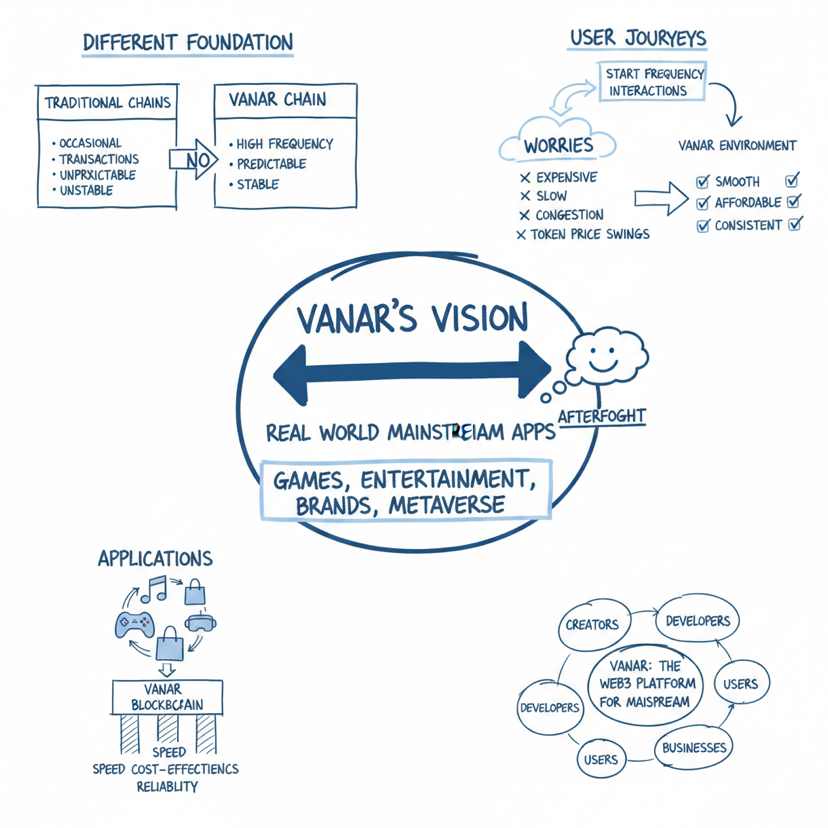
The sharpest pain point here is cost unpredictability. On many networks, you can build a feature that feels perfect in testing, then launch it and watch the economics break because fees spike or become inconsistent. That is not just annoying, it forces teams into compromises. They either subsidize users forever, reduce onchain features, or quietly push core logic offchain so the experience stays smooth. When that happens, the promise of building on a blockchain turns into a marketing layer rather than a real foundation.
Vanar focuses hard on making fees feel stable and practical for consumer scale usage. The reason this matters is simple: consumer apps have pricing and product loops. A game might need to mint items, track progress, or execute small trades constantly. A brand might want to distribute rewards to huge audiences without doing a cost calculation every time the market moves. If the chain cannot keep costs predictable, these products do not scale in a way that feels safe or sustainable. Vanar is trying to solve that by keeping the network experience closer to how real products are priced and operated, where teams can plan and users do not get surprised.
Now layer on what the next wave of consumer apps actually needs. It is not just cheap settlement. It is content, discovery, personalization, and increasingly AI driven features. Most chains do not help you there. Developers end up rebuilding the same stack offchain: databases, indexing, search, recommendation, and all the logic that makes an app feel smart. The chain becomes the final ledger, while the real user experience depends on centralized services. That is fine for a prototype, but it creates operational complexity, extra cost, and a trust gap that never fully goes away.
Vanar leans into a different direction by positioning its stack around mainstream verticals and the kinds of applications that need more than basic transfers. This is why the project keeps pointing to areas like gaming, metaverse, AI, and brand solutions. It is not just a broad claim that it can handle them, it is trying to be defined by them. And that matters because other chains often stay general purpose on paper, then struggle when they try to support consumer scale interaction without friction.
The practical example in Vanars own world is its association with products like Virtua Metaverse and the VGN games network. Whether someone is exploring a digital world, interacting with in game items, or moving through a branded experience, the expectation is the same: smooth, fast, and predictable. These are the exact environments where fee volatility and clunky onboarding kill momentum. If Vanar can make those experiences feel natural, without constant workarounds, it proves the mission in a way that no roadmap can.
So when people ask what Vanar does better than anyone, the honest answer is not that it is simply faster or cheaper. It is that it is trying to make blockchain disappear into the background for consumer apps. The user is not meant to feel the chain. The user is meant to feel the product. Vanar is attempting to build an L1 where mainstream adoption is not a future narrative, but a design constraint from day one.
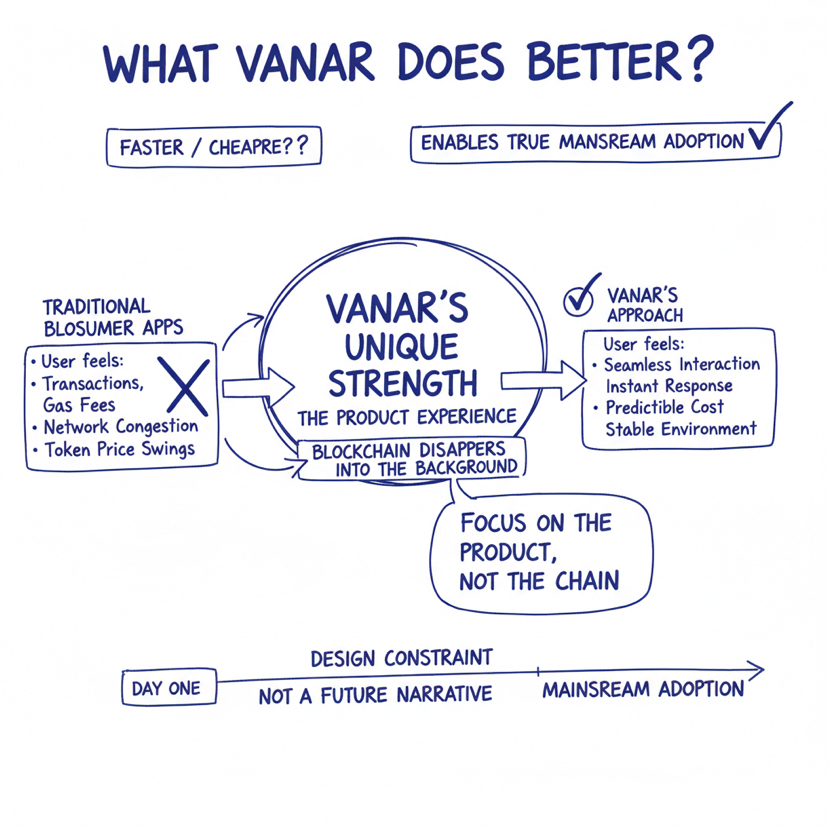
Vanar succeeds in the next 6 to 12 months, it will not be because of a single announcement. It will look like real usage. More apps actually launching and retaining users. More onchain interactions happening at a frequency that feels normal for games and entertainment. Fees staying stable enough that teams do not need to constantly reprice or subsidize. And a visible pattern where builders choose Vanar specifically because other chains still force too many compromises when you try to scale a consumer experience.
