
Most blockchains were built to move tokens. Vanar was built with a different ambition — to move people.
Behind the technical language of Layer 1 architecture and delegated proof-of-stake systems, there’s a simple idea driving Vanar forward: blockchain will never reach billions of users if it feels like infrastructure. It has to feel like experience. It has to feel invisible, intuitive, and intelligent. And that belief shapes everything about Vanar’s design.
The team behind Vanar didn’t come from a purely academic crypto background. Their roots are in gaming, entertainment, and digital brand experiences — industries that live and die by user engagement. They understand something that many protocol-first projects overlook: people don’t adopt technology because it is technically impressive. They adopt it because it is meaningful, entertaining, useful, or emotionally engaging.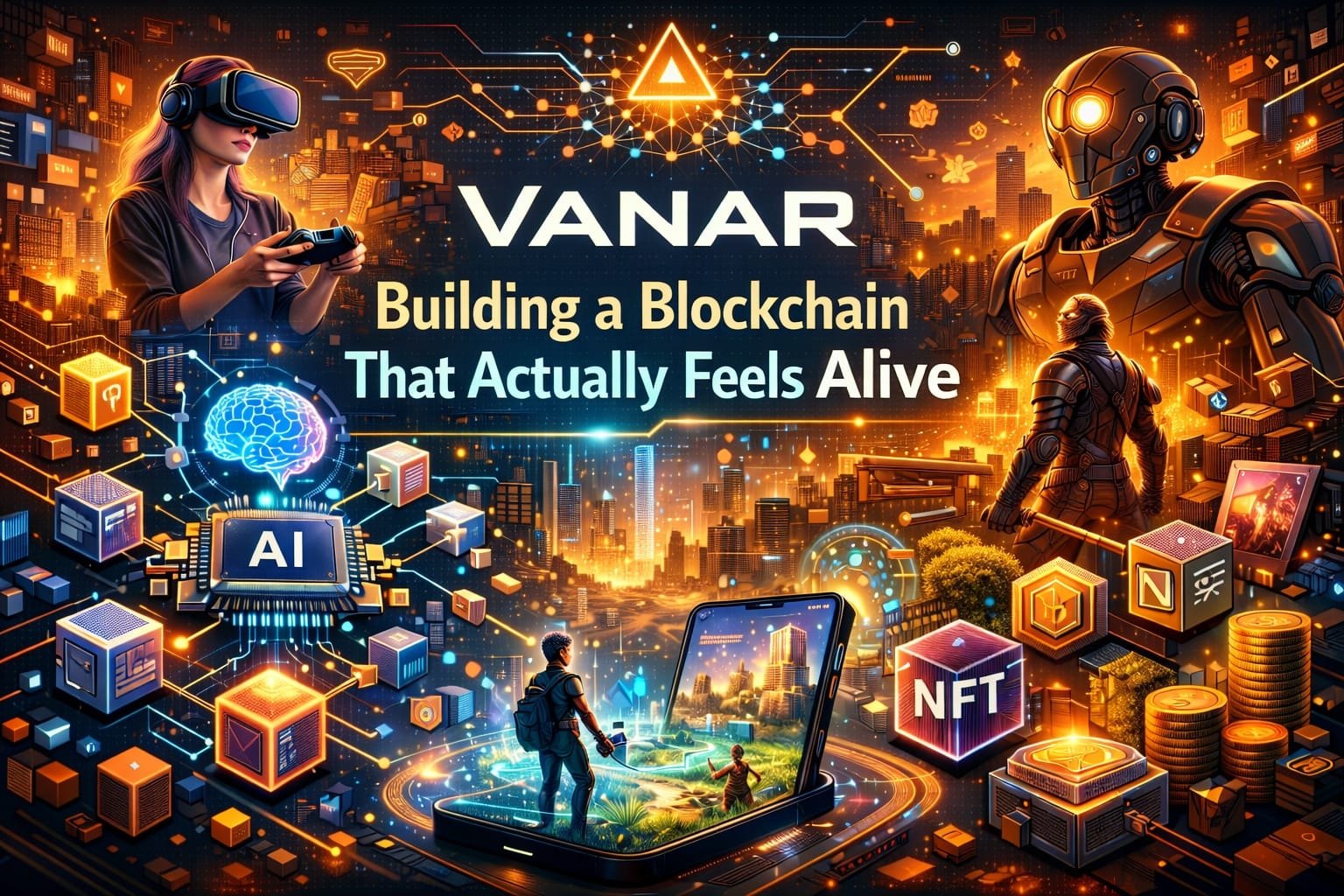
That philosophy explains why Vanar doesn’t just talk about throughput or gas efficiency. Instead, it talks about bringing the next three billion consumers into Web3. That’s not a small claim. It implies a shift away from crypto-native audiences and toward everyday users who may never care about consensus algorithms but deeply care about digital identity, ownership, and immersive experiences.
Technically, Vanar positions itself as an AI-native Layer 1 blockchain. That phrase gets used often in marketing across the industry, but Vanar attempts to ground it in structural design. Rather than treating artificial intelligence as an add-on feature, it aims to embed intelligence into the network itself. Through layered architecture and semantic data compression, Vanar seeks to make blockchain data not just verifiable but understandable — especially for AI-driven applications.
Why does that matter? Because modern digital systems increasingly rely on AI models that process patterns, context, and relationships. Traditional blockchains store data securely, but they don’t make it easy for intelligent systems to interpret that data efficiently. Vanar tries to bridge that gap. By compressing large datasets into smaller, structured units and designing infrastructure that supports fast processing, it hopes to create an environment where decentralized applications can feel responsive and adaptive rather than rigid and mechanical.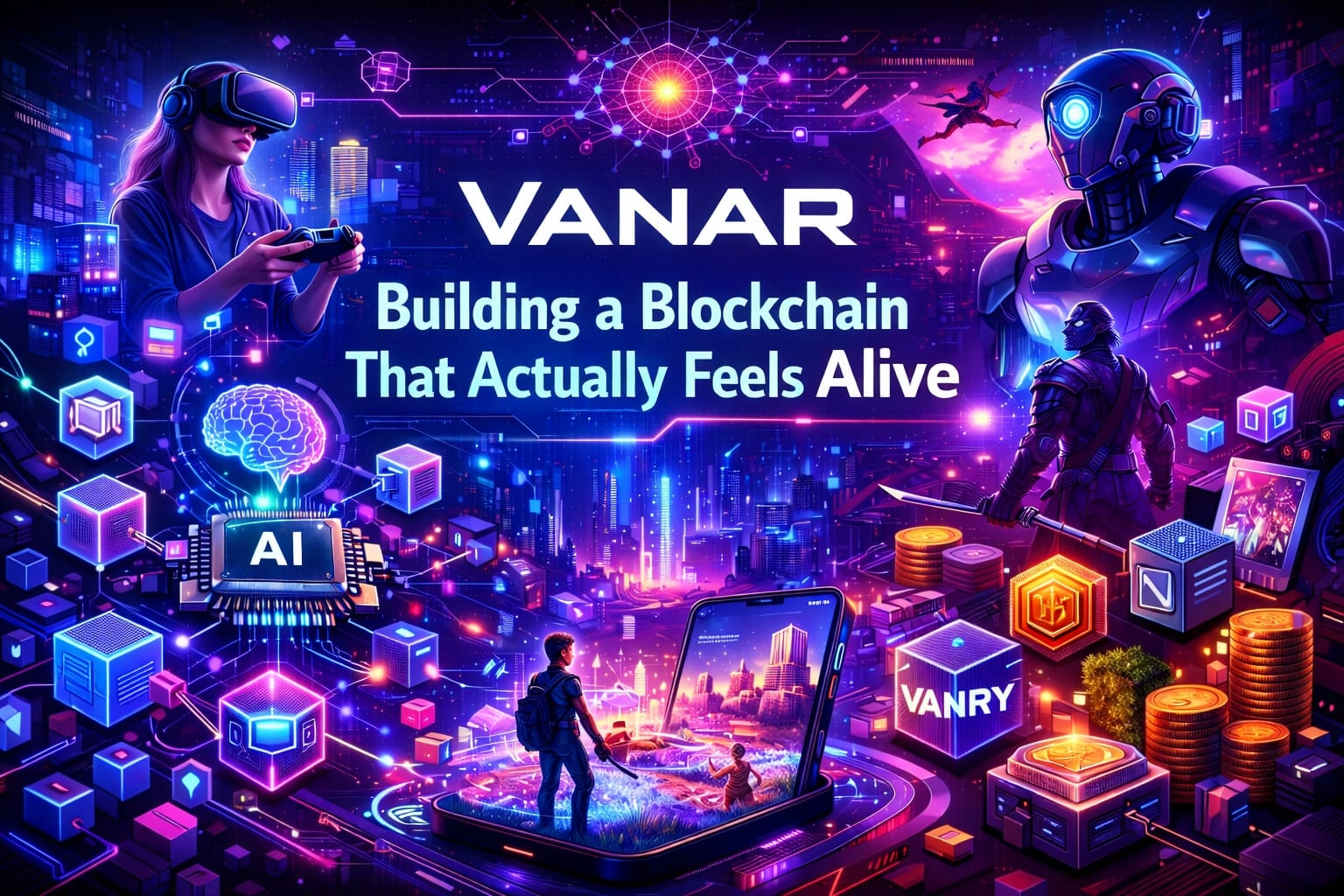
But technology alone doesn’t create adoption. This is where Vanar’s ecosystem becomes important.
Products like Virtua Metaverse and the VGN Games Network aren’t side experiments — they are proof-of-concept environments. They represent Vanar’s attempt to test its infrastructure in real consumer scenarios. In gaming and metaverse ecosystems, users expect speed, immersion, and continuity. Digital assets need to move seamlessly between experiences. Items should not just exist as static collectibles; they should evolve, unlock content, and carry context across platforms.
If blockchain can support that kind of dynamic functionality, it becomes something more than a ledger. It becomes a living layer beneath digital worlds.
The transition from the earlier TVK token to VANRY marked a deeper evolution of this vision. VANRY is not just a rebranded asset; it powers the entire ecosystem. It fuels transactions, secures the network through staking, and enables governance. In a delegated proof-of-stake model like Vanar’s, validators play a central role in maintaining performance and reliability. The network began with a more controlled validator set, prioritizing trust and operational stability, while planning gradual decentralization over time.
That balancing act — between reliability and decentralization — is one of the most delicate challenges any Layer 1 faces. Too centralized, and the network loses credibility. Too fragmented too quickly, and performance suffers. Vanar’s long-term strength will depend on how carefully it manages that evolution.
There is also a broader impact worth considering. As AI systems become more autonomous, they will increasingly interact with digital assets and financial infrastructure. A blockchain built with intelligence in mind could serve as a settlement layer for machine-to-machine transactions, autonomous agents, and programmable digital property. In that future, networks like Vanar would not simply host games or NFTs — they could underpin entirely new forms of economic coordination.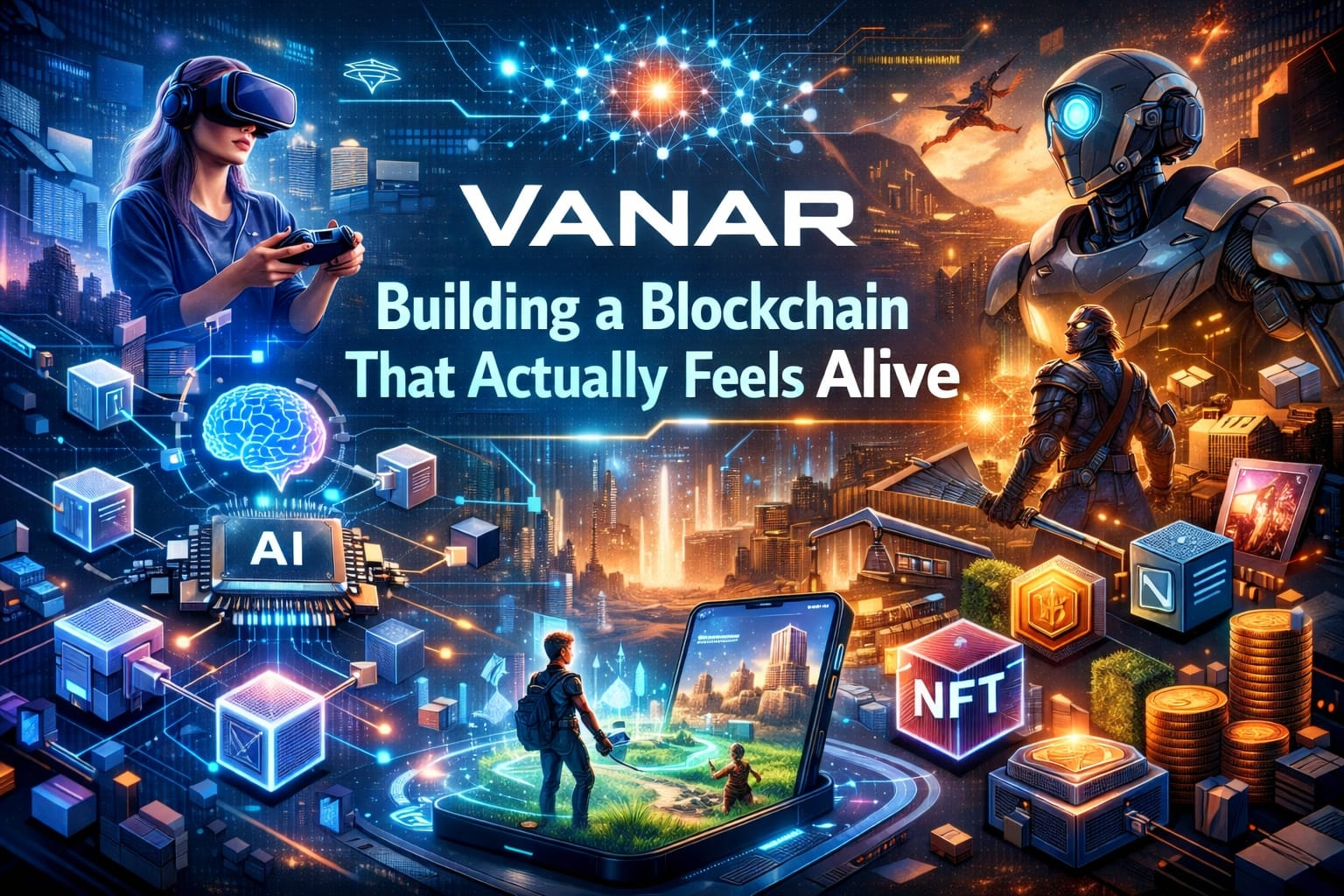
Of course, ambition carries risk. Building an AI-integrated blockchain demands computational resources, careful incentive design, and sustained developer interest. The crypto space is filled with projects that promised transformation but struggled to translate vision into durable usage. Vanar’s success will not be measured by technical whitepapers alone. It will be measured by active users, thriving applications, and a community that builds beyond speculation.
What makes Vanar compelling is not that it claims to be faster or cheaper than every competitor. It is compelling because it tries to rethink what blockchain should feel like. Instead of presenting decentralization as a feature for developers only, it treats it as infrastructure for digital culture — for games, brands, immersive worlds, and intelligent systems.
In a space often dominated by abstract metrics and token price charts, Vanar’s narrative feels more human. It speaks about experiences, ecosystems, and meaningful engagement. Whether it ultimately reshapes the industry remains to be seen. But by attempting to merge intelligence with decentralization and entertainment with infrastructure, Vanar is pushing the conversation forward.
And sometimes, progress begins not with a louder claim, but with a different question: what if blockchain could actually feel alive?
