


Hashrate represents the mining difficulty of Bitcoin, which has just experienced the largest drop since 2021, causing weaker miners to leave. So what is the cause of this and is it correlated with the price $BTC ?
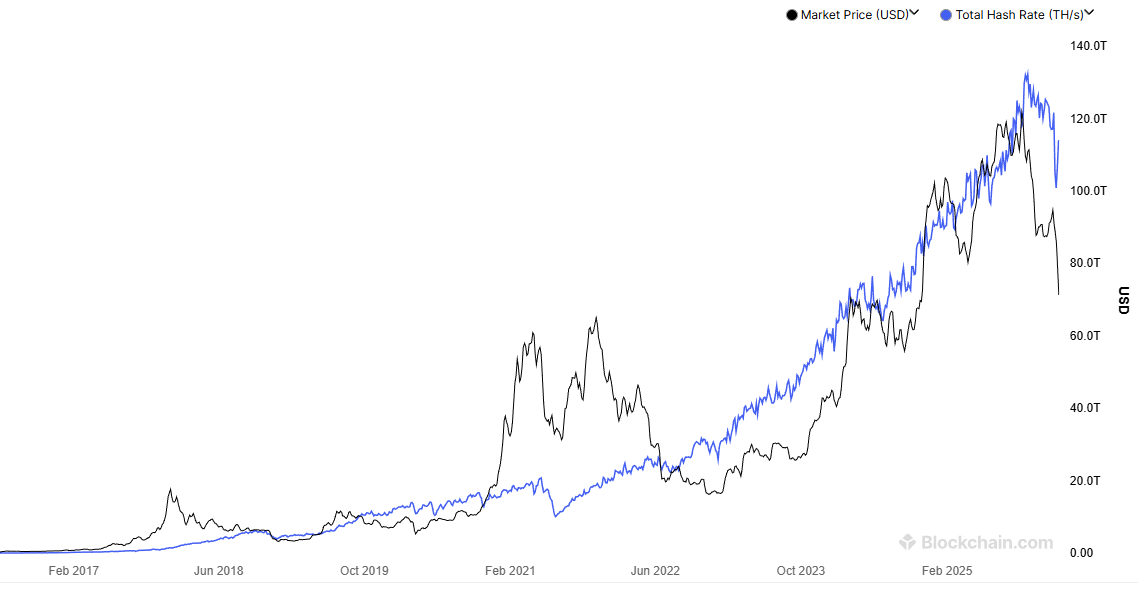
1. Analyzing the causes of Hashrate decline
- The price of BTC has dropped significantly; when the price decreases, the revenue of miners (measured in USD) is no longer enough to cover electricity and operational costs, forcing small miners or those using older machines to disconnect.
- At the beginning of 2026, winter storms in the U.S. (where many large mining farms are concentrated) caused rolling blackouts or skyrocketing electricity prices, making it economically unfeasible to maintain hashrate.
- A new trend in 2025-2026 is for Bitcoin mining companies to convert their infrastructure to provide power for AI data centers (High-Performance Computing - HPC) for stable and higher profits compared to mining BTC in a bear market.
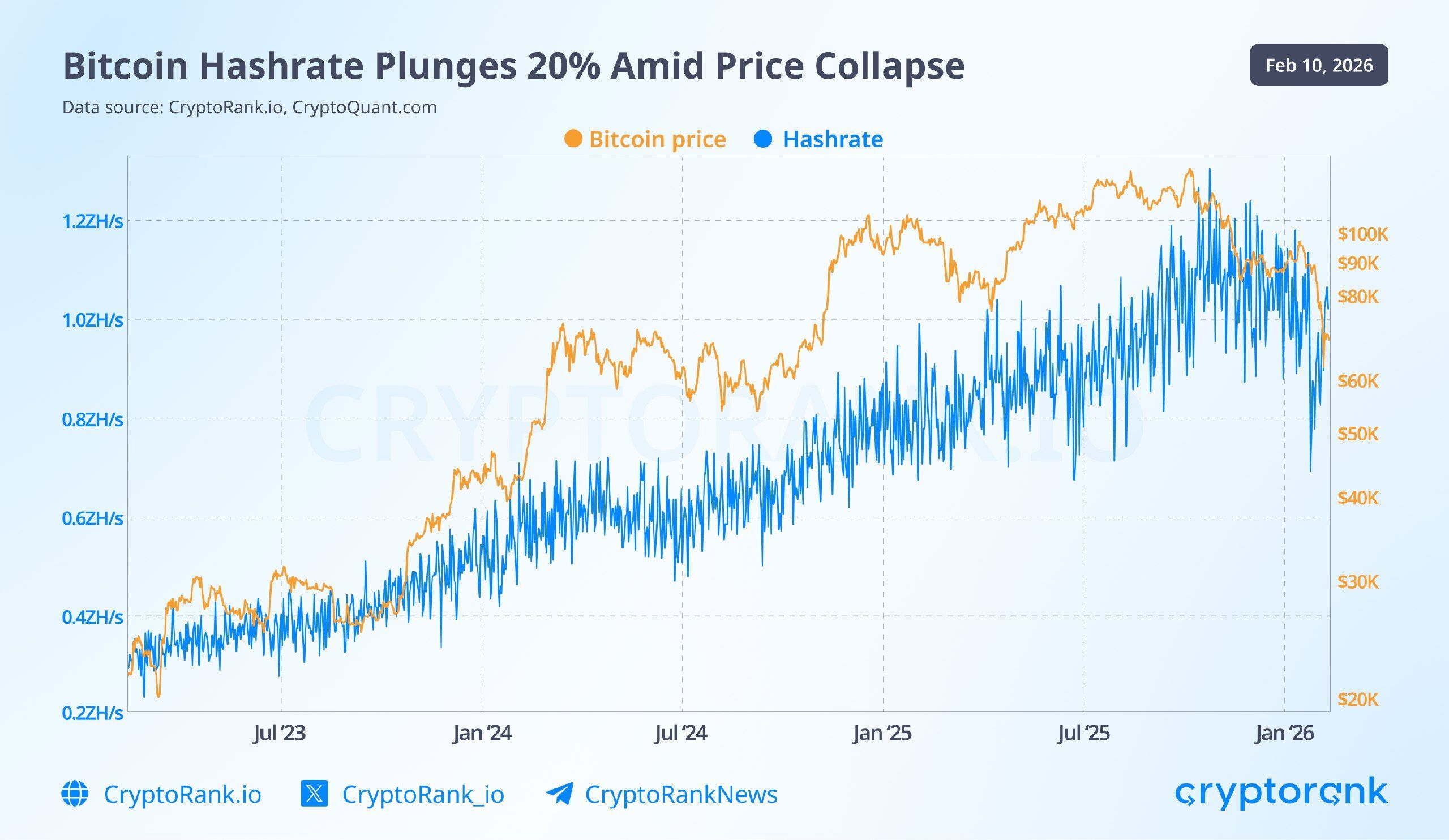
2. Correlation between Hashrate and BTC Price
- In the short term, prices often drop first, and then Hashrate decreases afterward (as miners need time to assess losses/profits before shutting down).
- When Hashrate decreases sharply (~20%) and a Difficulty Adjustment occurs, this is often a signal of "Miner Capitulation." History shows that large drops in Hashrate (like in 2021) often mark the end stage of a downtrend, establishing a new long-term price range.
3. Consequences for BTC price
- Once the weaker miners have exited the game, the selling pressure from this group to cover costs will diminish.
- The market needs time to absorb the amount of BTC that has been sold off. Prices may form an accumulation zone around the current support level.
- After the difficulty decreases, increased mining efficiency will attract new, more effective generation machines back to the network. Hashrate will gradually recover and establish new all-time highs (ATH).
