
Bitcoin’s current structure is creating confusion across the market. Price is no longer in a euphoric uptrend, yet it’s not collapsing either. This type of environment forces a more important question:
Are we witnessing distribution by large holders, or quiet re-accumulation before the next expansion phase?
To answer this properly, we need to step away from surface-level price action and look at on-chain behavior.
1️⃣ Long-Term Holder Activity: The Conviction Gauge
One of the clearest signals comes from Long-Term Holder (LTH) Net Position Change.
When LTH supply increases, it suggests coins are moving into stronger hands — typically a re-accumulation phase.
When LTH supply declines, it indicates distribution — experienced holders are selling into strength.
Currently, data shows:
LTH accumulation has slowed significantly.
Some older coins are beginning to move.
Short-term supply is gradually increasing.
This does not confirm aggressive distribution, but it signals reduced conviction at current price levels.
2️⃣ Exchange Flows: Are Coins Moving to Sell?
Exchange inflows often precede distribution phases.
If large volumes of BTC move onto exchanges, it increases available sell-side liquidity.
If BTC leaves exchanges, it suggests long-term storage behavior.
Recent flow data shows mixed behavior:
No extreme spike in exchange deposits.
But also no aggressive outflow trend.
This neutral positioning typically aligns with consolidation, not panic selling.
3️⃣ Realized Price & Cost Basis Clusters
Cost-basis clusters reveal where major supply last changed hands.
If price holds above key realized price zones, the structure often remains constructive.
If price breaks below high-density cost clusters, underwater holders can accelerate selling pressure.
Right now, Bitcoin is hovering near an important cost-basis region.
Holding this level would favor re-accumulation.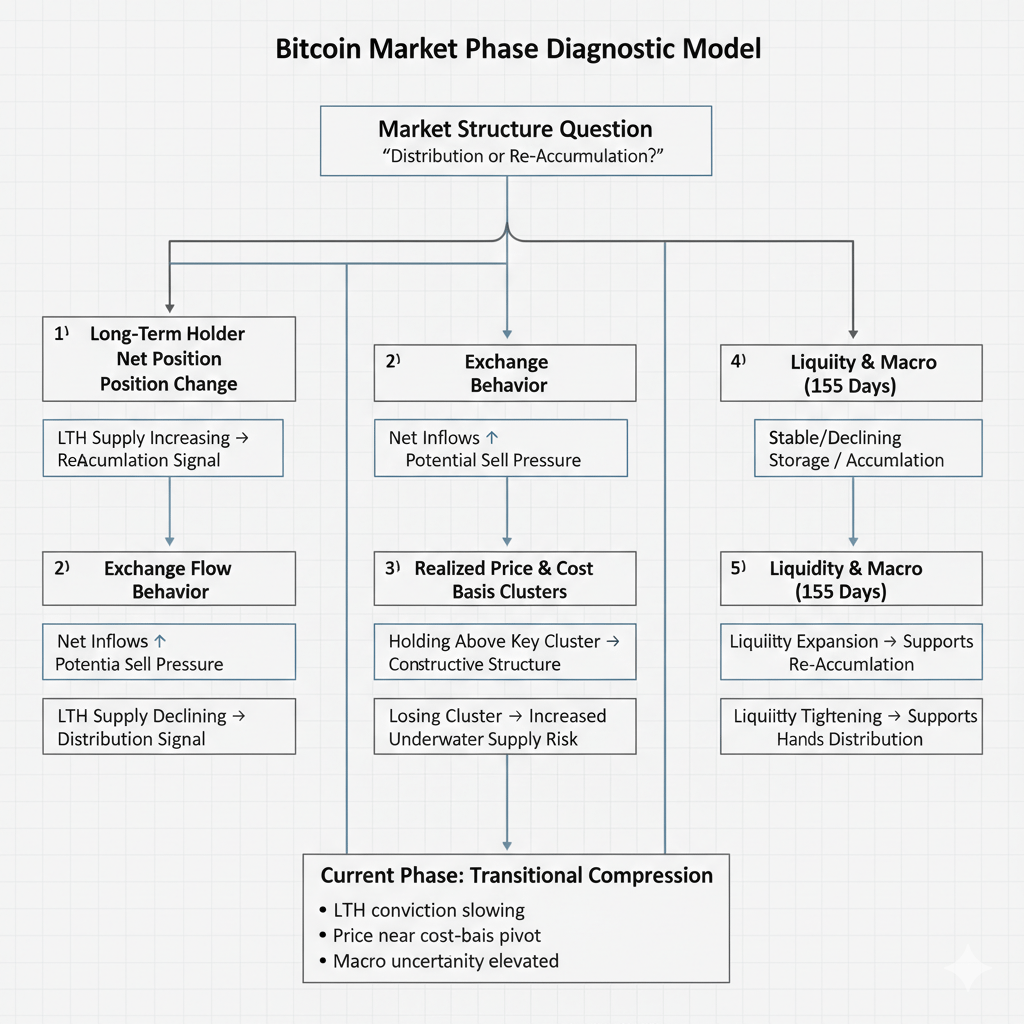
Losing it increases probability of distribution continuation.
4️⃣ Short-Term Holder Behavior: Fragility Factor
Short-term holders (coins held <155 days) tend to react emotionally.
An increase in short-term supply suggests speculative positioning.
That increases volatility risk because these holders are more likely to panic sell.
Recent data shows a modest rise in short-term participation.
This adds fragility to the structure.
5️⃣ Liquidity Environment: The Macro Overlay
No cycle analysis is complete without macro context.
Bitcoin does not move in isolation.
Global liquidity conditions, rate expectations, and risk appetite influence accumulation behavior.
If liquidity tightens further, distribution pressure increases.
If liquidity stabilizes or expands, re-accumulation becomes more probable.
So… Distribution or Re-Accumulation?
The data does not yet show full-scale distribution.
But it also does not confirm strong re-accumulation.
What we’re seeing is a transitional phase: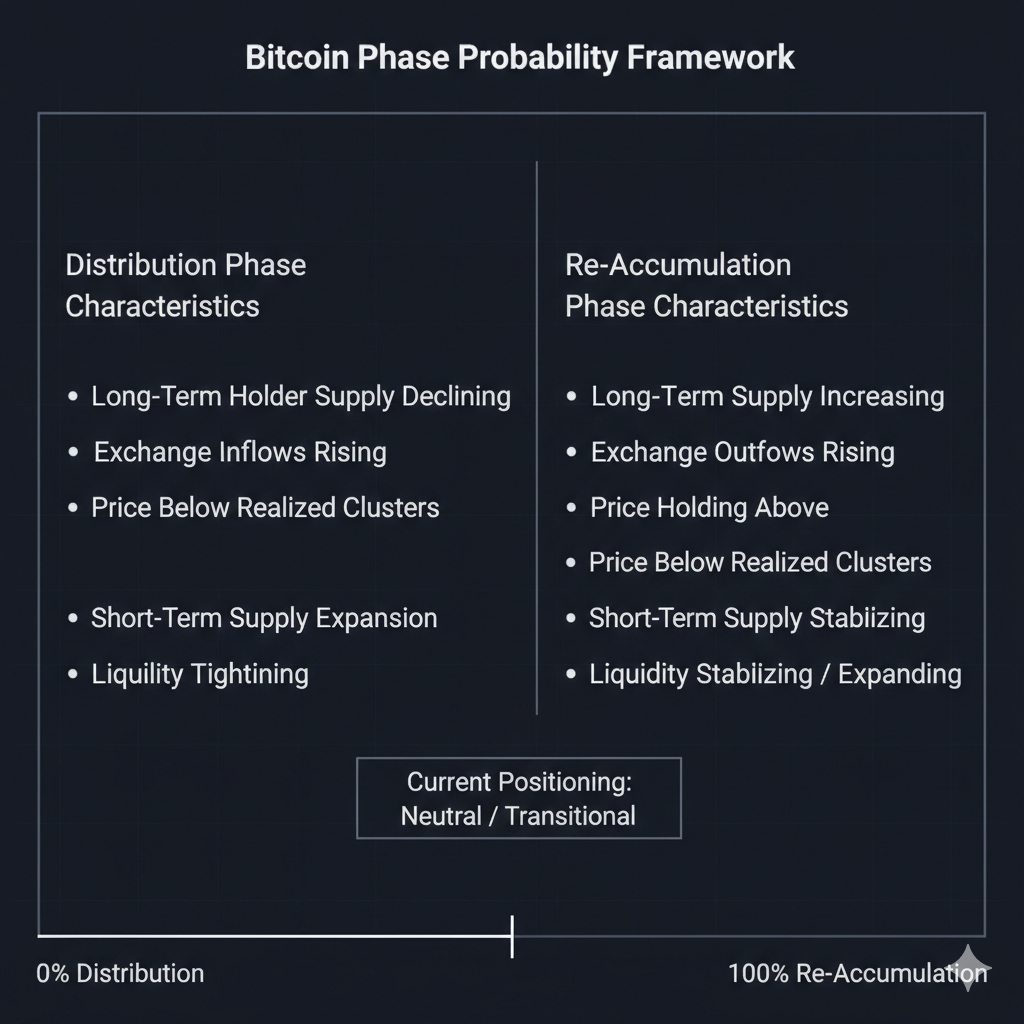
Long-term conviction slowing
Short-term speculation increasing
Price compressing near key cost clusters
Liquidity conditions uncertain
This is typically the stage where markets build a base — or lose it.
The next decisive move will likely come from whether long-term holders resume accumulation or continue reducing exposure.
In cycles like this, patience matters more than prediction.
