
Vanar didn’t suddenly become “new.” What changed is how the market is looking at projects in 2026, and how Vanar is positioning itself right inside that shift. Last month, it was easy for people to place Vanar in a simple box: a gaming and metaverse-focused L1 with big adoption goals. This week, the story feels tighter. It’s being framed less like “another chain with a theme” and more like infrastructure that’s trying to solve real problems in a way people can actually build on.
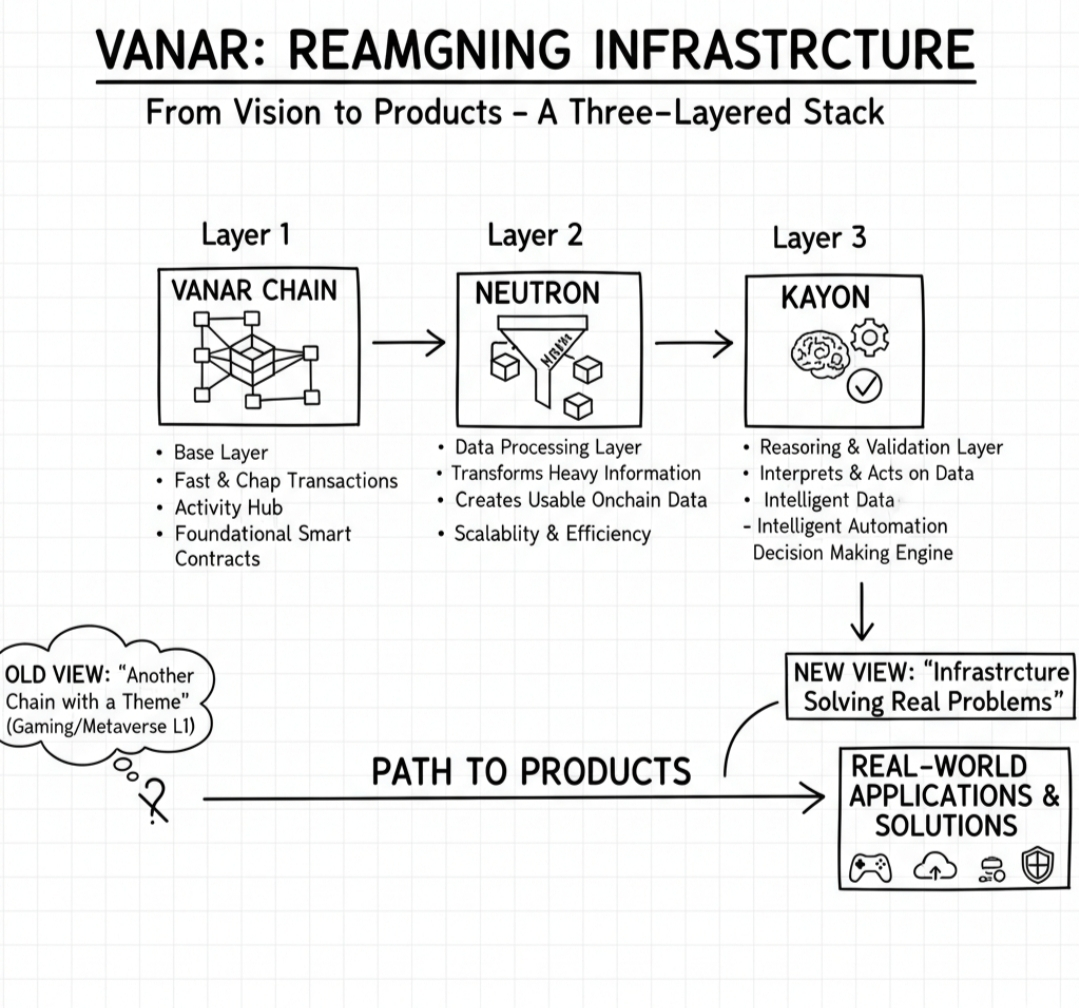
The biggest difference is that Vanar isn’t talking in vague AI language. The messaging is starting to feel like a proper stack, not a buzzword. The idea is basically this: the chain is the base layer where activity happens fast and cheap, Neutron is positioned as the layer that turns heavy information into something smaller and usable onchain, and Kayon is described as the reasoning layer that can validate and act on that information. When a project can explain itself like a stack, it becomes easier to take seriously, because you can see the path from “vision” to “products” without guessing.
That’s also why the “real-world adoption” line is hitting harder now than it did a month ago. In 2026, people aren’t just chasing speed or shiny narratives. They’re watching for networks that can support payments, tokenized real-world assets, compliance-style checks, and AI agents that can actually do things reliably instead of just looking smart in marketing. The market mood changed, and Vanar’s message suddenly matches it better. So it doesn’t feel like Vanar is forcing itself into a trend — it feels like the trend finally moved into Vanar’s lane.
The consumer angle matters here too, because Vanar isn’t starting from zero. When you mention things like Virtua Metaverse and the VGN games network, it gives the story some weight. It’s not just “we will onboard users one day.” It’s more like “we’re already building around mainstream verticals, and we want to scale that into something much bigger.” Even for someone who doesn’t follow every update, that existing footprint makes the “next 3 billion consumers” idea feel less like a slogan and more like a direction.
And then there’s the token side, because this is where a lot of projects fall apart. Many L1 tokens end up being nothing more than gas. Vanar’s positioning around VANRY leans into participation — staking, validators, governance, and powering the network. The reason that matters more right now is simple: once a project shifts toward AI infrastructure and real adoption, governance stops being a checkbox. It becomes part of the product, because the rules and incentives shape what gets built and what gets rewarded.
So the “why now?” isn’t about one dramatic announcement. It’s more like the story became easier to believe at the exact moment the market became more selective. Last month, Vanar could be dismissed as a chain with a gaming narrative. This week, it’s being presented as a practical L1 with a clearer AI-and-data direction, aimed at the parts of crypto that are actually growing up in 2026.
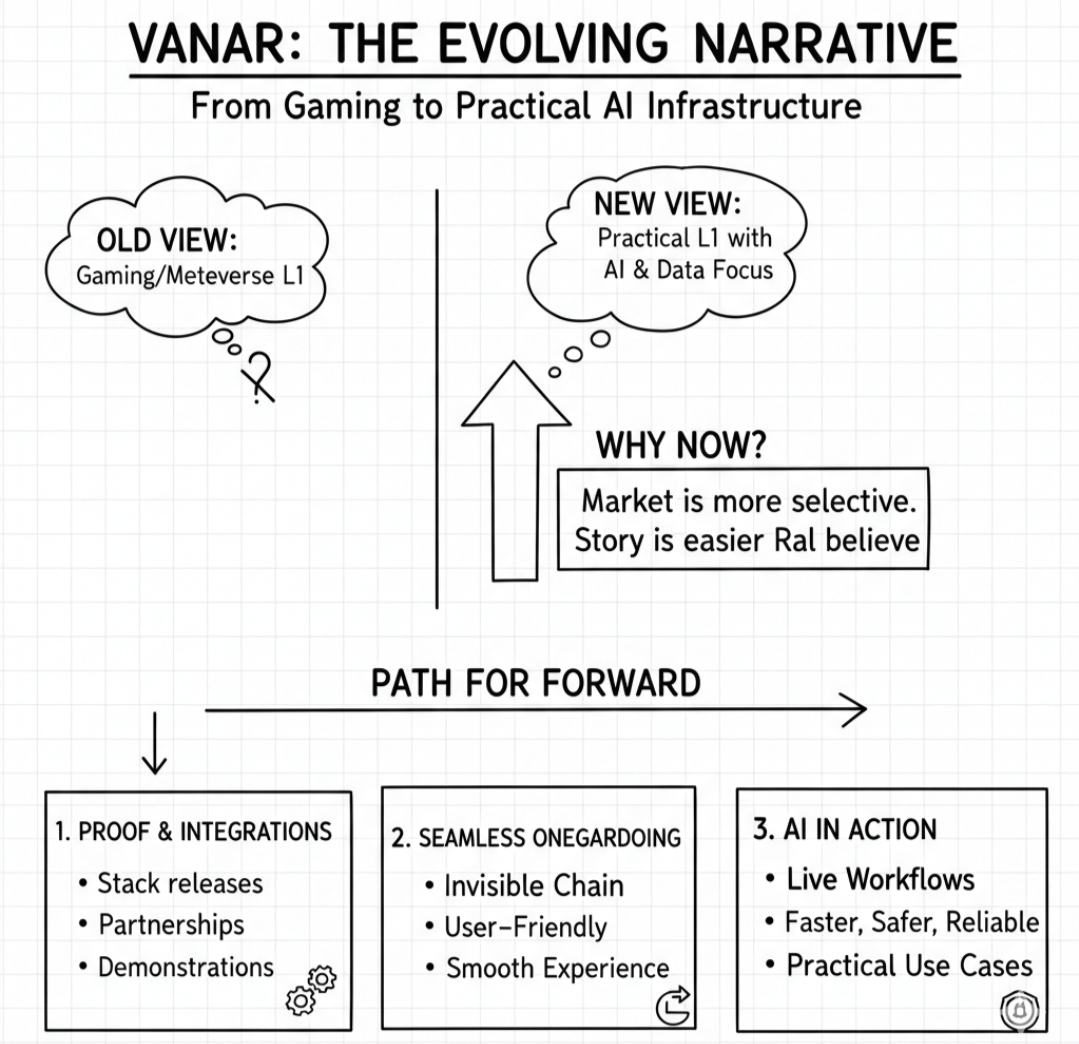
If Vanar keeps pushing this correctly, the next few steps are obvious. People will want proof that the stack is real through releases and integrations. They’ll want onboarding that feels smooth enough for normal users, where the chain is invisible behind the product. And they’ll want clearer examples of what the AI layer actually does in practice — not in theory, but in live workflows where it makes things faster, safer, and more reliable.
That’s why Vanar matters more today than it did last month. Not because it changed who it is, but because it’s sharpening what it wants to be — and 2026 is the year when that direction starts to matter a lot more than hype.
