Hey everyone, today I want to take a deep dive into something that has been quietly evolving but has massive underlying potential if you look beyond price charts and hype. I am talking about Vanar Chain and its native token VANRY. You’ve probably heard mentions here and there about it being an AI-focused blockchain, or read about its “smart data” features, but I want to give you a narrative that feels real, grounded, and forward-looking without repeating the same old lines you’ve seen elsewhere.
Let’s explore what’s going on with Vanar, why this project is unique, what it’s building right now, and where that could lead as we move into the future of Web3. I’ll break this down with context, clarity, and a focus on real developments rather than just price movements or speculation.
What Is Vanar Chain Actually Building?
First things first, Vanar Chain isn’t just another Layer 1 blockchain trying to offer lower fees or faster transactions. It’s trying to do something more fundamental. It was designed from the ground up to be AI-native, meaning the blockchain itself is built to not only handle transactions but to process, compress, reason, and store meaningful data directly on chain. This isn’t about slapping an AI label on existing tech. Vanar’s entire stack is structured around intelligence as a core function.
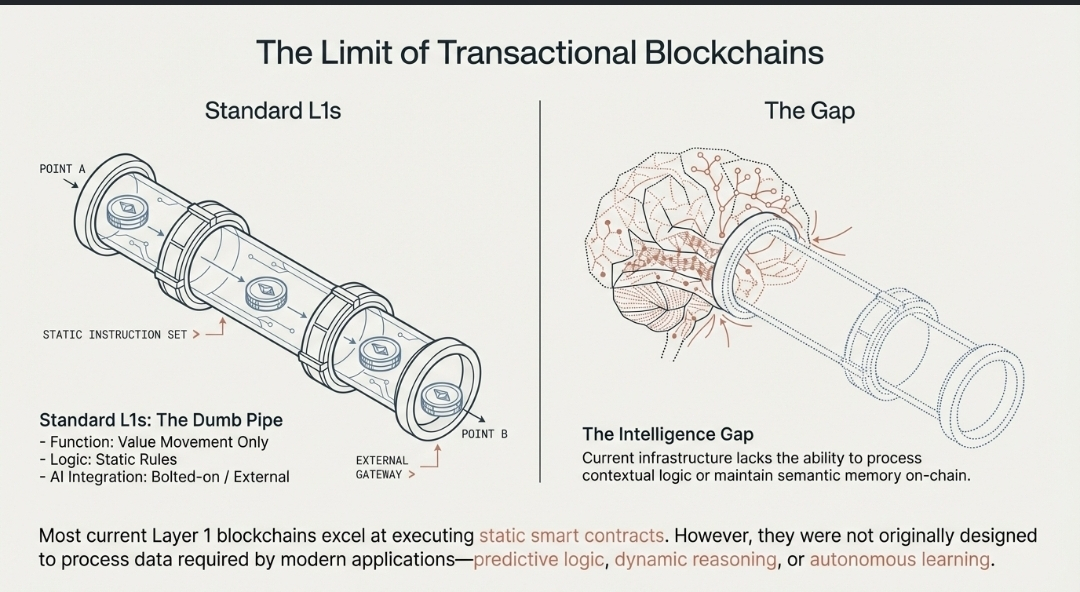
Let me unpack that. Most blockchains today excel at moving value. Some can support smart contracts. But none were originally built to process data the way modern applications demand especially those involving predictive logic, dynamic reasoning, or autonomous agents that learn over time. Vanar approaches blockchain differently. Its full stack isn’t just about executing code. It’s about understanding and reasoning over compressed data. That means smart contracts and applications can interact with information in ways that mimic more intelligent computing systems.
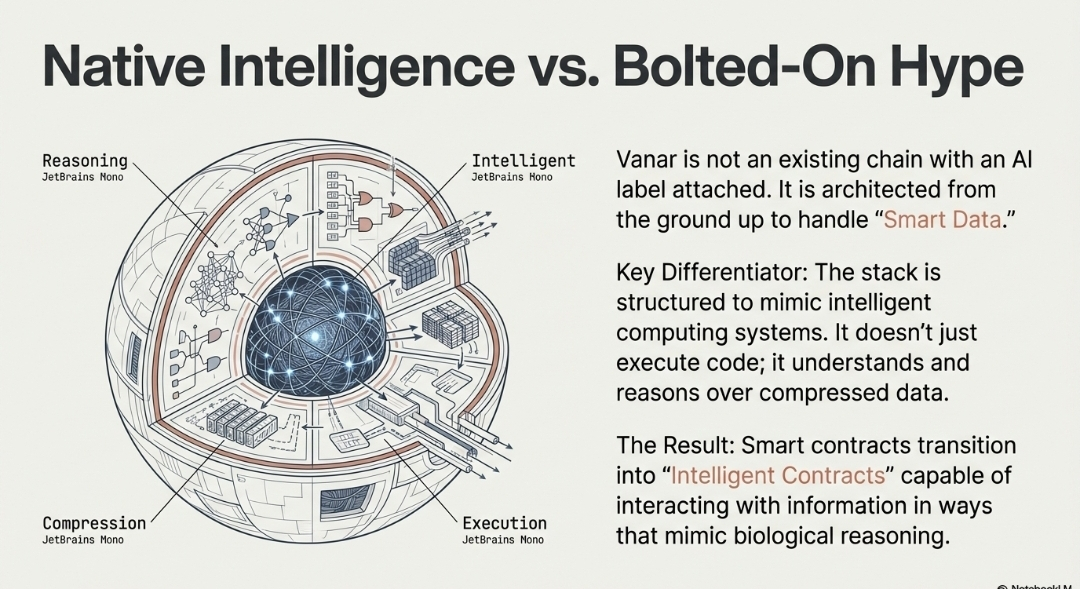
This matters because as Web3 evolves, applications will need more than static transactions. They will require contextual logic, semantic memory, real-time decisions, and AI workflows executed with verifiable trust. Vanar’s stack aims to deliver that natively.
Breaking Down the Vanar Stack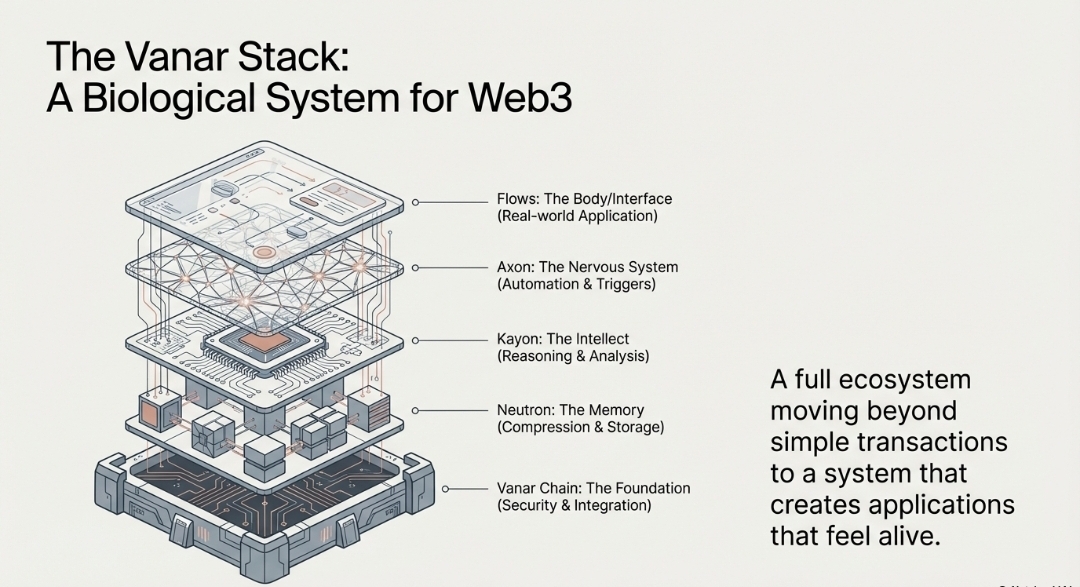
Vanar’s architecture is layered and intentional, and it’s worth understanding how those pieces interact because it paints a picture of what developers can build. Think of it as five building blocks, each serving a critical role:
Vanar Chain: This is the core layer, the L1 blockchain that secures the network, handles transactions, and integrates intelligent features by design. Unlike many Layer 1 projects that retrofit advanced features later, Vanar built AI compatibility into its base.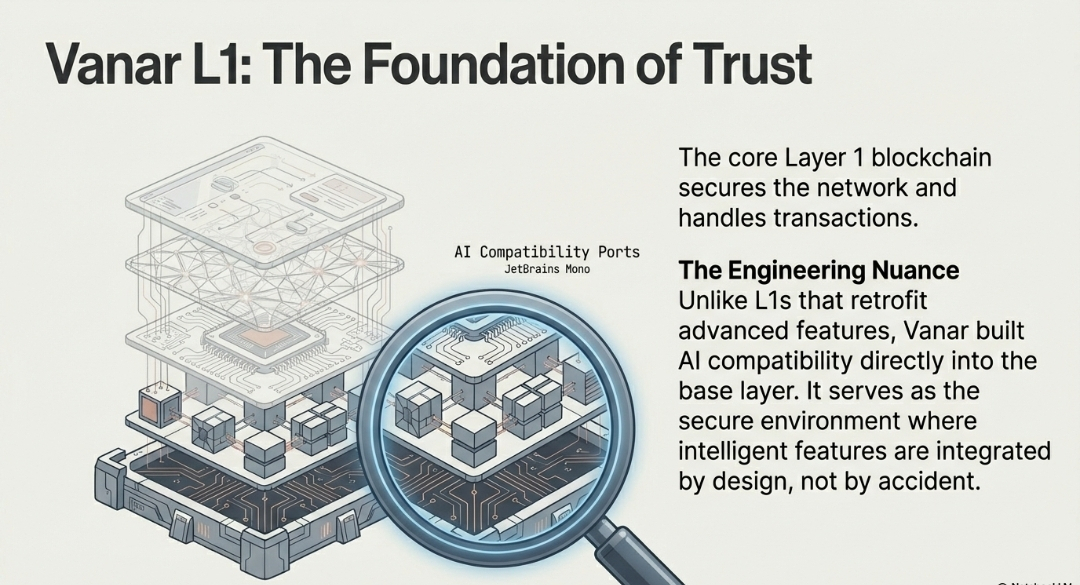
Neutron: This module is like the data brain. It takes massive files and compresses them into tiny on-chain “seeds” that smart contracts and applications can work with directly. We are talking about meaningful data storage that is not just a hash pointer to some off-chain server somewhere. This transforms how real data gets used in blockchain apps.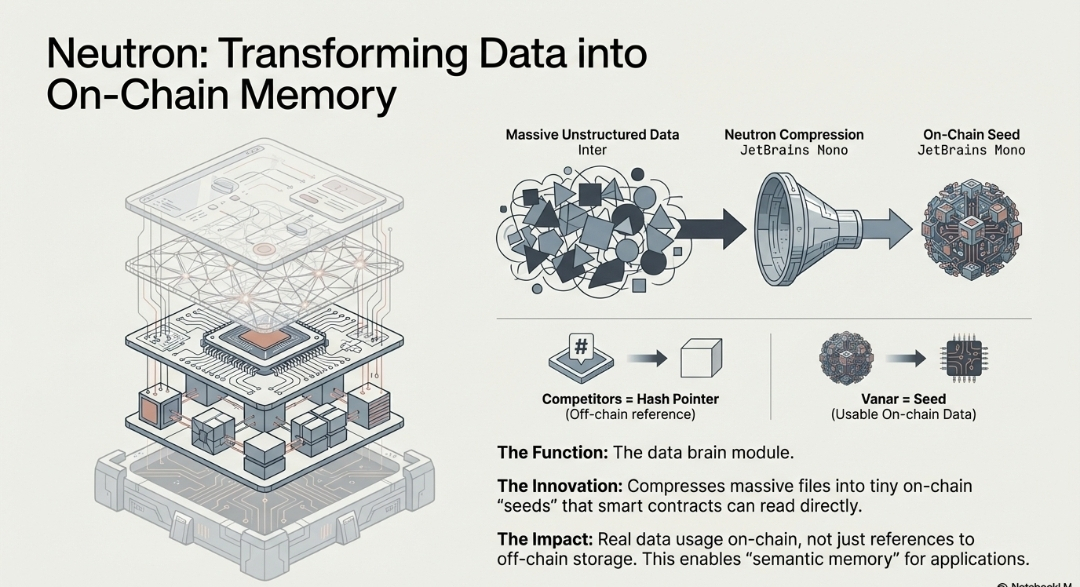
Kayon: Here’s where the reasoning happens. Kayon is the AI engine that interprets and analyzes compressed data. It allows the network to make decisions based on context, pattern recognition, and logic rather than just simple rules. This is where Vanar steps into the realm of “intelligent contracts,” not static ones.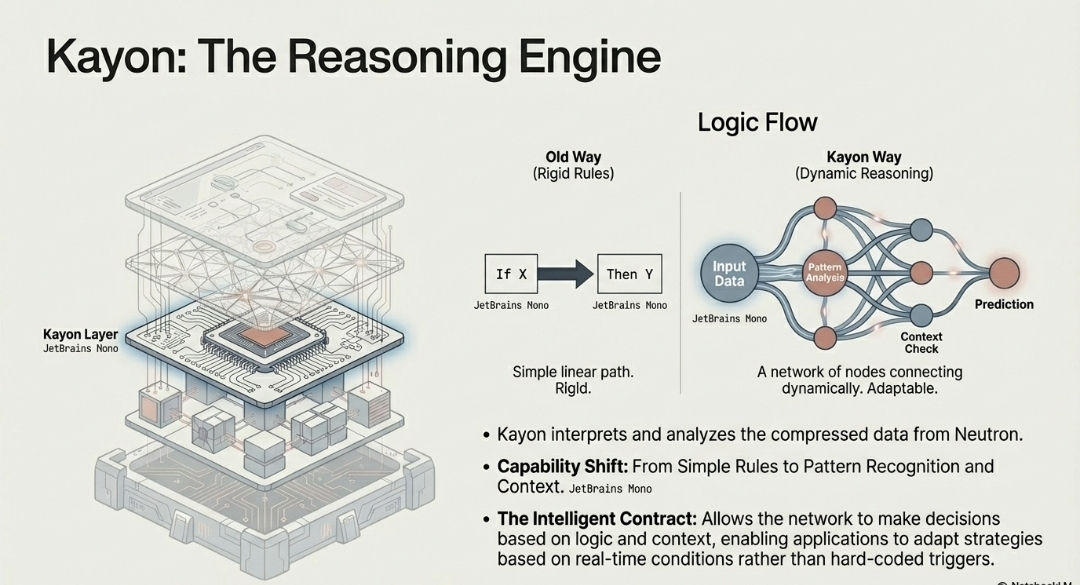
Axon: Focuses on automation. Once the network understands data and can reason over it, Axon enables workflows, triggers, and complex sequences that run without manual intervention. It’s a step toward autonomous decentralized applications.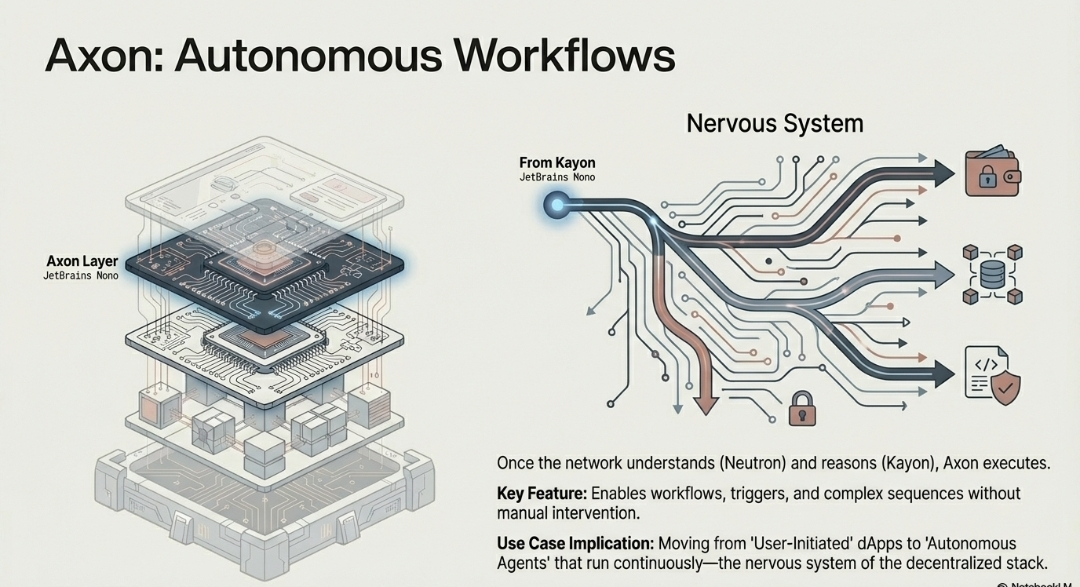
Flows: Represents real industry use cases built on top of all the above. This is where payments, real-world assets, and user experiences converge with native blockchain intelligence.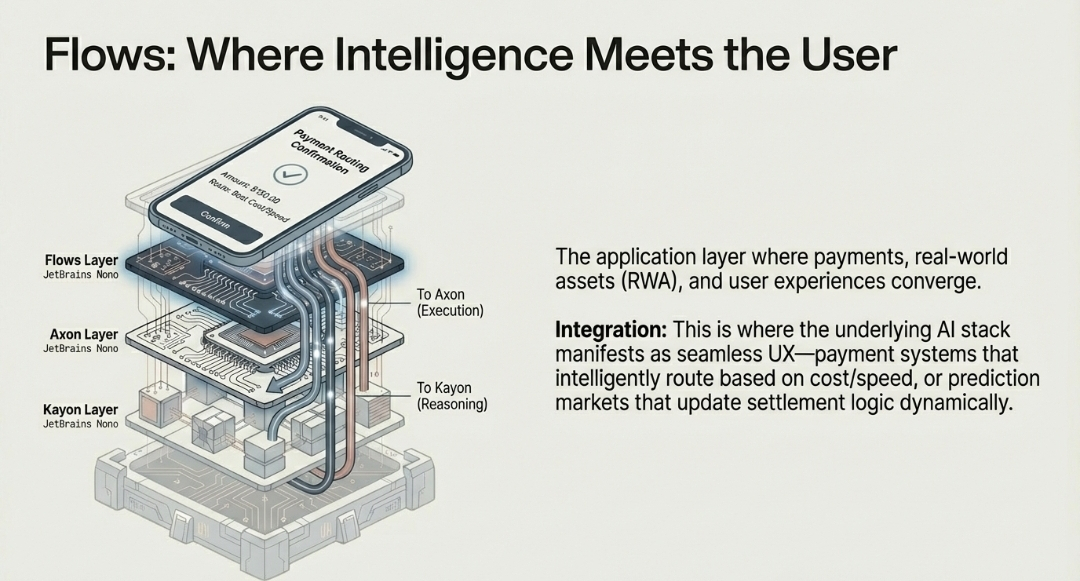
Think of this stack as a full ecosystem that moves beyond simple transactions or smart contracts to a system that can interact with data intelligently, take actions, predict outcomes, and create applications that feel alive rather than passive.
$VANRY Token: More Than Just Gas
The utility of the VANRY token is deeply entwined with the ecosystem’s operation. It’s the primary utility and governance token. That means it’s not just used for paying transaction fees. It’s used to power the entire interaction with Vanar’s intelligent blockchain. That includes staking in network security, participating in governance decisions, and enabling data operations within modules like Neutron.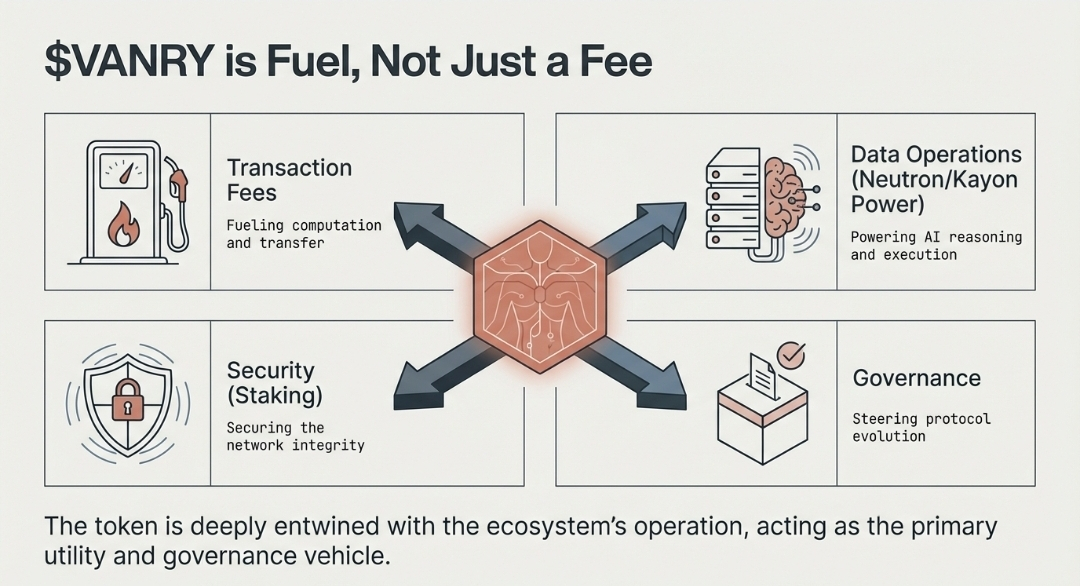
Another interesting point is that the token actually ties into data storage fees and ecosystem incentives. As developers store compressed data or interact with AI reasoning, VANRY plays a direct role in facilitating those actions and a portion of those fees feeds back into networks and stakers. This creates a feedback loop that goes beyond simple transactional demand.
This structure is meaningful because it aligns long-term participation with real network usage rather than short-term speculative trading. If developers build applications that require intelligent data processing, the token becomes a utility hub for that ecosystem.
AI and Web3 Comes Together — Not as a Gimmick, But as Infrastructure
One of the big narratives we’ve seen lately is the explosion of “AI integrated with blockchain” marketing. But the key difference with Vanar is that its AI focus isn’t bolted on. It’s the foundation. When the network launched its AI-native infrastructure earlier this year, it signaled a shift from concept to real implementation. Developers can start building applications that don’t just react, but reason.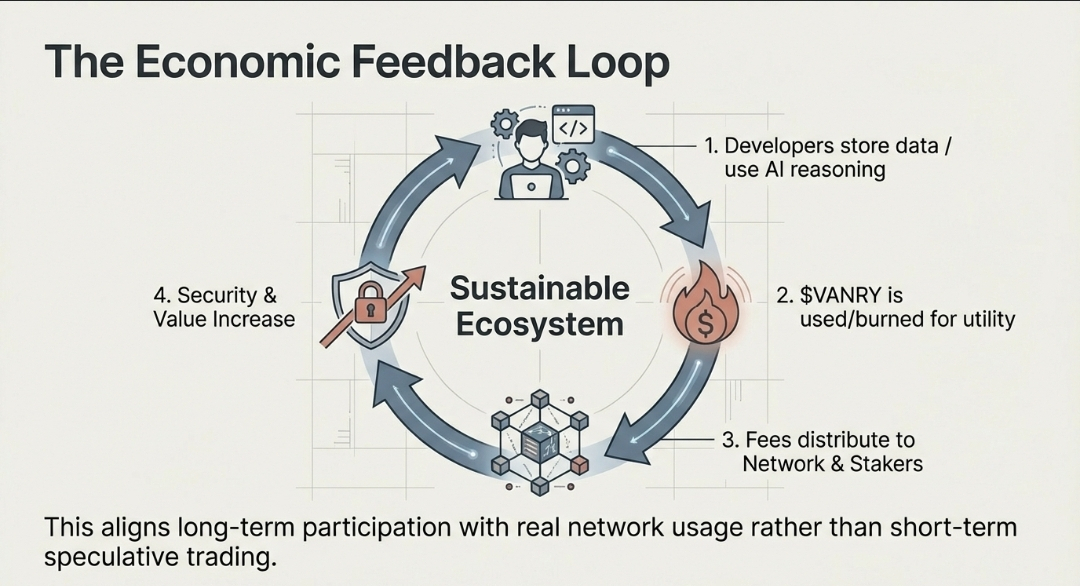
What does that actually mean in practice? Imagine decentralized finance applications that can adapt strategies based on real-time market conditions, or prediction markets that dynamically update settlement logic. Think about decentralized autonomous organizations where the governance logic can learn from past decisions and refine future proposals. Or consider payment systems that intelligently route transactions based on cost, speed, trust, and user preferences. This is the kind of innovation Vanar is architected to support.
Early Integrations and Real-World Use Cases
We’ve already seen some early integrations that hint at the direction the ecosystem is headed. Early Q4 developments included pilot integrations with AI agent platforms that let users interact with wallet balances and transactions using natural language commands. This is more than a gimmick it’s a real demonstration that blockchain data can be accessed and acted upon through intelligent interfaces, without traditional UI dependencies.
Additionally, leadership from the project has been actively sharing the vision of Vanar as a foundational AI infrastructure at major industry events, reinforcing the idea that this technology isn’t for niche demos but for real application layers.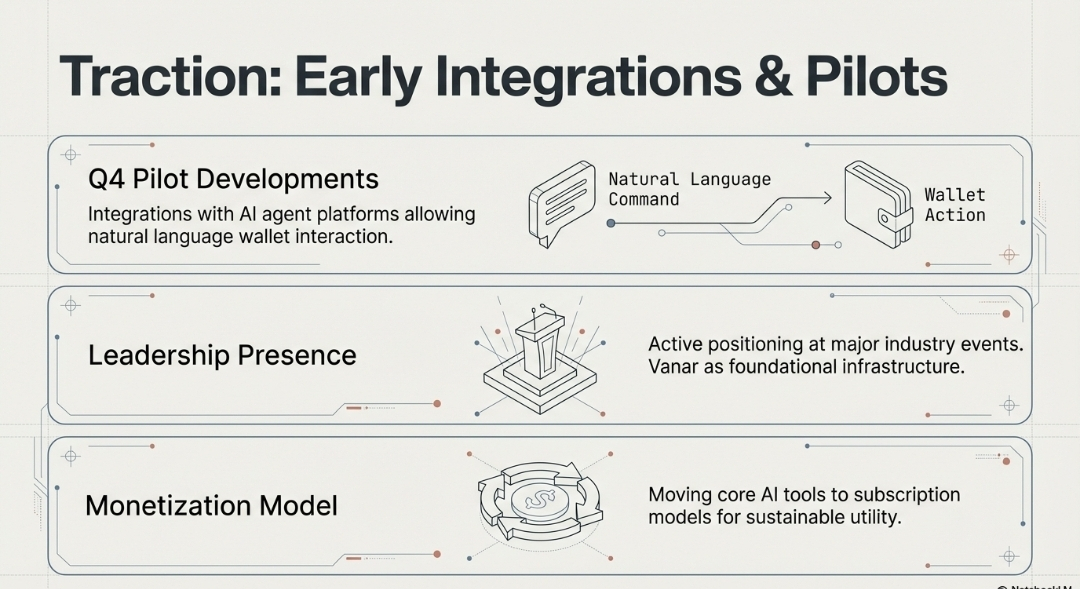
There are also moves toward monetizing components of the ecosystem like taking core AI tools to subscription models to create usage-based utility rather than purely speculative demand. This shift represents a mature approach to ecosystem sustainability.
Where Vanar Is Headed Next
Looking ahead, Vanar is aiming to expand its AI infrastructure and real-world use cases. That’s a bold play, because while many chains focus on gimmicks or short-term token incentives, Vanar is structuring itself around long-term technological relevance. The roadmap includes broader deployment of the data compression and reasoning technology across applications and potentially other chains, positioning Vanar as a settlement layer for intelligent data tasks.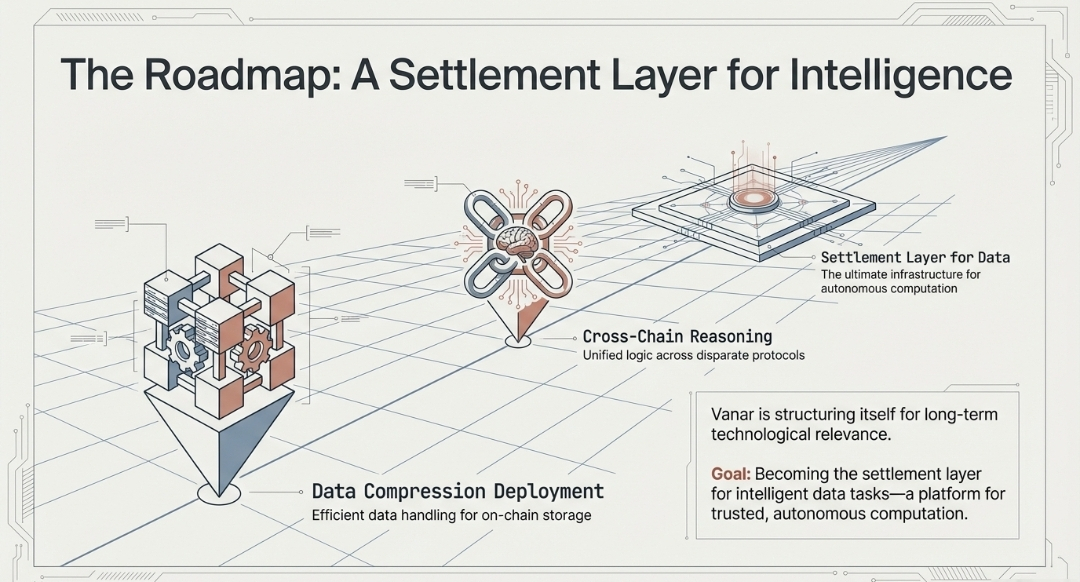
This direction reflects a worldview where blockchains are no longer just transaction layers but platforms for trusted autonomous computation. Imagine supply chain systems that verify and reason over logistics data without intermediaries, or digital identity systems that verify reputation and authenticity through intelligent on-chain logic. Those are the possibilities Vanar is architected to support.
Challenges and Market Conditions
Of course, it’s important to be real about the environment Vanar operates in. Right now, the broader crypto market is experiencing tough sentiment, with trading volumes and prices under pressure across many altcoins, including VANRY. This reflects broader macro sentiment rather than a specific indictment of Vanar’s technology or team.
Sentiment across social indicators remains cautious, and the path to widespread adoption will require continued developer engagement, real usage metrics, and real-world partnerships. But the approach Vanar is taking focusing on utility, not hype positions it well for long cycles rather than short cycles.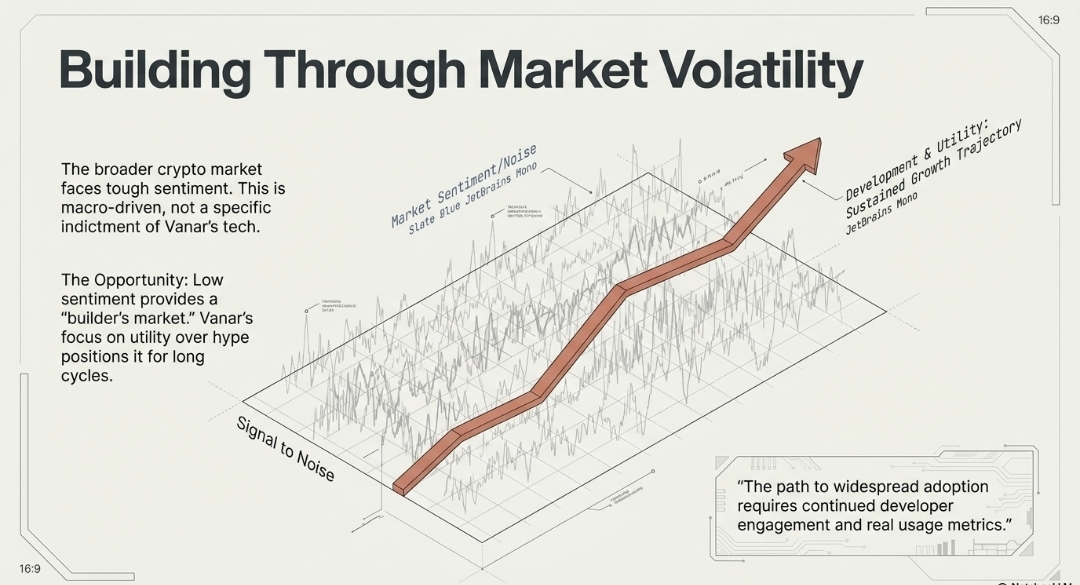
Final Thoughts for the Community
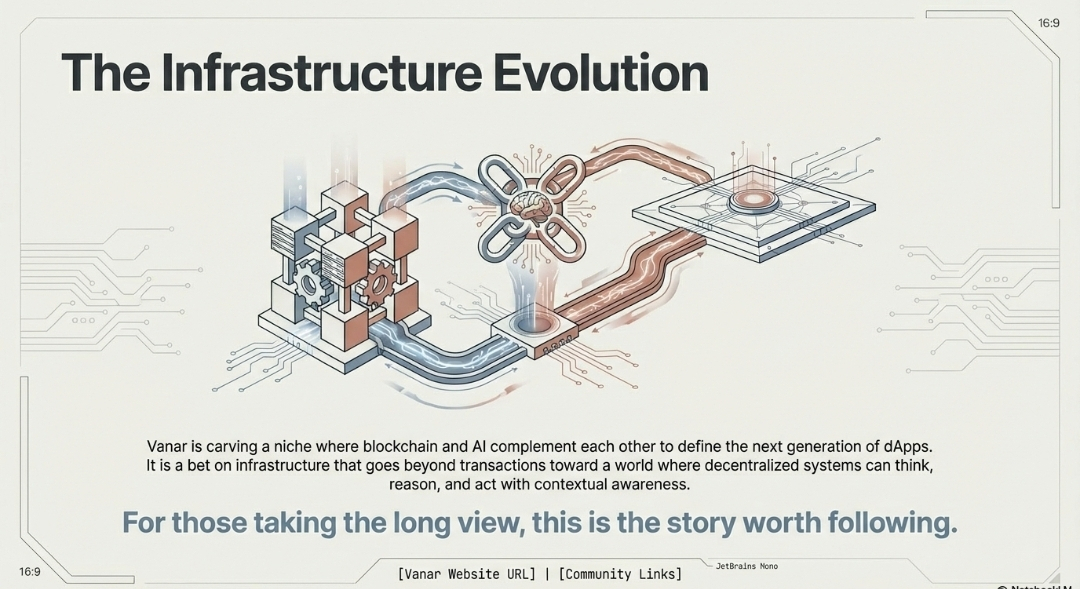
If you’re part of the Vanar community or watching from the sidelines, the narrative here isn’t about overnight gains or viral social media buzz. It’s about infrastructure evolution. Vanar is carving a niche where blockchain and AI don’t just coexist, but complement each other in ways that could define the next generation of decentralized applications.
We are still early. Very early. And that means there will be bumps, volatility, and skepticism. But the underlying architecture a blockchain built for intelligent data interaction is unique. It’s a bet on infrastructure that goes beyond transactions, beyond simple smart contracts, and toward a world where decentralized systems can think, reason, and act with contextual awareness.
For those of us who are here for the long view, that’s a story worth following.