
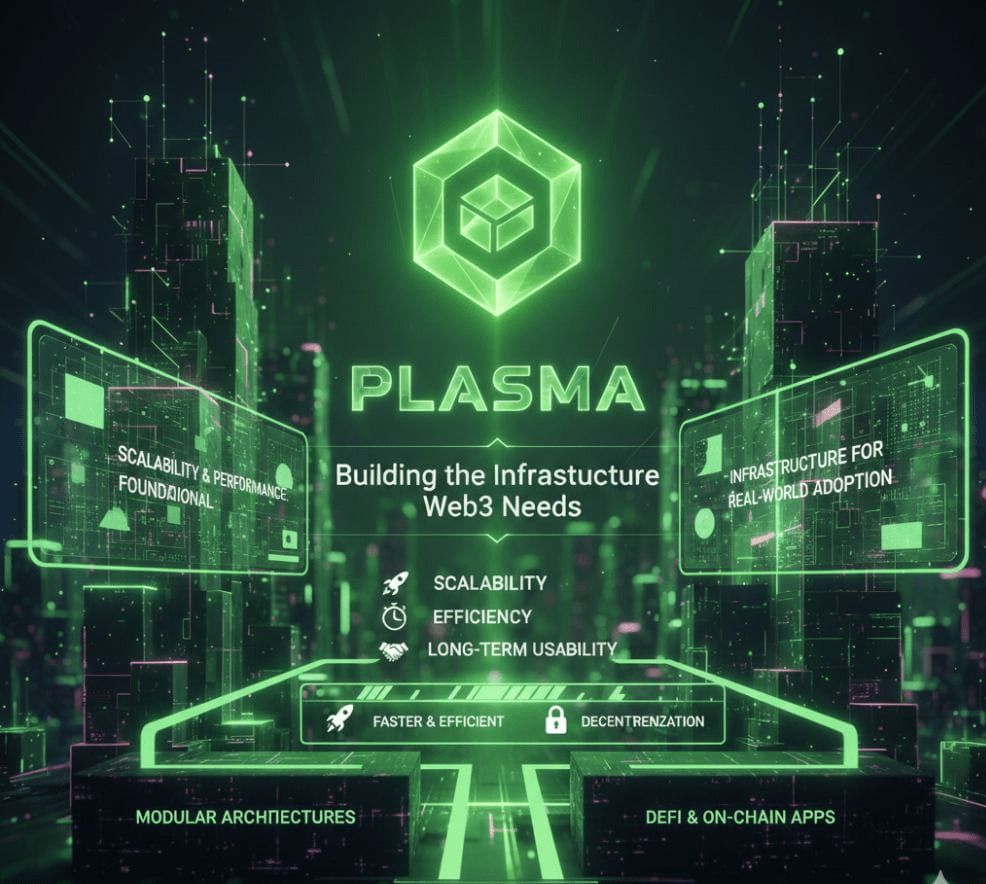
Why Building Strong Infrastructure Matters More Than Chasing the Next Trend
How Plasma-Based Scaling Solutions Move Web3 Toward Everyday Use
Since its early days, Web3 has promised to reinvent ownership and value transfer online. The vision: true digital autonomy, decentralized apps anyone can use, and open systems that cut out middlemen. But in reality, many users still face the same fundamental stumbling block—blockchains, by design, don’t yet scale to meet mainstream demand. High transaction costs, sluggish confirmations, and interfaces that feel more like science experiments than user-friendly apps have kept the technology out of reach for most people.
This is where Plasma and similar scaling solutions come in. After some years in the background, Plasma is returning to the spotlight, offering a practical path to make blockchains faster, cheaper, and more usable—without compromising on security. It’s less about flashy narratives and more about building the invisible, essential plumbing that makes the Web3 dream possible.
Think of the main blockchain as a crowded highway at rush hour. Every extra car—a new user, a new app, a fresh transaction—slows things down and pushes up tolls. Plasma works like an intricate system of local roads and side streets, rerouting most of the traffic away from gridlock, only sending the final results back to the highway. This clever architecture means the main chain isn’t overloaded, but everything still adds up securely in the end.
For everyday users, the impact is huge. Apps built on Plasma-like frameworks can process transactions quickly and at a fraction of the cost. That means no more waiting for minutes (or hours) for a simple payment to go through, or worrying about gas fees that make microtransactions impossible. Imagine paying for a coffee, sending a game item, or automating a smart contract—without a second thought about the underlying technology.
Developers, too, stand to benefit in a big way. With scaling solutions like Plasma, they have the freedom to build richer, more complex applications—think games with millions of players, payment platforms with global reach, or AI-driven apps that require rapid-fire data processing—all while knowing the backbone of the network can actually support their ambitions.
As new use cases emerge—especially in areas like gaming, real-time payments, decentralized social media, and AI-powered applications—the demand on blockchain networks will only grow. Without robust scaling infrastructure, these innovations will hit a wall. Plasma and related technologies are the key to breaking through those limits and making sure blockchain isn’t just a niche playground for enthusiasts, but a foundation for real-world, everyday solutions.
What lies ahead for Web3 likely won’t be defined by the next viral token or speculative asset. Instead, it’s the subtle, behind-the-scenes upgrades—like Plasma—that will quietly transform the user experience. The best technology is the kind you barely notice because it works so seamlessly. When blockchain “just works,” users will stop thinking about the technology and start focusing on what they actually want to accomplish—whether that’s trading, collaborating, creating, or playing.
True adoption happens when technology fades into the background and the value it provides moves front and center. Plasma is a crucial step toward that future: reducing friction, improving efficiency, and letting people engage with Web3 on their own terms, without needing to be experts in cryptography or blockchain mechanics.
As scaling solutions continue to evolve, keep an eye on the infrastructure powering this new era. It might not be as flashy as the latest meme coin, but it’s the solid foundation that will determine how far, and how fast, Web3 can grow.
FAQs
What’s Plasma, in simple terms?
Plasma is a framework that lets most transactions happen off the main blockchain, then records only the essential results back on-chain. This makes things much faster and cheaper, while still keeping security strong.
Why is scaling so important in Web3?
Without scaling, blockchains stay slow and expensive, limiting their real-world use. Scalable solutions like Plasma turn blockchains from experimental tech into practical platforms for millions.
Does Plasma replace blockchains themselves?
No, Plasma doesn’t replace the main chain—it makes it more efficient. By handling the heavy lifting off-chain, Plasma ensures the main blockchain isn’t overwhelmed but can still guarantee security and finality.
Understanding the invisible infrastructure powering the next stage of Web3 adoption.

