
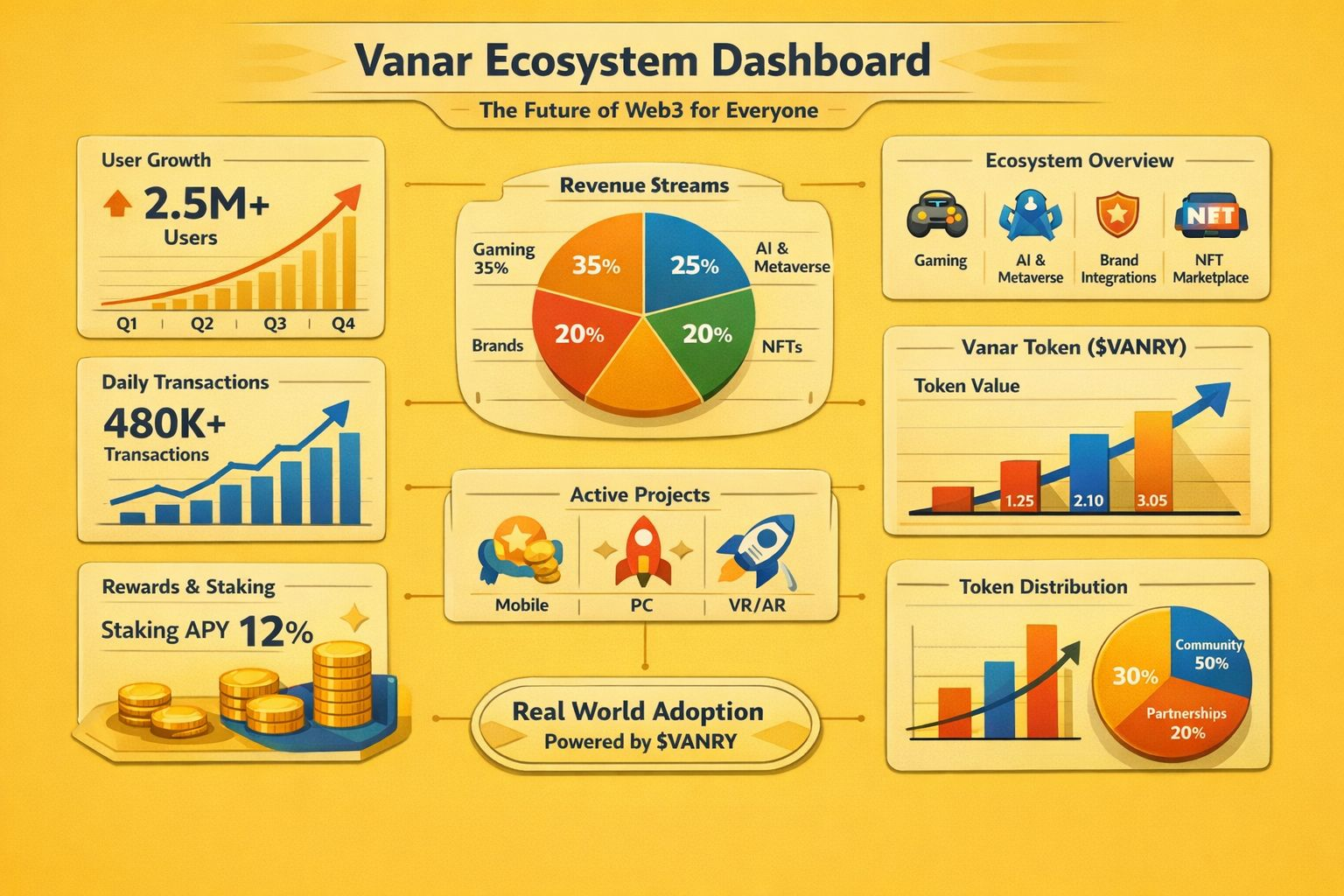
When I read about Vanar Chain, I don’t think about it as a technical product first. I think about the feeling most people have the first time they touch crypto: curiosity mixed with hesitation. There is always that small fear of doing something wrong, sending to the wrong address, pressing the wrong button, or not understanding what the system expects from you. Vanar feels like it was imagined by people who noticed that emotional barrier and decided that adoption is not only a technical challenge, it is a human one. The project reads like an attempt to build Web3 in a way that respects how normal people actually behave instead of assuming they will transform into blockchain experts overnight.
The focus on gaming, entertainment, and brands makes this even more relatable. These are spaces where people already spend time without thinking about infrastructure. When someone joins a game or a digital world, they care about identity, ownership, and experience, not consensus mechanisms. Products like Virtua Metaverse and the VGN gaming network make Vanar feel anchored in environments where fun comes first and technology stays behind the curtain. That matters because the harsh truth is that users will not tolerate friction in entertainment. If something is slow, confusing, or stressful, they will walk away without ceremony. So building a chain around these spaces is almost a promise that usability has to be taken seriously.
What feels most human about Vanar is the quiet ambition to make blockchain invisible. A lot of Web3 still feels like work. You prepare transactions, calculate fees, double-check steps, and carry a constant sense of responsibility. That weight is exhausting for newcomers. Vanar’s direction suggests a different dream: people should be able to move assets, play, collect, and interact without feeling like they are operating a fragile machine. When the system fades into the background and the experience stays in focus, trust grows naturally. Users stop thinking about whether the technology works and start assuming that it does, the same way they trust everyday apps without analyzing the code behind them.
The way Vanar talks about AI adds another emotional layer to this vision. Modern users are getting used to software that adapts to them, recommends content, and feels responsive instead of static. If Web3 wants to feel contemporary, it cannot remain rigid. The idea of an ecosystem where applications can be more intelligent hints at a future where blockchain environments are not just secure, but also personalized. At the same time, there is a delicate balance here. People want smart systems, but they also want fairness and control. The human challenge is making technology feel helpful without making it feel manipulative, and any chain stepping into AI territory has to carry that responsibility carefully.
The VANRY token, from a human perspective, only makes sense if it is connected to real activity. Tokens become meaningful when they represent participation, not just speculation. If people are using Vanar through games, digital identities, collectibles, and community governance, then the token becomes part of their routine instead of an abstract investment object. The healthiest ecosystems are the ones where users understand the token intuitively because they encounter it through action, not explanation. It becomes something you use, not something you constantly question.
I also think it is important to admit that consumer-focused ecosystems live under constant pressure. Entertainment cycles move fast. Communities can be excited one month and distracted the next. For Vanar, the real test is not launch energy but long-term rhythm. The chain has to support an ecosystem that keeps evolving, adding new experiences, refreshing its worlds, and giving people reasons to return. Adoption is emotional before it is numerical. People come back to places that feel alive. If the products stagnate, the technology underneath cannot save them.
What keeps Vanar interesting to me is the sense that it is trying to meet people where they already are instead of asking them to relocate into a purely crypto-native culture. If it succeeds, users might not even describe themselves as blockchain users. They will just describe the games they play, the spaces they explore, and the assets they own. That quiet integration is where Web3 stops being a niche and starts becoming part of everyday digital life. And Vanar’s story feels less like a campaign to impress and more like an attempt to build a home where blockchain simply becomes normal.
